Doryteuthis opalescens
Opalescent Inshore Squid
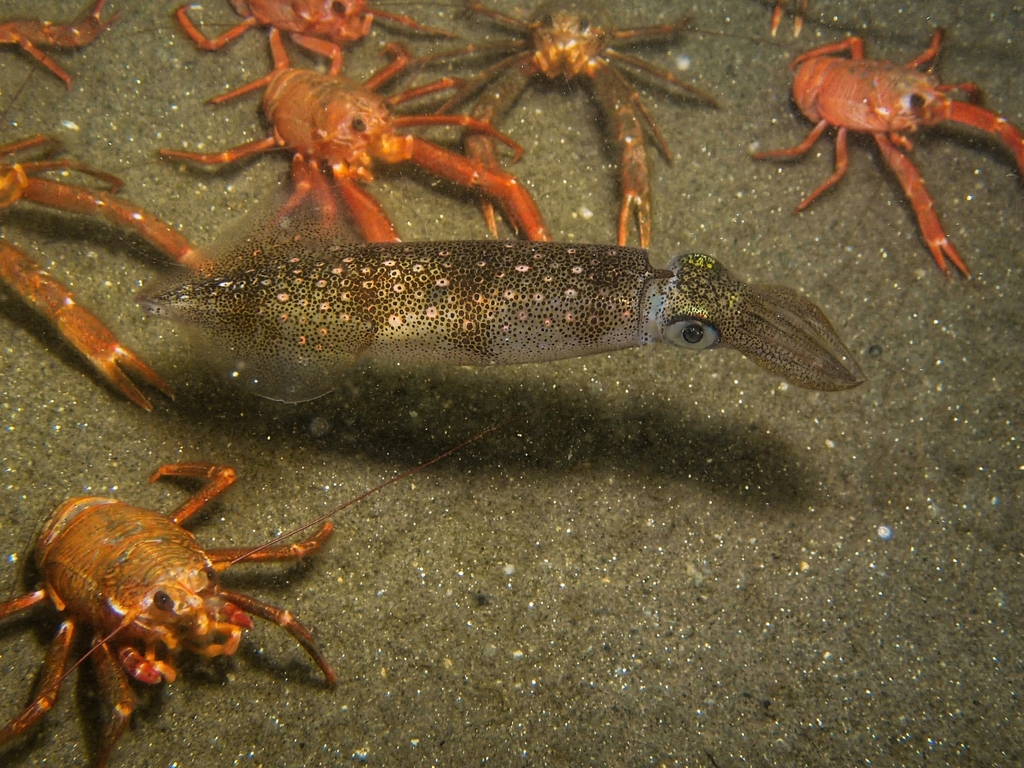
(c) Jackie H, some rights reserved (CC BY) · licence
Family: Loliginidae · Class: Cephalopoda · Order: Teuthoidea
Doryteuthis opalescens (Opalescent Inshore Squid) is a California animal in the Loliginidae family.
The opalescent inshore squid is a small to medium-sized cephalopod measuring 150 to 190 millimeters (5.9 to 7.5 inches) in mantle length, with females typically growing larger than males. The species exhibits the characteristic opalescent coloration that gives it its common name, with translucent body tissues that display iridescent hues of blue, green, and purple. The mantle is torpedo-shaped with paired triangular fins at the posterior end. Like other loliginid squids, it possesses ten arms - eight shorter arms and two longer tentacles equipped with suckers for prey capture. Doryteuthis opalescens ranges along the eastern Pacific coast from southeastern Alaska to Baja California, Mexico. In California waters, the species occurs from the surface to depths of approximately 500 meters (1,640 feet), though it is most commonly found in nearshore waters over the continental shelf. The species demonstrates seasonal migration patterns, moving closer to shore during spawning periods. The opalescent inshore squid inhabits coastal and offshore waters of the continental shelf, preferring areas with sandy or muddy substrates for egg-laying. During spawning, adults aggregate in nearshore waters typically at depths of 20 to 100 meters (65 to 328 feet). Spawning occurs year-round in southern California waters, with peak activity from April through October. According to the California Department of Fish and Wildlife, spawning aggregations are particularly concentrated around the Channel Islands and Monterey Bay areas. This species exhibits complex reproductive behavior, with males competing for access to females through aggressive displays and arm wrestling. Females deposit large, gelatinous egg capsules on sandy bottoms, often in communal spawning beds that can contain thousands of egg masses. Each egg capsule contains 180 to 300 individual eggs that develop over 3 to 5 weeks depending on water temperature. Adults die shortly after reproduction, following the typical semelparous life cycle of most squid species. The species feeds primarily on small schooling fishes, crustaceans, and other cephalopods, using jet propulsion to pursue prey through the water column. As a key forage species in the California Current Ecosystem, market squid supports numerous predators including seabirds, marine mammals, and larger fish species. The species serves as prey for marbled murrelets, white seabass, Pacific herring, and California sea lions, among others. California maintains one of the world's largest squid fisheries targeting this species, which is managed by the California Department of Fish and Wildlife through seasonal closures and other regulations. The fishery operates primarily with purse seines and is concentrated in the nearshore waters off central and southern California. While not federally listed, the species faces potential impacts from climate change, including ocean acidification and temperature increases that may affect spawning success and larval development. The species currently has no special conservation status but is monitored through fisheries management programs.
Classification
Class: Cephalopoda · Order: Teuthoidea · Family: Loliginidae
Frequently asked questions
How is Doryteuthis opalescens classified?
Doryteuthis opalescens belongs to class Cephalopoda, order Teuthoidea, family Loliginidae.
What family does Doryteuthis opalescens belong to?
Doryteuthis opalescens is in the Loliginidae family.
What is Doryteuthis opalescens?
The opalescent inshore squid is a small to medium-sized cephalopod measuring 150 to 190 millimeters (5.9 to 7.5 inches) in mantle length, with females typically growing larger than males.
Is Doryteuthis opalescens found in California?
Yes. Doryteuthis opalescens is recorded in California in The California Species Project's catalogue.
More California species
This species has no close relatives in our California data — here are other species to explore.
Data from The California Species Project — 14,000+ California species with verified data from CNPS, CDFW, USFWS, and more.