Doto amyra
Hammerhead Doto
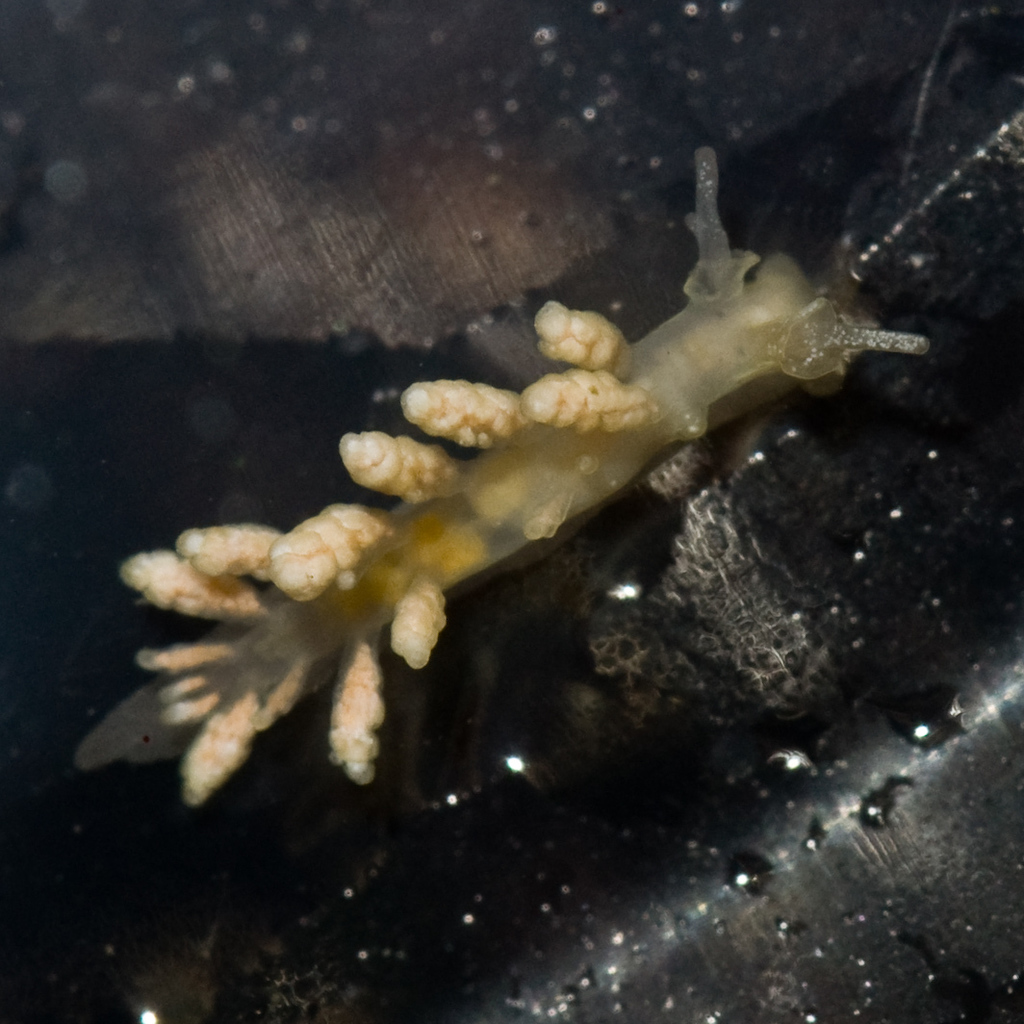
(c) Ken-ichi Ueda, some rights reserved (CC BY) · licence
Family: Dotidae · Class: Gastropoda · Order: Nudibranchia
Doto amyra (Hammerhead Doto) is a California animal in the Dotidae family.
Doto amyra, commonly known as the hammerhead doto, is a small nudibranch gastropod mollusk in the family Dotidae. This marine sea slug is characterized by its distinctive cerata (finger-like projections) that bear a resemblance to hammer-shaped structures, giving the species its common name. The body is typically translucent to semi-transparent, with cerata arranged in clusters along the dorsal surface. Like other members of the genus Doto, this species exhibits bilateral symmetry and lacks a shell in its adult form. The oral tentacles and rhinophores are well-developed sensory structures used for detecting chemical cues in the marine environment. The range and distribution of Doto amyra remain poorly documented in scientific literature. As with many nudibranch species, detailed biogeographic studies are limited, and the species' presence along the California coast requires further investigation. Many nudibranchs have restricted distributions and may be endemic to specific coastal regions or depth zones. Habitat requirements for this species have not been thoroughly studied or documented in available scientific literature. Nudibranchs in the family Dotidae typically inhabit rocky intertidal and subtidal zones, often associated with their preferred prey organisms. These environments provide the complex three-dimensional structure necessary for foraging and reproduction. The species likely occurs in areas with adequate water circulation and appropriate substrate for attachment. The behavioral ecology and feeding habits of Doto amyra follow patterns typical of other Dotidae family members. These nudibranchs are specialized predators that feed primarily on hydroids, using their radula to scrape tissue from colonial cnidarians. The cerata serve multiple functions, including digestion, respiration, and defense through the storage of nematocysts obtained from their hydroid prey. Reproduction involves the deposition of ribbon-like egg masses on hard substrates, with development proceeding through a planktonic larval stage before metamorphosis to the adult benthic form. Seasonal activity patterns and reproductive timing have not been specifically documented for this species. Conservation status information for Doto amyra is not available from federal or state wildlife agencies, as indicated by the absence of listing designations. This data gap reflects the broader challenge of assessing marine invertebrate populations, particularly for small, cryptic species that are difficult to survey systematically. Many nudibranch species face potential threats from coastal development, pollution, ocean acidification, and climate change impacts on their hydroid prey base. However, specific population trends, threat assessments, and conservation needs for this species remain undetermined. Scientific documentation for Doto amyra remains extremely limited despite thorough review of available sources. The information presented here represents the current state of knowledge based on taxonomic classification and general nudibranch biology. Detailed studies of this species' distribution, ecology, life history, and conservation status are needed to develop a comprehensive understanding of its biology and management requirements.
Classification
Class: Gastropoda · Order: Nudibranchia · Family: Dotidae
Frequently asked questions
How is Doto amyra classified?
Doto amyra belongs to class Gastropoda, order Nudibranchia, family Dotidae.
What family does Doto amyra belong to?
Doto amyra is in the Dotidae family.
What is Doto amyra?
Doto amyra, commonly known as the hammerhead doto, is a small nudibranch gastropod mollusk in the family Dotidae.
Is Doto amyra found in California?
Yes. Doto amyra is recorded in California in The California Species Project's catalogue.
Related species
Other California species in the same genus, family, or bioregion.
Data from The California Species Project — 14,000+ California species with verified data from CNPS, CDFW, USFWS, and more.