Doto columbiana
British Columbia Doto
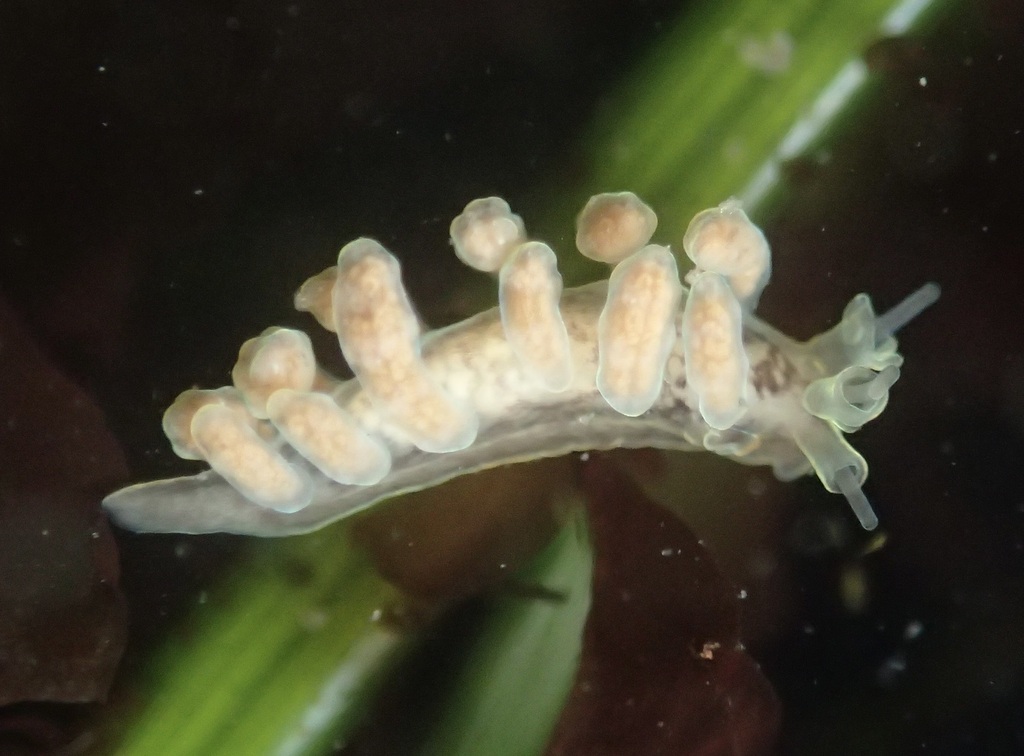
(c) Cricket Raspet, some rights reserved (CC BY) · licence
Family: Dotidae · Class: Gastropoda · Order: Nudibranchia
Doto columbiana (British Columbia Doto) is a California animal in the Dotidae family.
Doto columbiana, commonly known as the British Columbia Doto, is a marine nudibranch mollusk in the family Dotidae. As a member of the order Nudibranchia, this species is a shell-less gastropod that inhabits marine environments along the Pacific coast. The taxonomic classification places it within the genus Doto, which comprises small aeolid nudibranchs characterized by distinctive cerata (finger-like projections) along their dorsal surface. Nudibranchs in the genus Doto typically measure between 5 to 15 millimeters in length, though specific morphological data for D. columbiana remains undocumented in available scientific literature. Like other Doto species, this nudibranch likely possesses a translucent to semi-opaque body with numerous cerata arranged in clusters along the back. The cerata serve both respiratory and digestive functions, extending the animal's gut system and increasing surface area for gas exchange. Based on the common name, Doto columbiana likely occurs in Pacific Northwest waters, potentially ranging from British Columbia southward along the North American coast. However, specific distributional data and habitat preferences have not been well documented in accessible scientific sources. Most Doto species inhabit subtidal rocky reefs, kelp forests, and areas with abundant hydroid growth, typically at depths ranging from the intertidal zone to approximately 30 meters. Members of the genus Doto are specialized predators that feed exclusively on hydroids, small colonial cnidarians that form branching, plant-like structures on hard substrates. The feeding relationship is often species-specific, with individual Doto species typically associated with particular hydroid species. The nudibranchs use their radula, a rasping feeding organ, to scrape tissue from hydroid polyps. Reproduction involves the deposition of spiral egg masses on the substrate, with development proceeding through a planktonic larval stage before settlement and metamorphosis. The conservation status of Doto columbiana has not been formally assessed by state or federal agencies. No federal or state listing status has been assigned to this species as of December 2025. The lack of comprehensive distributional and ecological data makes it difficult to evaluate population trends or conservation needs. Like many marine invertebrates, potential threats may include habitat degradation, ocean acidification, and changes in prey availability due to climate change impacts on hydroid communities. Scientific documentation for this species remains extremely limited despite thorough literature review. The information presented here synthesizes available taxonomic data from federal databases and general knowledge of Doto biology. Additional field studies and taxonomic research are needed to better understand the distribution, ecology, and conservation status of this Pacific Northwest nudibranch. We welcome contributions of verified scientific data, photographs, or field observations to enhance this species account.
Classification
Class: Gastropoda · Order: Nudibranchia · Family: Dotidae
Frequently asked questions
How is Doto columbiana classified?
Doto columbiana belongs to class Gastropoda, order Nudibranchia, family Dotidae.
What family does Doto columbiana belong to?
Doto columbiana is in the Dotidae family.
What is Doto columbiana?
Doto columbiana, commonly known as the British Columbia Doto, is a marine nudibranch mollusk in the family Dotidae.
Is Doto columbiana found in California?
Yes. Doto columbiana is recorded in California in The California Species Project's catalogue.
Related species
Other California species in the same genus, family, or bioregion.
Data from The California Species Project — 14,000+ California species with verified data from CNPS, CDFW, USFWS, and more.