Drasteria howlandii
Howland’s Drasteria
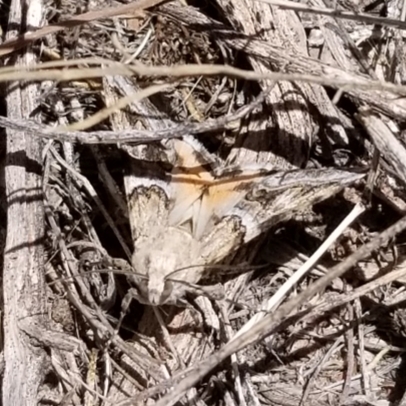
(c) Justin, some rights reserved (CC BY) · licence
Family: Erebidae · Class: Insecta · Order: Lepidoptera
Drasteria howlandii (Howland’s Drasteria) is a California animal in the Erebidae family.
Howland's Drasteria is a small moth in the family Erebidae, subfamily Erebinae, belonging to the tribe Melipotini. Adults have a wingspan of approximately 37 mm, as documented from specimens collected in California (BugGuide 2021). The forewings display the characteristic coloration and patterning typical of Drasteria species, though detailed morphological descriptions of this species remain limited in the scientific literature. Drasteria howlandii occurs across multiple states in North America. Verified records exist from California, where specimens have been documented in San Benito County near Aromas (BugGuide 2019, 2021). The species also appears on Species of Greatest Conservation Need lists for Arkansas, New York, and Louisiana, indicating a broader but possibly discontinuous distribution across the United States (BugGuide 2016). The historical range and current distribution patterns require further documentation through systematic surveys. In California, this species has been recorded in live oak and chaparral habitats. Specimens were collected in areas characterized by mixed oak woodlands and chaparral vegetation communities typical of the central California coast ranges (BugGuide 2021). The elevation range and specific microhabitat requirements have not been well documented, though the San Benito County collection site suggests the species occurs in foothill and lower montane environments. Adults are attracted to artificial light sources, including black light and mercury vapor traps, indicating nocturnal activity patterns typical of many erebid moths (BugGuide 2021). Specimens have been documented during July and September, suggesting an extended flight period or multiple generations per year, though the complete seasonal phenology remains undocumented. Host plant relationships and larval ecology have not been described in the available literature. Reproductive behavior, mating systems, and larval development patterns require investigation. The conservation status of Drasteria howlandii reflects the limited knowledge about this species. While not federally listed, its inclusion on Species of Greatest Conservation Need lists in multiple states indicates concern about population status or data deficiency (BugGuide 2016). These listings typically include species that are rare, experiencing population decline, or lack sufficient information to determine conservation status. The species may face threats common to other lepidoptera, including habitat loss, fragmentation of native plant communities, pesticide use, and climate change impacts on host plants and suitable habitat. Scientific documentation for this species remains limited. The information presented here is based on available sources including BugGuide community observations and state wildlife action plans. Detailed ecological studies, comprehensive distribution surveys, and life history investigations are needed to better understand this species' biology and conservation needs. We welcome contributions of verified scientific data, photographs, or field observations to enhance this species account.
Classification
Class: Insecta · Order: Lepidoptera · Family: Erebidae
Frequently asked questions
How is Drasteria howlandii classified?
Drasteria howlandii belongs to class Insecta, order Lepidoptera, family Erebidae.
What family does Drasteria howlandii belong to?
Drasteria howlandii is in the Erebidae family.
What is Drasteria howlandii?
Howland's Drasteria is a small moth in the family Erebidae, subfamily Erebinae, belonging to the tribe Melipotini.
Is Drasteria howlandii found in California?
Yes. Drasteria howlandii is recorded in California in The California Species Project's catalogue.
Related species
Other California species in the same genus, family, or bioregion.
Data from The California Species Project — 14,000+ California species with verified data from CNPS, CDFW, USFWS, and more.