Drasteria ochracea
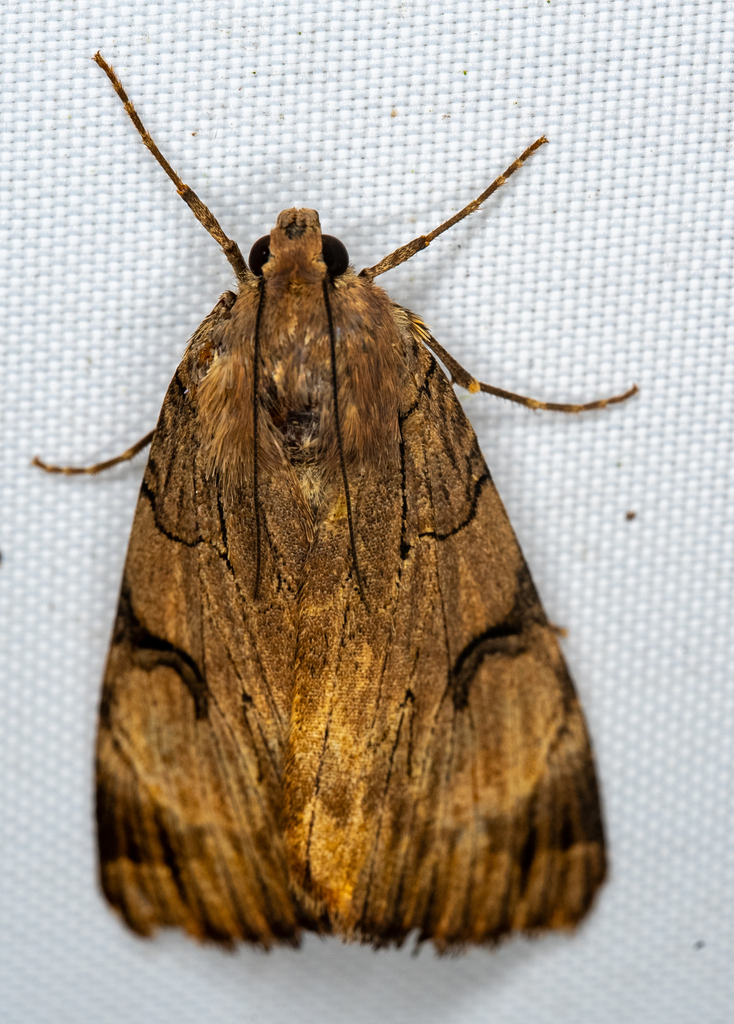
(c) Michael Warner, some rights reserved (CC BY) · licence
Family: Erebidae · Class: Insecta · Order: Lepidoptera
Drasteria ochracea is a California animal in the Erebidae family.
Drasteria ochracea is a moth species in the family Erebidae, subfamily Erebinae. This nocturnal lepidopteran belongs to a genus commonly known as arches or darts, characterized by their cryptic coloration and triangular forewings. The species epithet 'ochracea' refers to the ochre or yellowish-brown coloration that typically dominates the wing pattern. Like other Drasteria species, adults likely measure 25 to 35 mm (1.0 to 1.4 inches) in wingspan, with forewings displaying subtle earth-toned patterns that provide effective camouflage against bark and soil substrates. The distribution and range of Drasteria ochracea remain poorly documented in the scientific literature. The species appears to be associated with western North America, though specific locality records and county-level distribution data are limited. Many Drasteria species occupy arid and semi-arid regions, suggesting this species may inhabit similar environments. Without verified occurrence records, the precise geographic range within California or other western states cannot be definitively established. Habitat preferences for Drasteria ochracea have not been thoroughly studied or published. Related species in the genus typically inhabit open woodlands, chaparral, desert scrub, and grassland environments. These moths generally prefer areas with sparse to moderate vegetation cover, where their host plants occur and where the cryptic adult coloration provides effective concealment during daylight hours. Elevation ranges and specific microhabitat requirements remain undocumented for this species. The life history and ecological behavior of Drasteria ochracea are not well-documented in available literature. Adult moths are presumably nocturnal, like other members of the genus, becoming active after sunset to mate and seek nectar sources or other nutrients. Larval host plants have not been identified for this species, though many Drasteria larvae feed on herbaceous plants in families such as Plantaginaceae, Fabaceae, or Asteraceae. The timing of adult flight periods, number of broods per year, and overwintering stage remain unknown. Larvae likely develop in soil or leaf litter, pupating before adults emerge. The conservation status of Drasteria ochracea is not established, as the species lacks formal assessment by state or federal agencies. No population estimates, trend data, or threat assessments are available in current literature. The apparent rarity of collection records may indicate either limited distribution, low population densities, or insufficient survey effort in appropriate habitats. Without baseline population data or ecological studies, potential threats cannot be evaluated. Climate change, habitat modification, and urban development may affect populations if the species occupies sensitive environments, but these impacts remain speculative without verified occurrence data and habitat requirements.
Classification
Class: Insecta · Order: Lepidoptera · Family: Erebidae
Frequently asked questions
How is Drasteria ochracea classified?
Drasteria ochracea belongs to class Insecta, order Lepidoptera, family Erebidae.
What family does Drasteria ochracea belong to?
Drasteria ochracea is in the Erebidae family.
What is Drasteria ochracea?
Drasteria ochracea is a moth species in the family Erebidae, subfamily Erebinae.
Is Drasteria ochracea found in California?
Yes. Drasteria ochracea is recorded in California in The California Species Project's catalogue.
Related species
Other California species in the same genus, family, or bioregion.
Data from The California Species Project — 14,000+ California species with verified data from CNPS, CDFW, USFWS, and more.