Drasteria stretchi
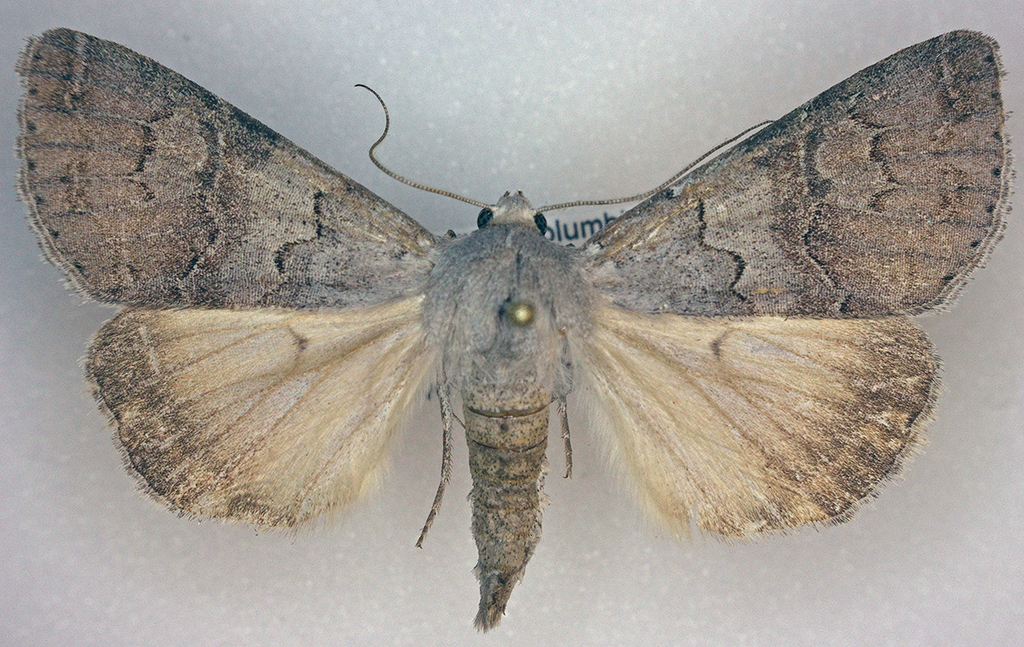
(c) Dave, some rights reserved (CC BY) · licence
Family: Erebidae · Class: Insecta · Order: Lepidoptera
Drasteria stretchi is a California animal in the Erebidae family.
Drasteria stretchi is a moth species in the family Erebidae, subfamily Erebinae. This nocturnal lepidopteran belongs to a genus commonly known as arches or owlet moths. Adults typically measure 35-45 mm in wingspan, with forewings displaying a characteristic pattern of dark and light markings. The forewings are generally brownish-gray with distinctive dark transverse lines and pale patches that help distinguish this species from other Drasteria moths. The hindwings are lighter in coloration, often whitish or pale gray with darker marginal markings. The historical and current range of Drasteria stretchi appears to be primarily concentrated in western North America, though specific distribution records for this species are limited in the available literature. The species likely occurs in portions of California, given its inclusion in regional moth fauna surveys, though precise county-level distribution data requires further documentation. Like other Drasteria species, D. stretchi likely has a patchy distribution corresponding to suitable habitat and host plant availability. This species inhabits arid and semi-arid environments typical of many western Drasteria moths. Suitable habitat likely includes chaparral, coastal sage scrub, and desert margin communities where appropriate host plants occur. Elevation preferences appear to span from near sea level to moderate montane elevations, though specific altitudinal ranges for D. stretchi have not been well documented in the literature. The species likely requires areas with sufficient nectar sources for adult feeding and appropriate larval host plants. Adult Drasteria stretchi are nocturnal and attracted to artificial lights, following the typical behavior pattern of erebid moths. Flight periods likely occur during warmer months, with peak activity varying by location and elevation. Larvae are presumed to be herbivorous, feeding on specific plant species, though documented host plant relationships for D. stretchi are not well established in current literature. Reproductive behavior likely follows the standard lepidopteran pattern of mate location through pheromone communication, followed by egg laying on or near host plants. The conservation status of Drasteria stretchi is not well documented, with no apparent federal or state listing status. Population trends and threats are largely unknown due to limited systematic survey data for this species. Like many specialized moths, potential threats may include habitat loss and fragmentation, particularly in areas undergoing urban development or agricultural conversion. Climate change impacts on host plant distributions could also affect population stability. The species would benefit from targeted surveys to better understand its current distribution, population status, and ecological requirements. Without adequate baseline data, it is difficult to assess conservation needs or develop appropriate management strategies for this moth species.
Classification
Class: Insecta · Order: Lepidoptera · Family: Erebidae
Frequently asked questions
How is Drasteria stretchi classified?
Drasteria stretchi belongs to class Insecta, order Lepidoptera, family Erebidae.
What family does Drasteria stretchi belong to?
Drasteria stretchi is in the Erebidae family.
What is Drasteria stretchi?
Drasteria stretchi is a moth species in the family Erebidae, subfamily Erebinae.
Is Drasteria stretchi found in California?
Yes. Drasteria stretchi is recorded in California in The California Species Project's catalogue.
Related species
Other California species in the same genus, family, or bioregion.
Data from The California Species Project — 14,000+ California species with verified data from CNPS, CDFW, USFWS, and more.