Drepana arcuata
Arched Hooktip
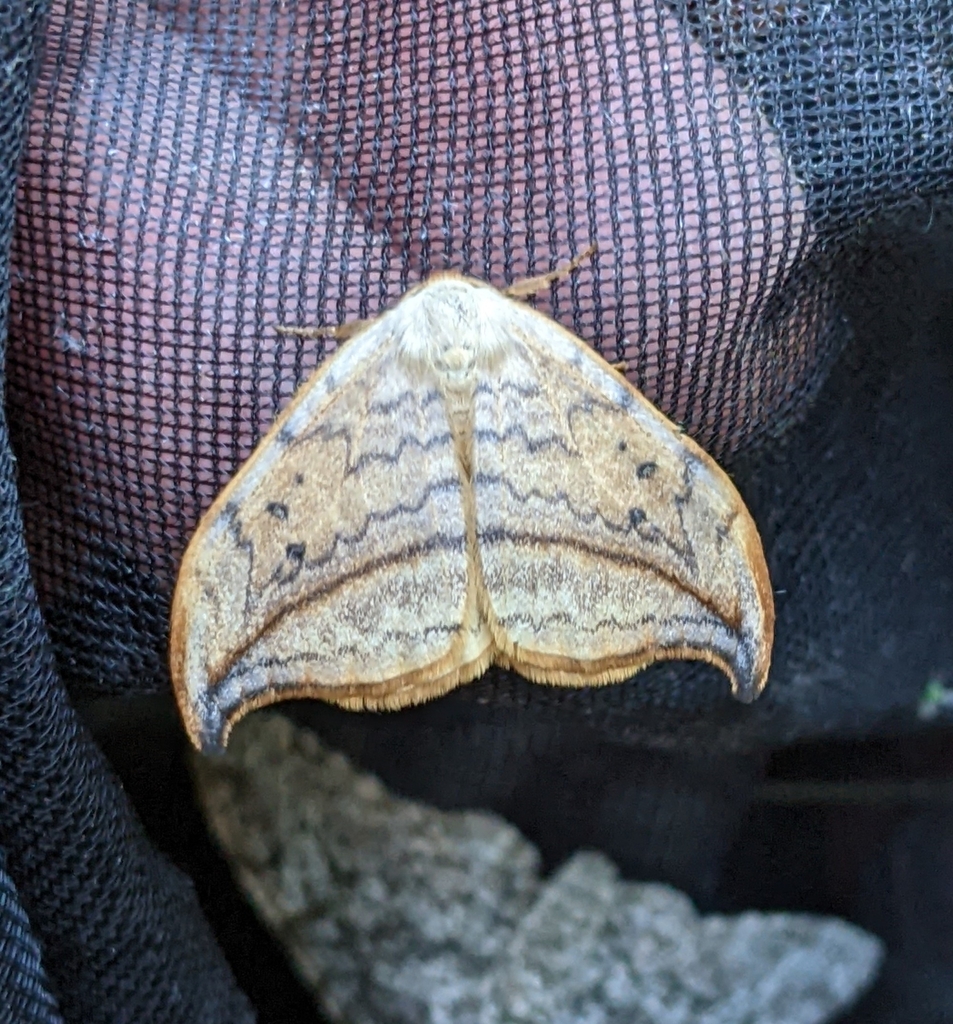
no rights reserved · CC0
Family: Drepanidae · Class: Insecta · Order: Lepidoptera
Drepana arcuata (Arched Hooktip) is a California animal in the Drepanidae family.
The Arched Hooktip (Drepana arcuata) is a distinctive moth in the family Drepanidae, characterized by its uniquely curved wing shape and subtle coloration patterns. Adults typically measure 25 to 35 mm (1.0 to 1.4 inches) in wingspan. The forewings display a characteristic hooked apex that gives the species its common name, with pale brown to buff-colored ground coloration marked by darker brown transverse lines. The hindwings are similarly colored but lack the pronounced hook. At rest, the moth assumes a distinctive posture with wings held in a tent-like fashion, enhancing its resemblance to a dead leaf. Drepana arcuata has a transcontinental distribution across North America, ranging from the Atlantic provinces of Canada west to British Columbia and Alaska. In the United States, the species occurs from Maine to Florida in the east and extends westward through the northern states to Washington and Oregon. The California population represents the species' presence along the Pacific Coast, though detailed distribution data within the state remains limited. The moth has been documented from sea level to moderate elevations in forested regions. The species inhabits deciduous and mixed woodlands, showing a strong association with areas containing its larval host plants. Adult moths are typically found in forest edges, riparian corridors, and woodland clearings where birch species are present. The larvae feed primarily on paper birch (Betula papyrifera) and other Betula species, with some records indicating use of alder (Alnus) species as alternative hosts. Caterpillars construct distinctive leaf shelters by folding and securing leaf margins with silk, creating protected feeding sites. Arched Hooktip moths are univoltine in most of their range, producing one generation per year. Adults emerge from late spring through mid-summer, typically from May through July depending on local climate conditions. Mating occurs shortly after emergence, with females depositing eggs singly on host plant foliage. Larvae develop through five instars before pupating in the soil or leaf litter, overwintering in the pupal stage. Adults are primarily nocturnal and are attracted to artificial lights, though they may also be active during daylight hours. The species exhibits typical drepanid behavior, with larvae displaying characteristic defensive postures when disturbed, arching the body and raising both ends while gripping the substrate with their prolegs. This behavior, combined with their cryptic coloration, provides effective camouflage against predators. Drepana arcuata is not currently listed under federal or state endangered species legislation and appears to maintain stable populations across most of its range. However, like many forest-associated lepidopteran species, it may face localized threats from habitat fragmentation, forest management practices, and climate change impacts on host plant distributions. The species' dependence on specific host plants makes it potentially vulnerable to changes in forest composition, particularly in areas where birch species face stress from environmental factors or invasive pests.
Classification
Class: Insecta · Order: Lepidoptera · Family: Drepanidae
Frequently asked questions
How is Drepana arcuata classified?
Drepana arcuata belongs to class Insecta, order Lepidoptera, family Drepanidae.
What family does Drepana arcuata belong to?
Drepana arcuata is in the Drepanidae family.
What is Drepana arcuata?
The Arched Hooktip (Drepana arcuata) is a distinctive moth in the family Drepanidae, characterized by its uniquely curved wing shape and subtle coloration patterns.
Is Drepana arcuata found in California?
Yes. Drepana arcuata is recorded in California in The California Species Project's catalogue.
Related species
Other California species in the same genus, family, or bioregion.
Data from The California Species Project — 14,000+ California species with verified data from CNPS, CDFW, USFWS, and more.