Drepanulatrix foeminaria
Foeminaria Gray Moth
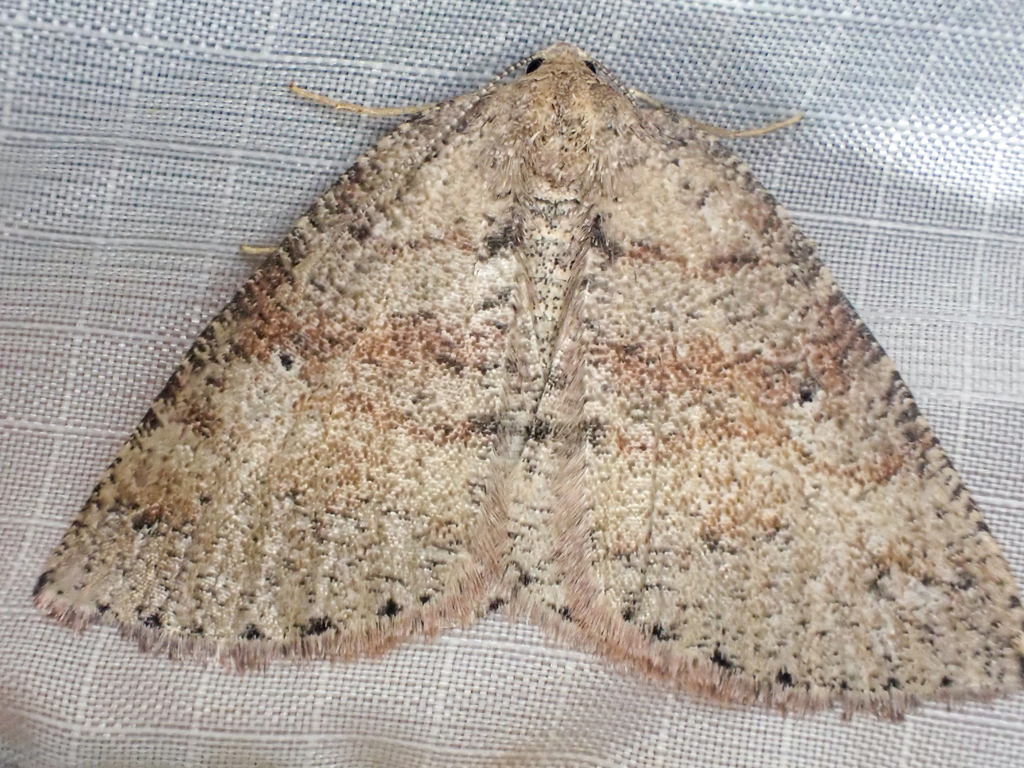
(c) Trevor Van Loon, some rights reserved (CC BY) · licence
Family: Geometridae · Class: Insecta · Order: Lepidoptera
Drepanulatrix foeminaria (Foeminaria Gray Moth) is a California animal in the Geometridae family.
Drepanulatrix foeminaria is a small geometrid moth with a wingspan ranging from 26 to 31 millimeters (1.0 to 1.2 inches). Males are distinguished by their pectinate (feathery) antennae, while females have simple antennae. The forewings are brown or brownish-gray with black speckling throughout. A distinctive feature is the tiny black discal spot, which may be white-margined in some individuals. The subterminal area shows variable patterning, and the overall coloration provides effective camouflage against bark and dead vegetation (BugGuide). This species occurs along the Pacific coast from southern California to southern Alaska, representing a broad latitudinal distribution. In California, the species has been documented in multiple counties including Inyo, Calaveras, and other regions throughout the state. Records indicate its presence at elevations ranging from low coastal areas to montane environments, with specimens collected at 6,500 feet in Inyo County near Lone Pine (Lepidopterists' Society 2010). The species overlaps geographically with the closely related Drepanulatrix monicaria, which can make field identification challenging. Drepanulatrix foeminaria inhabits areas supporting its primary host plants in the family Rhamnaceae, specifically species of Ceanothus (Moth Photographers Group). This association with Ceanothus shrubs, commonly known as wild lilacs or California lilacs, indicates the species' preference for chaparral, oak woodland, and mixed coniferous forest habitats where these plants occur naturally. The moth's distribution closely follows that of its host plants across the western landscape. Adult flight activity varies by geographic location and elevation, with records spanning much of the year. California specimens have been collected in May, suggesting spring emergence coinciding with new growth on host plants. The larvae feed on Ceanothus foliage, and mature caterpillars display considerable color variation, ranging from bright apple green with minimal markings to gray-green, greenish-brown, gray-brown, or dark brown with dark lateral striping and yellow and red dorsal markings. This polymorphism likely provides camouflage advantages across different host plant species and seasonal conditions. Currently, Drepanulatrix foeminaria lacks formal conservation status designations at federal or state levels. The species appears to maintain stable populations across its range, likely due to the widespread distribution of Ceanothus host plants. However, habitat modification affecting native shrubland communities could potentially impact local populations. Urban development, fire suppression altering natural fire cycles, and invasive plant species displacing native Ceanothus could pose localized threats. Climate change may also affect the species' distribution as it alters the suitable habitat range for both the moth and its host plants. The species' broad geographic range and association with diverse Ceanothus species across multiple habitat types suggest reasonable resilience to environmental changes, though monitoring of population trends would be valuable given the general decline of many native moth species.
Classification
Class: Insecta · Order: Lepidoptera · Family: Geometridae
Frequently asked questions
How is Drepanulatrix foeminaria classified?
Drepanulatrix foeminaria belongs to class Insecta, order Lepidoptera, family Geometridae.
What family does Drepanulatrix foeminaria belong to?
Drepanulatrix foeminaria is in the Geometridae family.
What is Drepanulatrix foeminaria?
Drepanulatrix foeminaria is a small geometrid moth with a wingspan ranging from 26 to 31 millimeters (1.0 to 1.2 inches).
Is Drepanulatrix foeminaria found in California?
Yes. Drepanulatrix foeminaria is recorded in California in The California Species Project's catalogue.
Related species
Other California species in the same genus, family, or bioregion.
Data from The California Species Project — 14,000+ California species with verified data from CNPS, CDFW, USFWS, and more.