Drepanulatrix hulstii
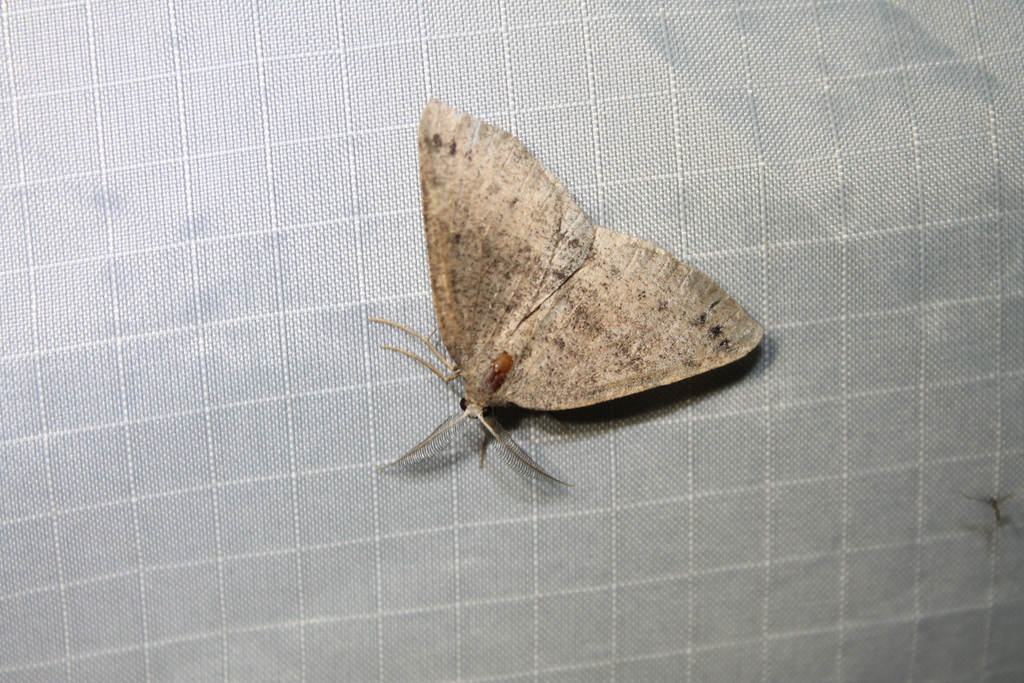
(c) Dominic, some rights reserved (CC BY) · licence
Family: Geometridae · Class: Insecta · Order: Lepidoptera
Drepanulatrix hulstii is a California animal in the Geometridae family.
Drepanulatrix hulstii is a geometrid moth in the family Geometridae, described by Harrison Gray Dyar Jr. in 1904. This species belongs to the subfamily Ennominae, commonly known as inchworm moths or loopers, which are characterized by their larvae's distinctive method of locomotion by arching their bodies. The physical characteristics of D. hulstii adults have not been extensively documented in the available literature. As a member of the Geometridae family, the species likely exhibits the typical moth body plan with broad wings held horizontally when at rest. The wingspan and specific coloration patterns require further documentation from specialized moth databases or taxonomic studies. Drepanulatrix hulstii is found in North America, with documented occurrences primarily in western regions. The species has been recorded in California, though specific county-level distribution data remains limited in current databases. The full extent of its range across North American states requires additional survey work and documentation. Habitat preferences for this species appear to be associated with areas supporting Ceanothus species, based on larval host plant associations. According to the Moth Photographers Group database, larvae have been documented feeding on Ceanothus cuneatus (buckbrush) and C. jepsonii (Jepson's ceanothus). These shrubs are characteristic of chaparral and oak woodland communities in California, suggesting the moth occupies Mediterranean climate zones with dry summers and mild, wet winters. The elevation range and specific microhabitat requirements have not been well documented. The life cycle of D. hulstii follows the typical geometrid pattern, with eggs developing into caterpillars that feed externally on host plant foliage. The larvae exhibit the characteristic looping locomotion of geometrid moths, lacking the full complement of prolegs found in other moth families. Larval development occurs through five instars, with the fifth instar documented by moth researchers. Specific timing of adult flight periods, overwintering stage, and number of generations per year require additional study. The species likely overwinters as pupae in soil or leaf litter, emerging as adults during spring or early summer months. No federal or state conservation status has been assigned to Drepanulatrix hulstii. The species does not appear on the U.S. Endangered Species Act list or California state listing categories. Population trends and conservation threats remain largely undocumented, reflecting the limited research attention given to many native moth species. Habitat loss from urban development and altered fire regimes in chaparral communities may pose potential threats to populations, though specific impacts have not been assessed. Scientific documentation for this species remains limited. The information presented here is based on available sources including iNaturalist observations, NatureServe Explorer, BugGuide, and the Moth Photographers Group database. If you have additional verified information about this species' biology, distribution, or ecology, please contact us to help improve this species account.
Classification
Class: Insecta · Order: Lepidoptera · Family: Geometridae
Frequently asked questions
How is Drepanulatrix hulstii classified?
Drepanulatrix hulstii belongs to class Insecta, order Lepidoptera, family Geometridae.
What family does Drepanulatrix hulstii belong to?
Drepanulatrix hulstii is in the Geometridae family.
What is Drepanulatrix hulstii?
Drepanulatrix hulstii is a geometrid moth in the family Geometridae, described by Harrison Gray Dyar Jr.
Is Drepanulatrix hulstii found in California?
Yes. Drepanulatrix hulstii is recorded in California in The California Species Project's catalogue.
Related species
Other California species in the same genus, family, or bioregion.
Data from The California Species Project — 14,000+ California species with verified data from CNPS, CDFW, USFWS, and more.