Drepanulatrix monicaria
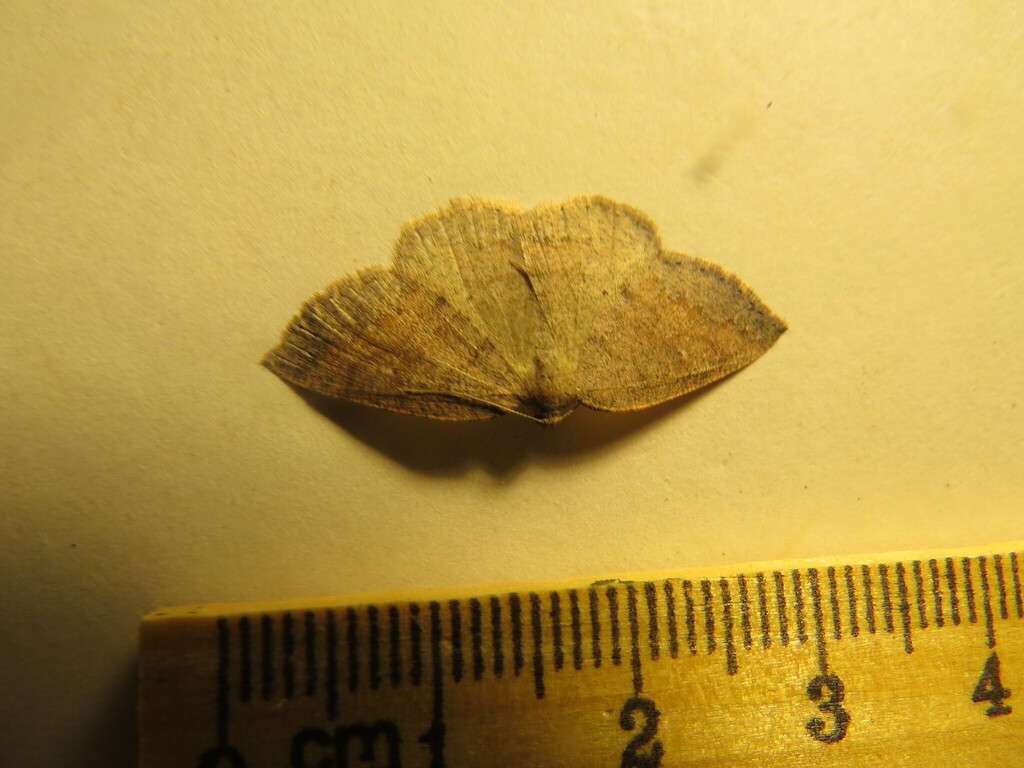
(c) Garth Harwood, some rights reserved (CC BY) · licence
Family: Geometridae · Class: Insecta · Order: Lepidoptera
Drepanulatrix monicaria is a California animal in the Geometridae family.
Drepanulatrix monicaria is a moth species belonging to the family Geometridae, commonly known as geometers or inchworms. This lepidopteran represents one of the many endemic species within California's diverse moth fauna. Adult moths in the genus Drepanulatrix typically exhibit the characteristic body plan of geometrid moths, with relatively broad wings and a slender abdomen. The forewings and hindwings display cryptic coloration patterns that provide effective camouflage against tree bark and other natural substrates. Wing patterns often include subtle mottling and linear markings typical of geometrid species, though specific coloration details for D. monicaria require further documentation. The historical and current distribution of Drepanulatrix monicaria appears to be restricted to California, though precise range boundaries remain poorly documented in accessible literature. Many geometrid moths exhibit narrow geographic distributions, particularly those associated with specific host plants or habitat types. The species likely occurs in mountainous or foothill regions where suitable host vegetation and environmental conditions persist. Habitat requirements for D. monicaria remain largely undocumented in published sources, though geometrid moths typically inhabit forested or woodland environments where their larval host plants occur. Many species in this family show strong associations with specific plant communities, and adults are often found in areas supporting diverse shrub and tree species. Elevation preferences and specific vegetation associations for this species require additional field research and documentation. Like other geometrid moths, D. monicaria likely exhibits typical lepidopteran life cycle patterns, progressing through egg, larval, pupal, and adult stages. Geometridae larvae are characterized by their distinctive looping locomotion, possessing fewer prolegs than other moth caterpillars, which creates their characteristic 'inchworm' movement. Larval feeding habits probably involve consumption of foliage from specific host plants, though the particular plant species utilized by D. monicaria larvae have not been definitively documented. Adult flight periods, mating behaviors, and seasonal activity patterns remain unreported in available literature. Many geometrid species are nocturnal, with adults attracted to artificial lights during evening and nighttime hours. The conservation status of Drepanulatrix monicaria has not been formally assessed by federal or state agencies. The species lacks federal listing status under the Endangered Species Act and does not appear on California's list of species of special concern. This absence of conservation designation may reflect limited knowledge about the species' population status, distribution, and ecological requirements rather than indicating stable populations. Many California moth species remain poorly studied, with inadequate data to evaluate population trends or conservation needs. Climate change, habitat loss, and pesticide use represent potential threats to endemic moth species throughout California, though specific impacts on D. monicaria populations cannot be assessed without baseline population data and ecological studies.
Classification
Class: Insecta · Order: Lepidoptera · Family: Geometridae
Frequently asked questions
How is Drepanulatrix monicaria classified?
Drepanulatrix monicaria belongs to class Insecta, order Lepidoptera, family Geometridae.
What family does Drepanulatrix monicaria belong to?
Drepanulatrix monicaria is in the Geometridae family.
What is Drepanulatrix monicaria?
Drepanulatrix monicaria is a moth species belonging to the family Geometridae, commonly known as geometers or inchworms.
Is Drepanulatrix monicaria found in California?
Yes. Drepanulatrix monicaria is recorded in California in The California Species Project's catalogue.
Related species
Other California species in the same genus, family, or bioregion.
Data from The California Species Project — 14,000+ California species with verified data from CNPS, CDFW, USFWS, and more.