Drepanulatrix secundaria
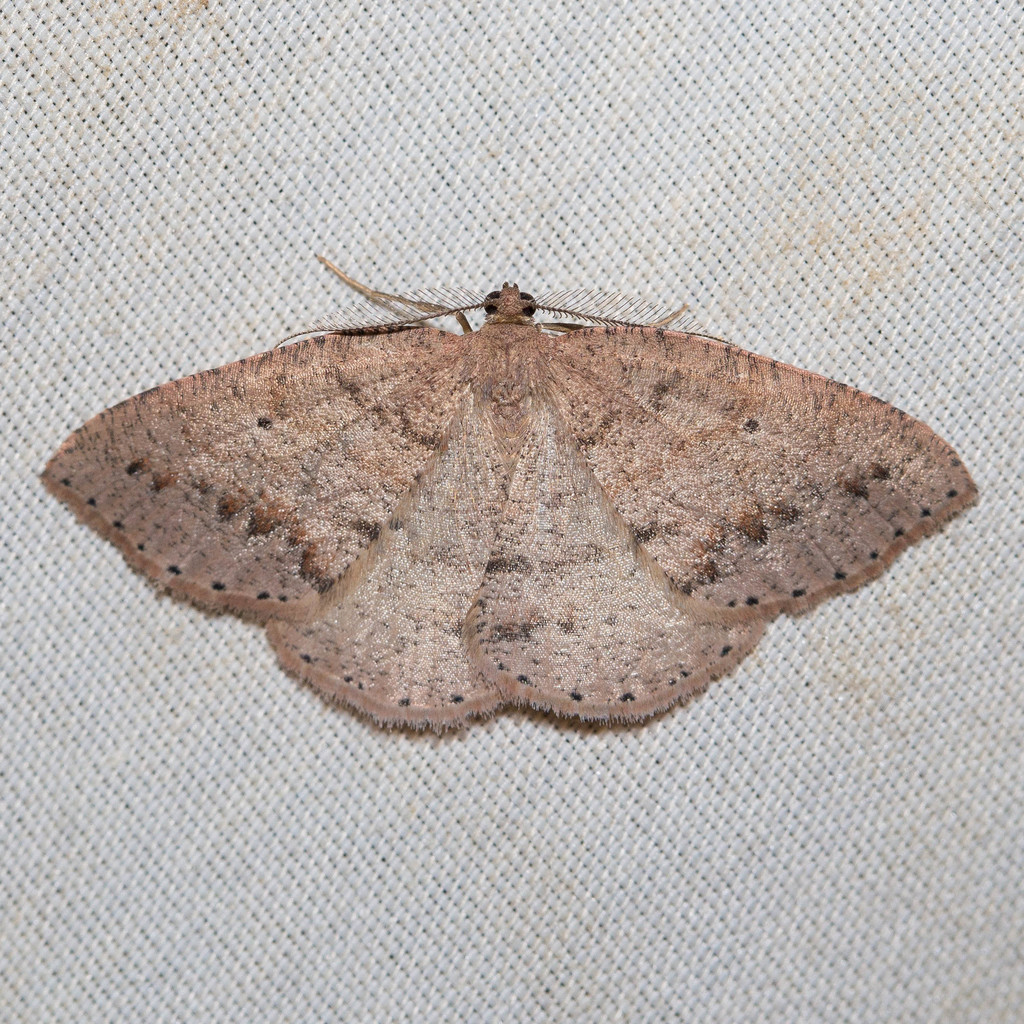
(c) Ken-ichi Ueda, some rights reserved (CC BY) · licence
Family: Geometridae · Class: Insecta · Order: Lepidoptera
Drepanulatrix secundaria is a California animal in the Geometridae family.
Drepanulatrix secundaria is a moth species in the family Geometridae, commonly known as geometers or inchworm moths. Limited taxonomic and biological information is available for this species in the scientific literature, reflecting the incomplete knowledge of many lesser-studied Lepidoptera taxa. Geometridae moths are characterized by their slender bodies and broad wings, with larvae that move in a distinctive looping motion, extending and contracting their bodies as they crawl. Adult geometers typically hold their wings horizontally when at rest, creating a triangular silhouette. The wing patterns and coloration of Drepanulatrix species generally consist of earth tones that provide camouflage against bark and leaf surfaces. The distribution and range of D. secundaria within California and North America remains poorly documented in accessible databases and species inventories. Many geometrid moths have restricted ranges tied to specific host plant communities, but the precise geographic extent of this species requires further field documentation and taxonomic study. Habitat preferences for D. secundaria are not well established in the literature. Geometridae family members occupy diverse habitats ranging from forests and woodlands to chaparral and desert environments. Species within this family often show strong associations with particular vegetation types that serve as larval host plants. The elevation range, specific plant communities, and microhabitat requirements for this species remain to be determined through systematic field research. The life history and ecological characteristics of D. secundaria are not comprehensively documented. Geometridae moths typically undergo complete metamorphosis, with eggs laid on or near host plants, larvae feeding on foliage during development, pupation occurring in soil or leaf litter, and adults emerging to mate and reproduce. Flight periods vary among species but often coincide with host plant phenology and favorable environmental conditions. Adult geometers are generally nocturnal and may be attracted to artificial lights during evening hours. The conservation status of D. secundaria has not been formally assessed at federal, state, or global levels. No listing status has been assigned by the U.S. Fish and Wildlife Service, California Department of Fish and Wildlife, or International Union for Conservation of Nature. The apparent lack of recent collection records and ecological data suggests this species may be rare, poorly surveyed, or possibly represents a taxonomic synonym of another described species. Many geometrid moths face potential threats from habitat loss, pesticide applications, light pollution, and climate change effects on host plant distributions. Further research is needed to establish the taxonomic validity, distribution, habitat requirements, and conservation needs of D. secundaria. Systematic surveys using standardized collection methods, molecular genetic analysis, and ecological field studies would contribute essential baseline data for understanding this species' status and informing any necessary conservation measures.
Classification
Class: Insecta · Order: Lepidoptera · Family: Geometridae
Frequently asked questions
How is Drepanulatrix secundaria classified?
Drepanulatrix secundaria belongs to class Insecta, order Lepidoptera, family Geometridae.
What family does Drepanulatrix secundaria belong to?
Drepanulatrix secundaria is in the Geometridae family.
What is Drepanulatrix secundaria?
Drepanulatrix secundaria is a moth species in the family Geometridae, commonly known as geometers or inchworm moths.
Is Drepanulatrix secundaria found in California?
Yes. Drepanulatrix secundaria is recorded in California in The California Species Project's catalogue.
Related species
Other California species in the same genus, family, or bioregion.
Data from The California Species Project — 14,000+ California species with verified data from CNPS, CDFW, USFWS, and more.