Drepanulatrix unicalcararia
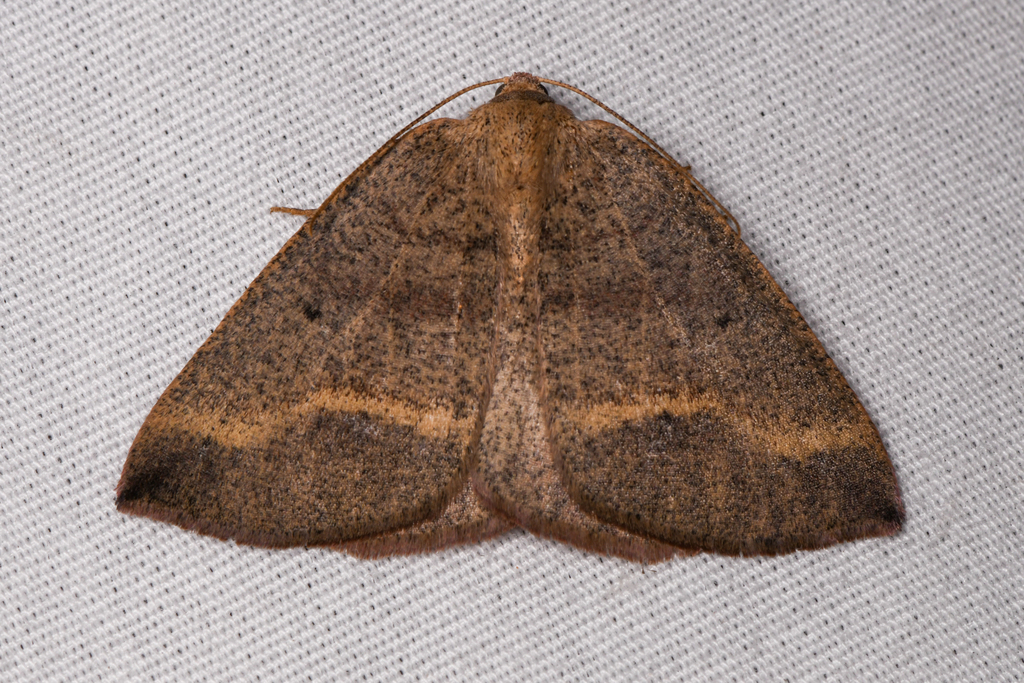
(c) Trevor Van Loon, some rights reserved (CC BY) · licence
Family: Geometridae · Class: Insecta · Order: Lepidoptera
Drepanulatrix unicalcararia is a California animal in the Geometridae family.
Drepanulatrix unicalcararia is a moth species belonging to the family Geometridae, commonly known as geometer moths or inchworm moths. This species is part of a diverse family characterized by their larvae's distinctive looping locomotion and the adults' typically broad wings held horizontally when at rest. The physical characteristics of D. unicalcararia follow the general geometric moth pattern, with adults likely displaying the family's characteristic broad, delicate wings. Geometridae moths typically have slender bodies relative to their wingspan, and many species in this family exhibit cryptic coloration that provides camouflage against bark, leaves, or other substrates. The specific morphological features distinguishing D. unicalcararia from closely related species would require examination of wing venation patterns, genital structures, and potentially DNA analysis for definitive identification. The geographic range and distribution of Drepanulatrix unicalcararia appears to be poorly documented in readily accessible scientific literature. Many Geometridae species have restricted ranges, particularly those adapted to specific host plants or habitat conditions. Without verified occurrence records, the precise distribution of this species within California or elsewhere remains uncertain. Habitat preferences for D. unicalcararia are not well-established in current literature. Geometridae moths occupy diverse habitats ranging from forests to grasslands, with many species closely associated with specific vegetation types that serve as larval host plants. The larvae of most geometer moths are herbivorous, feeding on leaves of various plant species, while adults typically feed on nectar or may not feed at all during their brief adult stage. The life cycle of D. unicalcararia likely follows the typical Geometridae pattern of complete metamorphosis. Females deposit eggs on or near host plants, and the characteristic looping larvae develop through several instars before pupating. Many geometer moth species are univoltine, producing one generation per year, though some may have multiple broods depending on climate and host plant availability. Adult flight periods vary among species but often coincide with optimal conditions for mating and oviposition. The conservation status of Drepanulatrix unicalcararia is not established through standard conservation databases. Many moth species, particularly those with limited distributions or specific habitat requirements, face potential threats from habitat loss, climate change, and pesticide use. However, without comprehensive population studies or documented declines, the conservation needs of this species remain unclear. The apparent lack of recent scientific attention to this species highlights the broader challenge of documenting and conserving invertebrate biodiversity, particularly among groups like moths that may include numerous undescribed or poorly known species. Further research is needed to establish the basic biological and ecological characteristics of D. unicalcararia, including its distribution, host plant relationships, and population status.
Classification
Class: Insecta · Order: Lepidoptera · Family: Geometridae
Frequently asked questions
How is Drepanulatrix unicalcararia classified?
Drepanulatrix unicalcararia belongs to class Insecta, order Lepidoptera, family Geometridae.
What family does Drepanulatrix unicalcararia belong to?
Drepanulatrix unicalcararia is in the Geometridae family.
What is Drepanulatrix unicalcararia?
Drepanulatrix unicalcararia is a moth species belonging to the family Geometridae, commonly known as geometer moths or inchworm moths.
Is Drepanulatrix unicalcararia found in California?
Yes. Drepanulatrix unicalcararia is recorded in California in The California Species Project's catalogue.
Related species
Other California species in the same genus, family, or bioregion.
Data from The California Species Project — 14,000+ California species with verified data from CNPS, CDFW, USFWS, and more.