Drosophila suzukii
Spotted-winged Drosophila
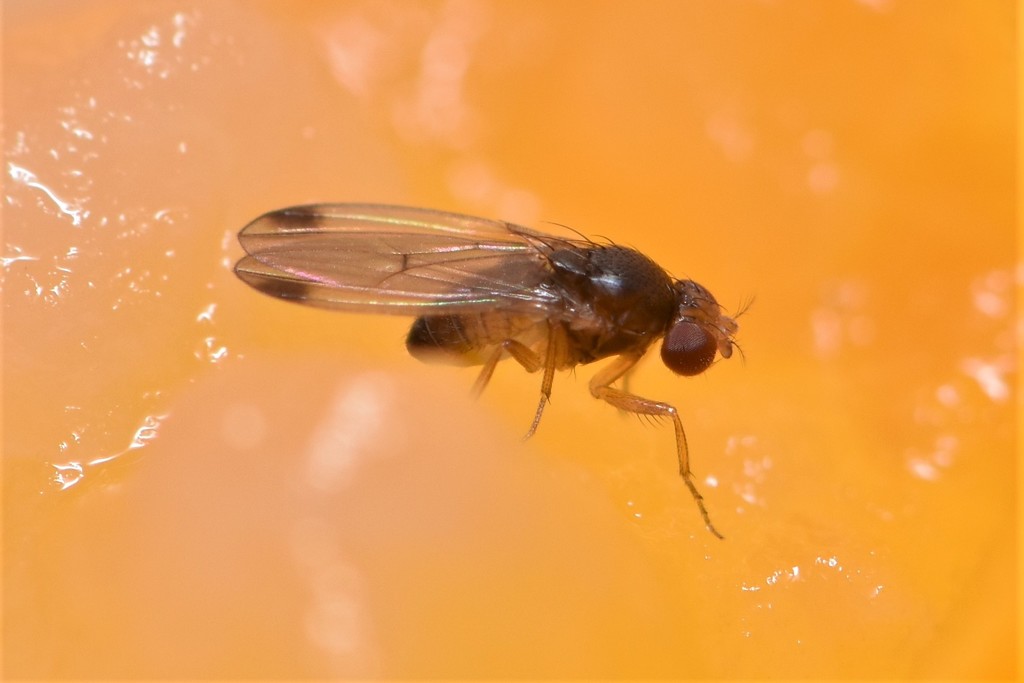
no rights reserved · CC0
Family: Drosophilidae · Class: Insecta · Order: Diptera
Drosophila suzukii (Spotted-winged Drosophila) is a California animal in the Drosophilidae family.
The spotted-winged drosophila is a small invasive fruit fly measuring approximately 2-3 mm in length. Adult males are distinguished by distinctive dark spots on the wing tips, while females lack these spots but possess a prominent, serrated ovipositor used for piercing fruit skin. The body is tan to yellow-brown with prominent red eyes and clear wings with dark banding patterns. Native to Southeast Asia, Drosophila suzukii was first detected in California in 2008 and has since spread throughout the western United States. The species now occurs across most fruit-growing regions of California, from coastal areas to inland valleys, and has established populations from sea level to elevations exceeding 1,000 meters. The fly has also colonized Hawaii, with established populations documented on Kauaʻi, Oʻahu, Molokaʻi, and Hawaiʻi islands. Spotted-winged drosophila inhabits diverse environments but shows strong preference for areas with abundant soft-skinned fruits. Unlike other drosophila species that primarily utilize overripe or fermenting fruit, this species attacks healthy, ripening fruit both in cultivated and wild settings. The fly thrives in moderate temperatures between 15-25°C and requires high humidity for optimal reproduction. Natural habitats include forest edges, riparian zones, and areas with native fruiting plants. This species exhibits a unique reproductive strategy that distinguishes it from other fruit flies. Females use their serrated ovipositor to pierce the skin of intact, ripening fruit to deposit eggs directly into the flesh. A single female can lay 300-400 eggs during her 21-40 day lifespan. Development from egg to adult takes 8-25 days depending on temperature, with faster development in warmer conditions. The species can complete multiple generations per year, with populations peaking during late summer and fall harvest periods. The spotted-winged drosophila feeds on a wide range of soft-skinned fruits including cherries, berries, grapes, stone fruits, and figs. In California, the species utilizes both commercial crops and wild hosts such as elderberry, currants, snowberry, and invasive Himalayan blackberry. Adult flies feed primarily on fermenting fruit juices, decaying organic matter, and plant exudates. While not federally listed as a conservation concern, spotted-winged drosophila is classified as a major agricultural pest requiring intensive management. The species causes significant economic losses to California's fruit industry, with damage estimates exceeding $500 million annually across affected crops. Management strategies include cultural controls such as sanitation practices, biological control using parasitoid wasps, and targeted pesticide applications. The fly's ability to attack healthy fruit before harvest, combined with its rapid reproduction rate and broad host range, makes it particularly challenging to control using traditional integrated pest management approaches developed for other drosophila species.
Classification
Class: Insecta · Order: Diptera · Family: Drosophilidae
Frequently asked questions
How is Drosophila suzukii classified?
Drosophila suzukii belongs to class Insecta, order Diptera, family Drosophilidae.
What family does Drosophila suzukii belong to?
Drosophila suzukii is in the Drosophilidae family.
What is Drosophila suzukii?
The spotted-winged drosophila is a small invasive fruit fly measuring approximately 2-3 mm in length.
Is Drosophila suzukii found in California?
Yes. Drosophila suzukii is recorded in California in The California Species Project's catalogue.
Related species
Other California species in the same genus, family, or bioregion.
Data from The California Species Project — 14,000+ California species with verified data from CNPS, CDFW, USFWS, and more.