Dryadaula terpsichorella
Dancing Moth
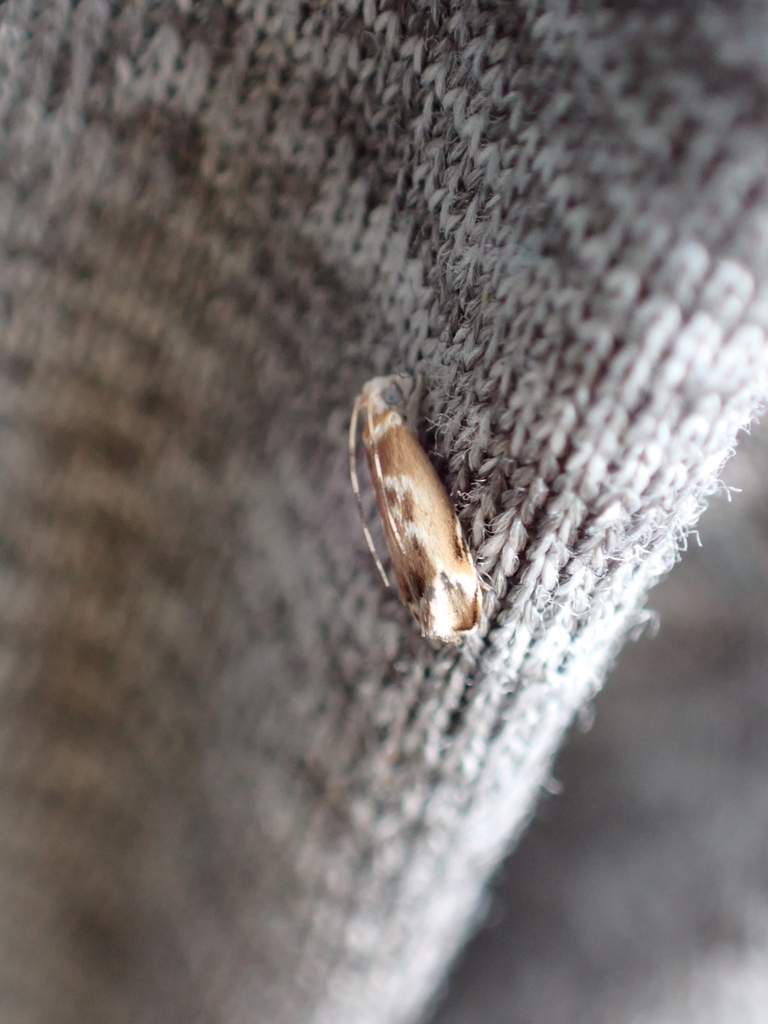
(c) Neal Kelso, some rights reserved (CC BY) · licence
Family: Tineidae · Class: Insecta · Order: Lepidoptera
Dryadaula terpsichorella (Dancing Moth) is a California animal in the Tineidae family.
Dryadaula terpsichorella is a small moth in the family Tineidae, commonly known as the Hawaiian Dancing Moth or simply Dancing Moth. The species derives its common name from the characteristic dance-like gyrations it performs when alighting (iNaturalist). Adults display forewings that are mainly creamy white with delicate brown markings, and the tips of the forewings are margined with a blackish line that is outwardly edged (BugGuide). This species is native to southeastern Polynesia, including Samoa and Fiji, but has established populations well beyond its natural range. In North America, D. terpsichorella has been documented from Hawaii, Florida, and California (iNaturalist, Wikipedia). The species represents a non-native arthropod introduction to the continental United States (BugGuide). In California, specific distribution patterns and establishment dates have not been well documented in available literature. Habitat preferences and ecological requirements for this species remain poorly documented in scientific literature. As a member of the Tineidae family, which includes many species associated with organic matter and plant materials, D. terpsichorella likely utilizes similar microhabitats, though specific substrate and vegetation associations in California have not been reported in accessible sources. The behavioral ecology of D. terpsichorella is characterized by the distinctive dancing movements that give the species its common name. These gyrations occur when the moth settles on surfaces, though the specific function of this behavior has not been well studied. Life history details, including flight periods, host plant relationships, reproductive biology, and larval development, are not documented in available California-specific or North American literature. The species' establishment success in diverse geographic regions from Hawaii to Florida suggests broad ecological tolerance. No conservation status has been assigned to D. terpsichorella at federal, state, or global levels. As a non-native species, management considerations would likely focus on monitoring its distribution and potential ecological impacts rather than conservation protection. The species' ability to establish in multiple biogeographic regions, including both tropical (Hawaii) and subtropical (Florida) climates, suggests it may continue expanding its North American range. However, specific population trends, abundance estimates, and ecological interactions with native California fauna have not been documented. Scientific documentation for this species remains limited, particularly regarding its biology and ecology in California. The information presented here is based on available sources including iNaturalist, BugGuide, and Wikipedia entries. Research gaps include detailed morphological descriptions, comprehensive distribution mapping within California, host plant associations, phenology, and potential impacts on native ecosystems. If you have additional verified information about this species' biology, distribution, or ecology in California, please contact us to help improve this species account.
Classification
Class: Insecta · Order: Lepidoptera · Family: Tineidae
Frequently asked questions
How is Dryadaula terpsichorella classified?
Dryadaula terpsichorella belongs to class Insecta, order Lepidoptera, family Tineidae.
What family does Dryadaula terpsichorella belong to?
Dryadaula terpsichorella is in the Tineidae family.
What is Dryadaula terpsichorella?
Dryadaula terpsichorella is a small moth in the family Tineidae, commonly known as the Hawaiian Dancing Moth or simply Dancing Moth.
Is Dryadaula terpsichorella found in California?
Yes. Dryadaula terpsichorella is recorded in California in The California Species Project's catalogue.
Related species
Other California species in the same genus, family, or bioregion.
Data from The California Species Project — 14,000+ California species with verified data from CNPS, CDFW, USFWS, and more.