Dryobates albolarvatus gravirostris
Southern White-headed Woodpecker
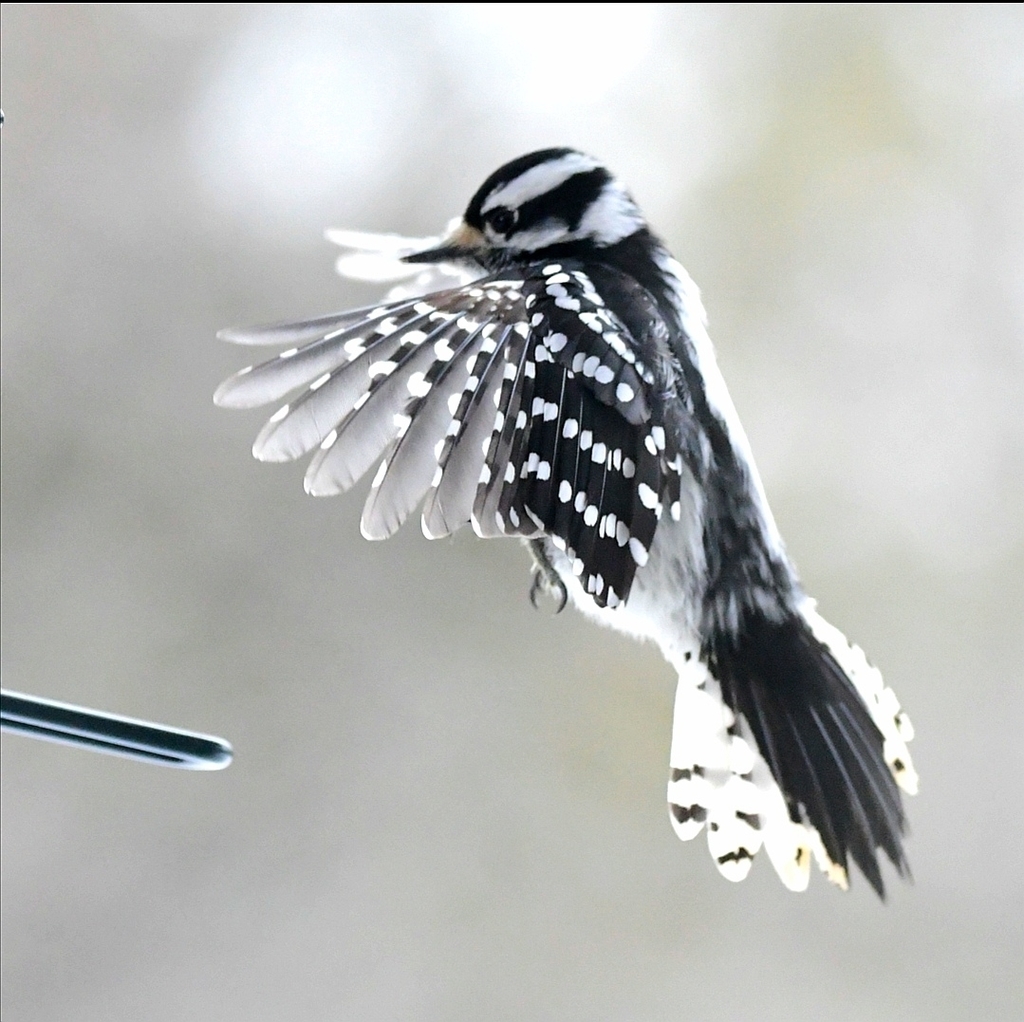
(c) Alexis Williams, some rights reserved (CC BY) · licence
Family: Picidae · Class: Aves · Order: Piciformes
Dryobates albolarvatus gravirostris (Southern White-headed Woodpecker) is a California animal in the Picidae family.
The Southern White-headed Woodpecker (Dryobates albolarvatus gravirostris) is a subspecies of the White-headed Woodpecker endemic to southern California's montane coniferous forests. This medium-sized woodpecker measures approximately 21-24 cm (8.3-9.4 inches) in length with distinctive plumage consisting of a white head and throat contrasting sharply with an entirely black body. Males display a red patch on the nape, while females lack this red marking. The subspecies gravirostris is distinguished from the nominate race by having a bill that is approximately 11% longer and deeper (Birds of the World). The Southern White-headed Woodpecker's range is restricted to the montane regions of southern California, including the Sierra Nevada, San Bernardino Mountains, and San Jacinto Mountains. The species has been recorded in scattered locations in Kern County, including occasional sightings in the lowlands of the Mojave Desert (Birds of the World). This represents the southernmost extent of the species' distribution along the Pacific Coast. This subspecies inhabits montane coniferous forests dominated by pine species, with tree composition varying by elevation and geographic location (ECOS). Primary habitat consists of mature pine forests, particularly those with large-diameter trees suitable for nest cavity excavation. The species shows strong association with ponderosa pine, sugar pine, and other pine species that provide both nesting sites and foraging opportunities. Nest cavities are typically located low in large-diameter conifers (ECOS). White-headed Woodpeckers exhibit unique foraging behavior compared to other woodpecker species, spending considerable time gleaning insects and larvae from bark surfaces rather than excavating. They also consume pine seeds, particularly from sugar pine and ponderosa pine cones. The species is known to be territorial, with males defending nest sites against various potential threats including other bird species and mammals. Adults have been observed aggressively defending nest cavities from predators such as American Kestrels attempting to capture nestlings (Birds of the World). Breeding occurs in late spring through early summer, with pairs excavating new nest cavities in dead or dying conifers. Primary threats to the Southern White-headed Woodpecker include habitat loss due to logging, fire suppression policies that alter natural forest structure, and climate change impacts on montane forest ecosystems. The subspecies' limited range in southern California makes it particularly vulnerable to habitat fragmentation and local population declines. Forest management practices that maintain large-diameter pine trees and natural fire regimes are critical for conservation. The White-headed Woodpecker has been identified as a species of conservation concern and is used to guide landscape-level management goals in western forests (ResearchGate). Conservation efforts focus on maintaining suitable habitat through forest management practices that preserve large-diameter trees and promote natural forest structure in pine-dominated ecosystems.
Classification
Class: Aves · Order: Piciformes · Family: Picidae
Frequently asked questions
How is Dryobates albolarvatus gravirostris classified?
Dryobates albolarvatus gravirostris belongs to class Aves, order Piciformes, family Picidae.
What family does Dryobates albolarvatus gravirostris belong to?
Dryobates albolarvatus gravirostris is in the Picidae family.
What is Dryobates albolarvatus gravirostris?
The Southern White-headed Woodpecker (Dryobates albolarvatus gravirostris) is a subspecies of the White-headed Woodpecker endemic to southern California's montane coniferous forests.
Is Dryobates albolarvatus gravirostris found in California?
Yes. Dryobates albolarvatus gravirostris is recorded in California in The California Species Project's catalogue.
Related species
Other California species in the same genus, family, or bioregion.
Data from The California Species Project — 14,000+ California species with verified data from CNPS, CDFW, USFWS, and more.