Dryocopus pileatus
Pileated Woodpecker
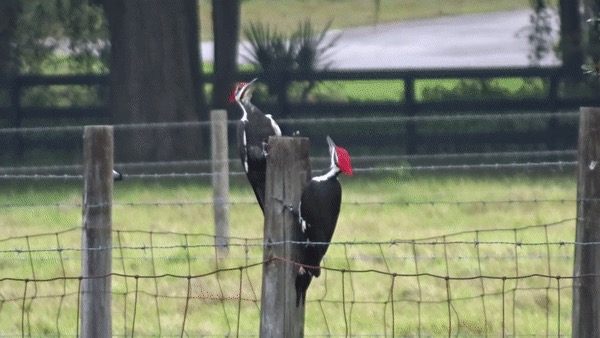
(c) Thomas Koffel, some rights reserved (CC BY) · licence
Family: Picidae · Class: Aves · Order: Piciformes
Dryocopus pileatus (Pileated Woodpecker) is a California animal in the Picidae family.
The Pileated Woodpecker is the largest woodpecker species in North America, measuring 40 to 49 centimeters (16 to 19 inches) in length with a wingspan of 66 to 75 centimeters (26 to 30 inches). Adults weigh between 250 to 400 grams (8.8 to 14.1 ounces). Both sexes display predominantly black plumage with white neck stripes and white wing linings visible in flight. Males possess a bright red crest extending from the forehead to the nape, while females have a red crest only on the back of the head with a black forehead. Males also display a red malar stripe, which is black in females. The species has a long, chisel-like bill and zygodactyl feet adapted for climbing vertical surfaces. In California, Pileated Woodpeckers occur primarily in the northern and central portions of the state, including the Coast Ranges, Cascade Range, and Sierra Nevada. Their range extends from sea level to approximately 2,100 meters (6,900 feet) elevation. The species is most abundant in mature coniferous and mixed coniferous-deciduous forests of the Pacific Northwest region of California, with populations also present in riparian woodlands along major river systems. Pileated Woodpeckers require large tracts of mature forest with an abundance of dead and dying trees (snags) for foraging and nesting. They prefer forests with trees exceeding 50 centimeters (20 inches) in diameter at breast height. The species utilizes both coniferous forests dominated by Douglas fir, redwood, and pine species, as well as mixed forests containing oak, maple, and other hardwoods. Suitable habitat must provide sufficient dead wood for insect prey and nesting cavities. The species is primarily insectivorous, with carpenter ants and wood-boring beetle larvae comprising the majority of their diet. They create distinctive rectangular excavations in dead wood while foraging, often removing large sections of bark and wood to access prey. Pileated Woodpeckers also consume fruits, nuts, and tree sap seasonally. Breeding occurs from March through July, with pairs excavating new nest cavities each year in dead trees or dying portions of live trees. Females typically lay 3 to 5 glossy white eggs, with both parents sharing incubation duties for 15 to 18 days. Nestlings fledge after approximately 26 to 28 days. As of December 2025, the Pileated Woodpecker is not federally or state listed and maintains stable populations across most of its range. However, the species faces ongoing habitat pressure from timber harvesting, urban development, and forest management practices that remove dead trees. Conservation efforts focus on maintaining mature forest stands with adequate snag retention. The species serves as an important indicator of old-growth forest health and creates nesting opportunities for secondary cavity-nesting species through their excavation activities.
Classification
Class: Aves · Order: Piciformes · Family: Picidae
Frequently asked questions
How is Dryocopus pileatus classified?
Dryocopus pileatus belongs to class Aves, order Piciformes, family Picidae.
What family does Dryocopus pileatus belong to?
Dryocopus pileatus is in the Picidae family.
What is Dryocopus pileatus?
The Pileated Woodpecker is the largest woodpecker species in North America, measuring 40 to 49 centimeters (16 to 19 inches) in length with a wingspan of 66 to 75 centimeters (26 to 30 inches).
Is Dryocopus pileatus found in California?
Yes. Dryocopus pileatus is recorded in California in The California Species Project's catalogue.
Related species
Other California species in the same genus, family, or bioregion.
Data from The California Species Project — 14,000+ California species with verified data from CNPS, CDFW, USFWS, and more.