Dryocosmus dubiosus
Two-horned Gall Wasp
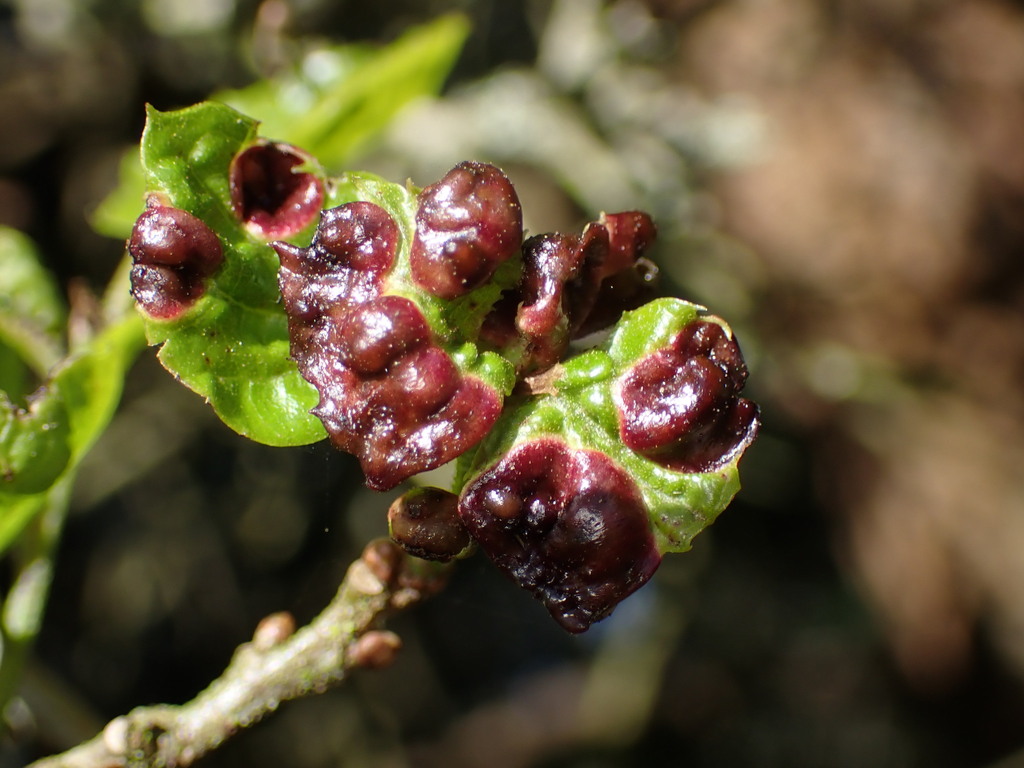
(c) Cricket Raspet, some rights reserved (CC BY) · licence
Family: Cynipidae · Class: Insecta · Order: Hymenoptera
Dryocosmus dubiosus (Two-horned Gall Wasp) is a California animal in the Cynipidae family.
The Two-horned Gall Wasp (Dryocosmus dubiosus) is a small parasitic wasp in the family Cynipidae, known for inducing distinctive galls on oak trees. Adult wasps are typically 2-4 mm in length with dark brown to black coloration and the characteristic two-segmented antennae that give the species its common name. Females possess a long, curved ovipositor used for egg laying, while males are generally smaller and less commonly observed. This species occurs in western North America, with documented populations in California, Oregon, and Washington. In California, D. dubiosus has been recorded primarily in the northern counties where suitable oak hosts are present. The species appears to have a relatively restricted distribution compared to other cynipid wasps, though comprehensive surveys of its range remain limited. Dryocosmus dubiosus is closely associated with oak woodlands and mixed forests containing its host plants. The species primarily induces galls on various Quercus species, including coast live oak (Q. agrifolia), interior live oak (Q. wislizeni), and other native California oaks. Galls typically develop on twigs, branches, or leaf petioles, appearing as rounded, often two-horned protrusions that give the wasp its common name. These structures serve as both nursery and food source for developing larvae. The life cycle of D. dubiosus follows the typical cynipid pattern of alternating sexual and asexual generations, though details of this species' reproductive biology remain poorly documented. Females insert eggs into oak tissue using their ovipositor, triggering the formation of galls through plant growth regulators. Larvae develop within the protective gall structure, feeding on nutritious tissue produced by the host plant. Development time varies with temperature and host species, but typically requires several months from egg to adult emergence. Adults are most active during spring and early summer months when oaks are producing new growth suitable for gall induction. Currently, Dryocosmus dubiosus does not appear on federal or state endangered species lists, and its conservation status has not been formally assessed. However, like many specialized gall-inducing insects, this species faces potential threats from habitat loss, oak woodland fragmentation, and climate change impacts on host plant distributions. The conversion of oak woodlands to agricultural or urban development in California represents the primary long-term threat to populations. Scientific documentation for this species remains limited compared to more common cynipid wasps. Much of the available biological and ecological information comes from taxonomic studies and general cynipid biology rather than species-specific research. Additional field studies are needed to better understand population trends, host plant relationships, and specific habitat requirements. The cryptic nature of gall wasps and their small size makes comprehensive surveys challenging, potentially leading to underestimation of their true distribution and abundance.
Classification
Class: Insecta · Order: Hymenoptera · Family: Cynipidae
Frequently asked questions
How is Dryocosmus dubiosus classified?
Dryocosmus dubiosus belongs to class Insecta, order Hymenoptera, family Cynipidae.
What family does Dryocosmus dubiosus belong to?
Dryocosmus dubiosus is in the Cynipidae family.
What is Dryocosmus dubiosus?
The Two-horned Gall Wasp (Dryocosmus dubiosus) is a small parasitic wasp in the family Cynipidae, known for inducing distinctive galls on oak trees.
Is Dryocosmus dubiosus found in California?
Yes. Dryocosmus dubiosus is recorded in California in The California Species Project's catalogue.
Related species
Other California species in the same genus, family, or bioregion.
Data from The California Species Project — 14,000+ California species with verified data from CNPS, CDFW, USFWS, and more.