Dryocosmus minusculus
Pumpkin Gall Wasp
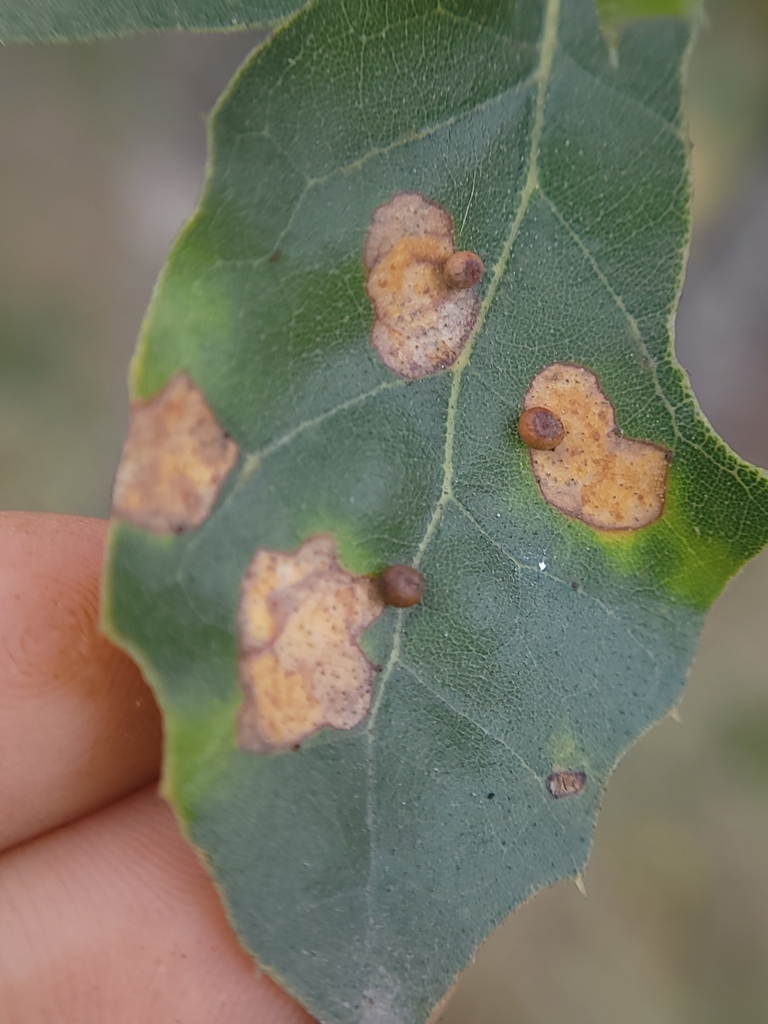
no rights reserved · CC0
Family: Cynipidae · Class: Insecta · Order: Hymenoptera
Dryocosmus minusculus (Pumpkin Gall Wasp) is a California animal in the Cynipidae family.
The Pumpkin Gall Wasp (Dryocosmus minusculus) is a small cynipid wasp in the family Cynipidae that induces distinctive galls on oak leaves throughout California. Adult wasps are minute, measuring approximately 2-3 millimeters in length, typical of gall wasps in this genus. The species is characterized by its dark coloration and compact body structure common to cynipid wasps. This species occurs throughout California where suitable oak hosts are present. According to BugGuide, the wasp has been documented in Los Angeles County and is likely distributed wherever its host oak species grow throughout the state. The species appears to have a broad distribution corresponding to the range of its preferred oak hosts in California's Mediterranean climate regions. Dryocosmus minusculus creates its distinctive galls exclusively on oak species, particularly coast live oak (Quercus agrifolia), interior live oak (Quercus wislizeni), and California black oak (Quercus kelloggii) (BugGuide). The wasps select the upper surfaces of oak leaves for gall formation, typically in areas with adequate sunlight and host tree vigor. The species exhibits the typical cynipid life cycle centered around gall formation. Female wasps oviposit eggs into oak leaf tissue, triggering the formation of distinctive pumpkin-shaped galls measuring approximately 1 millimeter in diameter (Russo, cited in BugGuide). When fresh in late spring and summer, these monothalamous galls are light yellow with dark red or purple centers. As the galls mature through the season, they lose their bright coloration and assume the appearance of miniature pumpkins with pronounced ridging. Each gall typically contains a single developing larva that feeds on the nutritious tissue produced by the host plant's response to the wasp's chemical stimulus. Adult wasps emerge from mature galls, likely timing their emergence to coincide with optimal conditions for mating and the next generation's oviposition cycle. The conservation status of Dryocosmus minusculus has not been formally assessed, and the species lacks state or federal protection status. Like many gall wasps, this species likely faces threats from habitat loss due to urban development and oak woodland conversion throughout California. Climate change may affect the synchronization between wasp life cycles and host plant phenology. The species' dependence on specific oak hosts makes it vulnerable to factors affecting oak health, including sudden oak death syndrome, drought stress, and invasive species impacts. However, the widespread distribution of its host oaks and the species' apparent ability to utilize multiple oak species may provide some resilience. Detailed population studies and long-term monitoring data for this species are lacking, making comprehensive conservation assessment difficult.
Classification
Class: Insecta · Order: Hymenoptera · Family: Cynipidae
Frequently asked questions
How is Dryocosmus minusculus classified?
Dryocosmus minusculus belongs to class Insecta, order Hymenoptera, family Cynipidae.
What family does Dryocosmus minusculus belong to?
Dryocosmus minusculus is in the Cynipidae family.
What is Dryocosmus minusculus?
The Pumpkin Gall Wasp (Dryocosmus minusculus) is a small cynipid wasp in the family Cynipidae that induces distinctive galls on oak leaves throughout California.
Is Dryocosmus minusculus found in California?
Yes. Dryocosmus minusculus is recorded in California in The California Species Project's catalogue.
Related species
Other California species in the same genus, family, or bioregion.
Data from The California Species Project — 14,000+ California species with verified data from CNPS, CDFW, USFWS, and more.