Dryotype opina
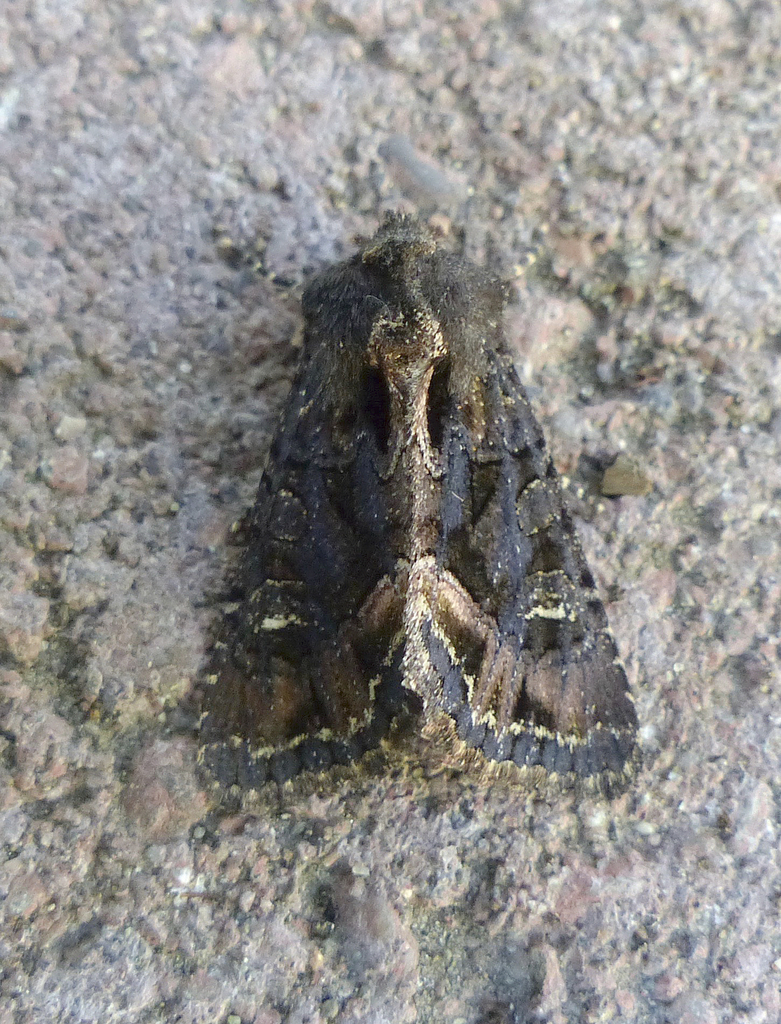
(c) metchbiodivcurator, some rights reserved (CC BY-SA) · licence
Family: Noctuidae · Class: Insecta · Order: Lepidoptera
Dryotype opina is a California animal in the Noctuidae family.
Dryotype opina is a moth species belonging to the family Noctuidae, commonly known as owlet moths or cutworm moths. This species represents one of the lesser-documented members of the genus Dryotype, with limited published information available regarding its detailed morphological characteristics. Like other noctuid moths, D. opina likely exhibits the typical moth body plan with a robust thorax, thread-like or feathered antennae, and forewings that are generally earth-toned to provide camouflage during daytime rest periods. The species occurs across a broad latitudinal range extending from British Columbia, Canada, southward to central California. This distribution suggests adaptation to diverse climatic conditions spanning temperate rainforest, mixed coniferous forests, and Mediterranean-climate regions. The range encompasses major mountain systems including the Coast Ranges and Sierra Nevada, though specific elevation limits and habitat preferences within this broad distribution remain poorly documented in available literature. Dryotype opina demonstrates host plant specificity within the legume family (Fabaceae), utilizing species in the genera Lathyrus and Lupinus as larval food sources. Lathyrus species, commonly known as wild peas or vetchlings, and Lupinus species (lupines) are herbaceous perennials and annuals that provide nitrogen-rich foliage due to their nitrogen-fixing root associations. This host plant relationship suggests the larvae likely feed on leaves, stems, or developing seed pods of these leguminous plants. The ecological role of D. opina within its ecosystem likely follows typical noctuid patterns, with larvae serving as herbivores that may occasionally reach pest status on cultivated legumes, while adults function as pollinators for night-blooming plants and prey items for nocturnal predators such as bats and spiders. Adult flight periods are not well-documented but likely coincide with host plant phenology and favorable temperature conditions. Overwintering strategy, whether as eggs, larvae, pupae, or adults, remains undetermined from available sources. Mating behavior probably involves chemical communication through species-specific pheromones released by females to attract males, consistent with most noctuid moths. Eggs are likely deposited directly on or near host plants, with larval development occurring through multiple instars before pupation in soil or leaf litter. No formal conservation status has been assigned to Dryotype opina at federal, state, or international levels. The absence of listing status may reflect either stable populations throughout its range or insufficient survey data to assess population trends. Given its association with native legume species and broad geographic distribution, the species may face localized threats from habitat conversion, invasive plant species that displace native Lathyrus and Lupinus populations, and pesticide applications in agricultural areas. Climate change impacts on host plant distributions could potentially affect future population stability, particularly at range margins where suitable habitat may become increasingly fragmented.
Classification
Class: Insecta · Order: Lepidoptera · Family: Noctuidae
Frequently asked questions
How is Dryotype opina classified?
Dryotype opina belongs to class Insecta, order Lepidoptera, family Noctuidae.
What family does Dryotype opina belong to?
Dryotype opina is in the Noctuidae family.
What is Dryotype opina?
Dryotype opina is a moth species belonging to the family Noctuidae, commonly known as owlet moths or cutworm moths.
Is Dryotype opina found in California?
Yes. Dryotype opina is recorded in California in The California Species Project's catalogue.
Related species
Other California species in the same genus, family, or bioregion.
Data from The California Species Project — 14,000+ California species with verified data from CNPS, CDFW, USFWS, and more.