Dubiraphia brunnescens
Brownish Dubiraphian Riffle Beetle
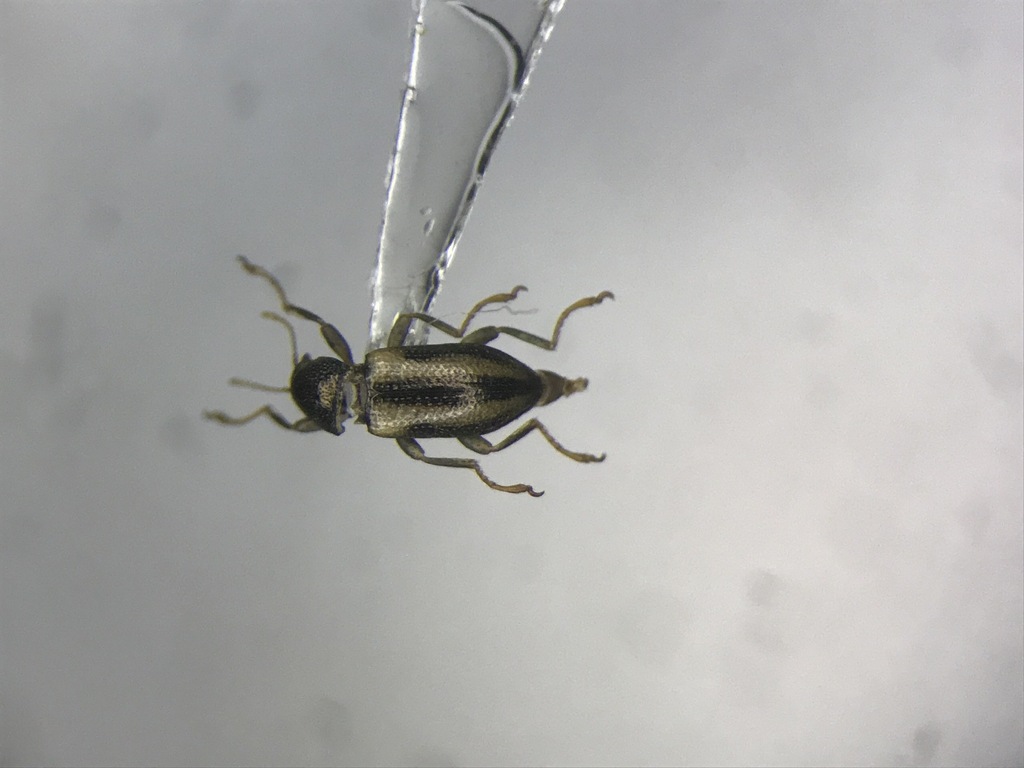
no rights reserved · CC0
Family: Elmidae · Class: Insecta · Order: Coleoptera
Conservation status: G1 S1
Dubiraphia brunnescens (Brownish Dubiraphian Riffle Beetle) is a California animal in the Elmidae family.
The Brownish Dubiraphian Riffle Beetle (Dubiraphia brunnescens) is a small aquatic beetle in the family Elmidae, commonly known as riffle beetles. This species exhibits the characteristic elongated, streamlined body typical of riffle beetles, adapted for life in flowing water environments. Adult beetles are brownish in coloration, as indicated by their common name, with a hardened exoskeleton that provides protection in rocky stream habitats. The species' range and specific distribution within California remain poorly documented in available scientific literature. Based on the global and state conservation rankings of G1 S1, this beetle appears to be extremely rare both globally and within California, suggesting a very limited geographic distribution. The specific counties, watersheds, or geographic regions where this species occurs have not been well documented in accessible sources. Like other riffle beetles, D. brunnescens likely inhabits rocky substrates in fast-flowing streams and rivers. Riffle beetles are typically found clinging to stones, logs, and other hard surfaces in well-oxygenated, flowing water environments. The larvae and adults of elmid beetles are adapted to high-flow conditions and require clean, unpolluted water with adequate dissolved oxygen levels. Specific habitat requirements for this species, including elevation range, water temperature preferences, and substrate specificity, have not been thoroughly studied or documented. Riffle beetles are primarily herbivorous, feeding on algae, diatoms, and organic detritus that accumulates on submerged surfaces. Both larvae and adults are aquatic, with adults capable of limited flight for dispersal between suitable stream habitats. Reproduction likely follows the typical elmid pattern, with females depositing eggs on submerged substrates and larvae developing through several aquatic instars before pupating. Specific details regarding seasonal activity patterns, reproductive timing, and life cycle duration for D. brunnescens are not available in current literature. The U.S. Fish and Wildlife Service currently classifies the Brownish Dubiraphian Riffle Beetle as a Species of Concern, indicating that while not federally listed, the species may warrant protection due to declining populations or threats (USFWS ECOS database, 2025). The extremely restricted global and state ranking of G1 S1 suggests that fewer than five populations or fewer than 1,000 individuals may exist worldwide. Primary threats to riffle beetles typically include water pollution, habitat degradation from mining or development, altered flow regimes from dams or diversions, and sedimentation that degrades rocky substrates essential for their survival. The lack of comprehensive ecological studies on this species represents a significant knowledge gap. Detailed surveys are needed to determine current population status, habitat requirements, and conservation needs. The species' apparent rarity and limited distribution make it particularly vulnerable to environmental changes and habitat loss within its range.
Classification
Class: Insecta · Order: Coleoptera · Family: Elmidae
Conservation status
G1 S1
Frequently asked questions
How is Dubiraphia brunnescens classified?
Dubiraphia brunnescens belongs to class Insecta, order Coleoptera, family Elmidae.
What family does Dubiraphia brunnescens belong to?
Dubiraphia brunnescens is in the Elmidae family.
Is Dubiraphia brunnescens protected or of conservation concern?
Dubiraphia brunnescens carries the following status: G1 S1.
What is Dubiraphia brunnescens?
The Brownish Dubiraphian Riffle Beetle (Dubiraphia brunnescens) is a small aquatic beetle in the family Elmidae, commonly known as riffle beetles.
Is Dubiraphia brunnescens found in California?
Yes. Dubiraphia brunnescens is recorded in California in The California Species Project's catalogue.
Related species
Other California species in the same genus, family, or bioregion.
Data from The California Species Project — 14,000+ California species with verified data from CNPS, CDFW, USFWS, and more.