Dumetella carolinensis
Gray Catbird
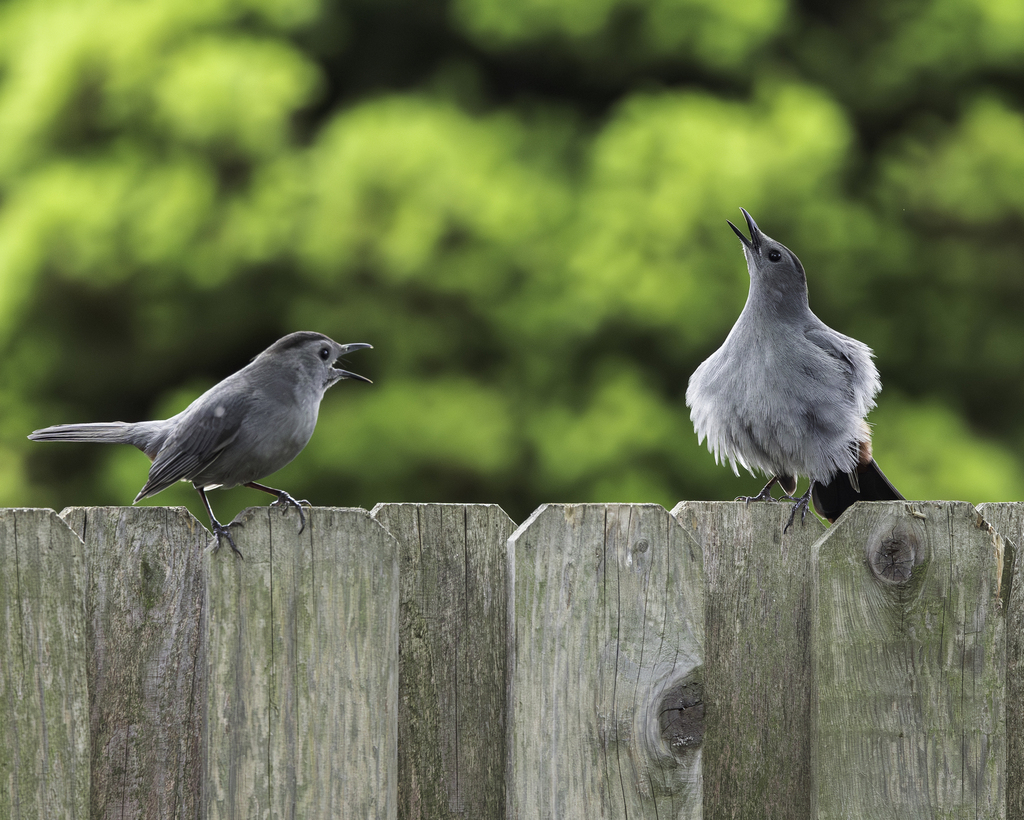
(c) Kristy Morley, some rights reserved (CC BY) · licence
Family: Mimidae · Class: Aves · Order: Passeriformes
Dumetella carolinensis (Gray Catbird) is a California animal in the Mimidae family.
The Gray Catbird is a medium-sized songbird measuring 20 to 24 cm (7.9 to 9.4 inches) in length with a wingspan of 22 to 30 cm (8.7 to 11.8 inches). Adults weigh between 23 to 56 grams (0.8 to 2.0 ounces). The species displays overall slate-gray plumage with a distinctive black cap extending from the forehead to the nape. The undertail coverts are rusty-red or chestnut, providing the primary field mark for identification. Males and females appear identical, while juveniles show slightly browner plumage with less distinct markings. The Gray Catbird breeds across much of North America from southern Canada to the Gulf Coast states. In California, the species occurs primarily as a vagrant or rare migrant, with scattered records from coastal and interior locations. Most California observations are documented during fall migration from August through October, with occasional winter records in southern California counties including Los Angeles, Orange, and San Diego. The species breeds primarily in eastern North America, with western populations concentrated in the Pacific Northwest. Gray Catbirds inhabit dense shrublands, forest edges, and riparian thickets. They show strong preference for areas with thick understory vegetation, including brambles, elderberry, and native shrub communities. During migration and winter, the species utilizes parks, gardens, and residential areas with dense plantings. In California, vagrant individuals are typically found in coastal scrub, riparian corridors, and urban green spaces with adequate cover. This species is omnivorous, consuming insects, spiders, fruits, and berries in roughly equal proportions depending on seasonal availability. During breeding season, catbirds feed extensively on beetles, ants, caterpillars, and moths to meet protein requirements for nestlings. Fall and winter diet shifts toward fruits including elderberries, grapes, and cherries. Gray Catbirds are secretive foragers, typically remaining within dense vegetation while gleaning prey from leaves and branches. The species derives its common name from its distinctive mewing call resembling a domestic cat, though males produce complex songs incorporating mimicry of other bird species. Breeding occurs from May through August, with females constructing bulky cup nests in dense shrubs 1 to 3 meters above ground. Clutches contain 2 to 6 glossy blue-green eggs, with incubation lasting 12 to 13 days. Both parents feed nestlings, which fledge after 10 to 11 days. The species typically produces one to two broods per season in optimal habitat. The Gray Catbird maintains stable populations across its primary range and is not federally or state listed in California. According to the North American Breeding Bird Survey, continental populations have remained relatively stable over the past five decades, though some regional declines have been documented in agricultural areas due to habitat loss. In California, the species remains an uncommon but regular vagrant, with no established breeding populations. Climate change may potentially expand the species' range westward, though current California records reflect natural vagrancy patterns rather than range expansion.
Classification
Class: Aves · Order: Passeriformes · Family: Mimidae
Frequently asked questions
How is Dumetella carolinensis classified?
Dumetella carolinensis belongs to class Aves, order Passeriformes, family Mimidae.
What family does Dumetella carolinensis belong to?
Dumetella carolinensis is in the Mimidae family.
What is Dumetella carolinensis?
The Gray Catbird is a medium-sized songbird measuring 20 to 24 cm (7.9 to 9.4 inches) in length with a wingspan of 22 to 30 cm (8.7 to 11.8 inches).
Is Dumetella carolinensis found in California?
Yes. Dumetella carolinensis is recorded in California in The California Species Project's catalogue.
Related species
Other California species in the same genus, family, or bioregion.
Data from The California Species Project — 14,000+ California species with verified data from CNPS, CDFW, USFWS, and more.