Dymasia dymas
Tiny Checkerspot
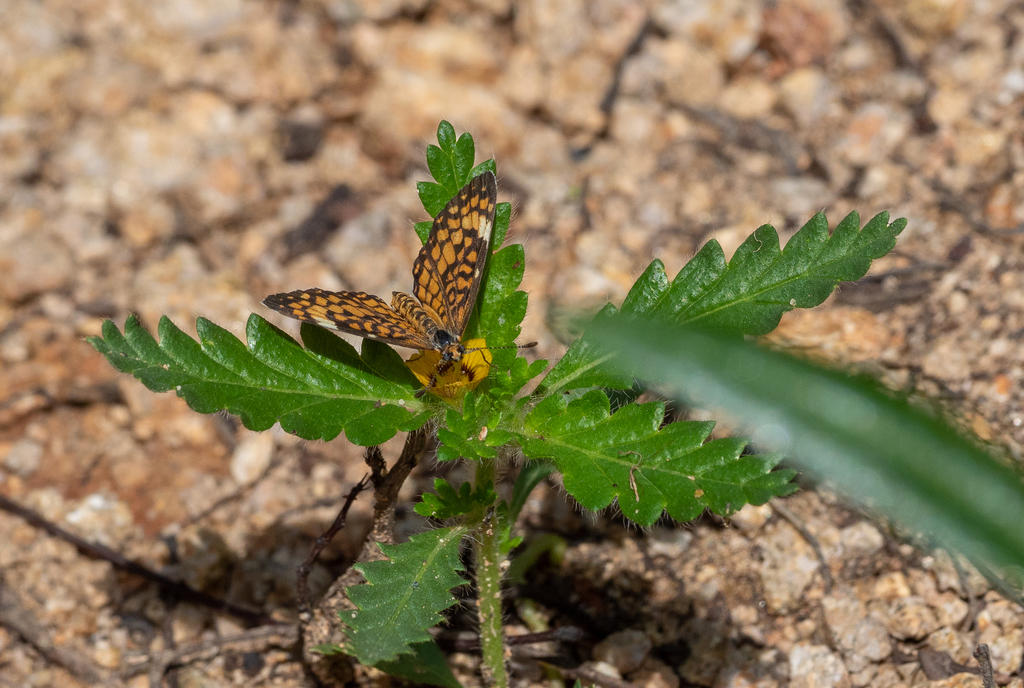
(c) Forest Botial-Jarvis, some rights reserved (CC BY) · licence
Family: Nymphalidae · Class: Insecta · Order: Lepidoptera
Dymasia dymas (Tiny Checkerspot) is a California animal in the Nymphalidae family.
The tiny checkerspot is a small butterfly in the brush-footed butterfly family (Nymphalidae). Adults are characterized by the checkered wing pattern typical of checkerspots, though specific size measurements and detailed coloration descriptions are not well documented in current literature. The species exhibits subspecific variation across its range, with at least three recognized subspecies: the nominate subspecies D. d. dymas, the Chara checkerspot (D. d. chara), and the Imperial checkerspot (D. d. imperialis). The tiny checkerspot ranges from central Mexico and Baja California north to southern California, central Arizona, central New Mexico, and south Texas. In California, the species occurs primarily in the southern regions, extending into the desert areas of the state. This distribution represents one of the more extensive ranges among North American checkerspots, spanning multiple biogeographic regions from subtropical Mexico to the southwestern United States. The species inhabits subtropical scrub and desert environments, with a particular preference for areas near valleys and washes (Butterflies and Moths of North America). These habitat preferences reflect the butterfly's adaptation to arid and semi-arid conditions throughout much of its range. The association with wash areas suggests the species may depend on the increased moisture and vegetation diversity found in these drainage systems within otherwise dry landscapes. Tiny checkerspots are specialized feeders, with larvae developing exclusively on hairy tubetongue (Siphonoglossa pilosella), a member of the acanthus family (Acanthaceae). This host plant relationship demonstrates the narrow ecological requirements typical of many checkerspot species. The reliance on a single host plant species makes the butterfly vulnerable to changes in plant distribution and abundance. Additional host plant relationships have been documented for related subspecies, with D. d. chara reportedly using Beloperone californica, also in the Acanthaceae family. Detailed information about the species' life cycle, flight periods, and reproductive behavior remains limited in published literature. Like other checkerspots, the tiny checkerspot likely undergoes complete metamorphosis with distinct egg, larval, pupal, and adult stages. The timing of these life stages and the number of generations per year across the species' extensive range have not been well documented. Currently, the tiny checkerspot does not appear on federal or state endangered species lists, and conservation status assessments indicate that protection measures are not usually required (Butterflies and Moths of North America). However, the species' dependence on specific host plants and desert habitats may make local populations vulnerable to habitat modification, climate change, and urban development pressures, particularly in rapidly growing areas of the southwestern United States. The broad geographic range may provide some resilience against localized threats, though population trends and connectivity between regional populations remain poorly studied.
Classification
Class: Insecta · Order: Lepidoptera · Family: Nymphalidae
Frequently asked questions
How is Dymasia dymas classified?
Dymasia dymas belongs to class Insecta, order Lepidoptera, family Nymphalidae.
What family does Dymasia dymas belong to?
Dymasia dymas is in the Nymphalidae family.
What is Dymasia dymas?
The tiny checkerspot is a small butterfly in the brush-footed butterfly family (Nymphalidae).
Is Dymasia dymas found in California?
Yes. Dymasia dymas is recorded in California in The California Species Project's catalogue.
Related species
Other California species in the same genus, family, or bioregion.
Data from The California Species Project — 14,000+ California species with verified data from CNPS, CDFW, USFWS, and more.