Dyotopasta yumaella
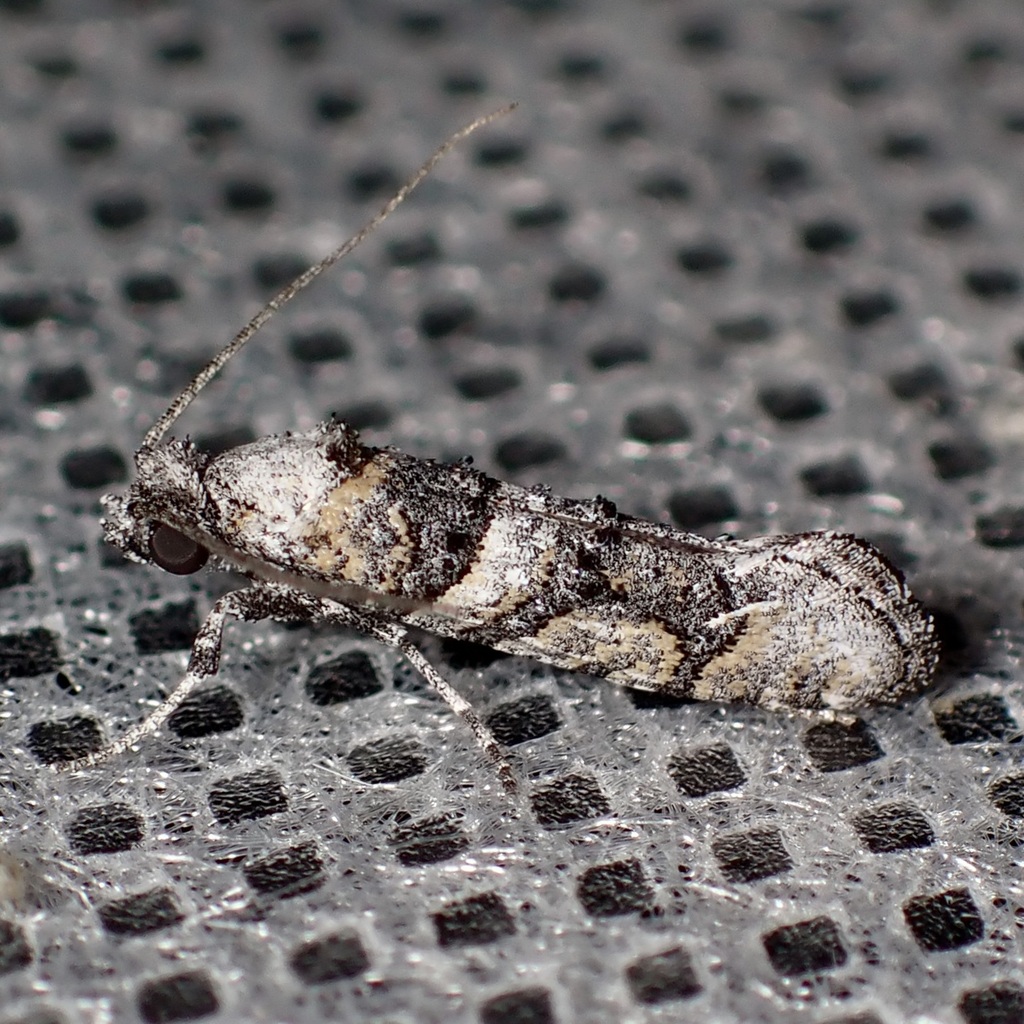
(c) Sue Carnahan, some rights reserved (CC BY) · licence
Family: Tineidae · Class: Insecta · Order: Lepidoptera
Dyotopasta yumaella is a California animal in the Tineidae family.
Dyotopasta yumaella is a small moth in the family Tineidae, commonly known as fungus moths or tineid moths. Adults typically measure 8 to 12 mm in wingspan, with forewings that are narrow and elongated. The forewings display a mottled brown to grayish-brown coloration with indistinct darker markings, providing effective camouflage against the bark and dried plant material where the species is commonly found. The hindwings are typically paler, ranging from light brown to cream-colored, and are fringed with long scales along the margins. The antennae are filiform in both sexes, and the head bears a covering of scales that matches the forewing coloration. This species occurs across a broad range extending from Texas to California, south to Puebla, Mexico, and including southern Nevada. Within California, D. yumaella is found primarily in desert regions where suitable host plants are present, including the Sonoran and Mojave desert ecosystems. The distribution follows the range of Opuntia and Echinocereus cacti, which serve as the primary larval host plants. Dyotopasta yumaella inhabits arid and semi-arid environments, typically at elevations below 1,200 meters. The species is closely associated with desert scrub communities dominated by various cacti species. Adults are found in areas with Opuntia (prickly pear) and Echinocereus (hedgehog cactus) populations, as well as in regions where the boojum tree (Fouquieria columnaris) occurs. These habitats are characterized by low annual precipitation, high temperature variation, and sparse vegetation cover. Larvae of D. yumaella are specialized feeders on dead tissue of cacti, specifically targeting necrotic portions of Opuntia and Echinocereus species. The larvae also utilize dead trunks of the boojum tree, feeding on the dried woody material. This feeding behavior classifies the species as a saprophage, playing a role in the decomposition of dead plant material in desert ecosystems. The larval stage likely extends through multiple months, allowing development during periods when dead cactus material is available. Adults are presumed to be active during warmer months, though specific flight periods have not been thoroughly documented. The species likely exhibits multiple generations per year in suitable climatic conditions. No formal conservation status has been assigned to D. yumaella at federal, state, or global levels. The species' wide distribution across multiple states and Mexico suggests stable populations, though localized impacts from habitat modification and urban development may affect some populations. Desert habitats face increasing pressure from renewable energy development, urban expansion, and climate change effects including altered precipitation patterns and increased drought frequency. The specialized nature of the larval feeding habits makes the species dependent on healthy cactus populations and the natural cycle of plant mortality that provides dead tissue for larval development. Conservation of desert ecosystems and their native plant communities benefits this species indirectly.
Classification
Class: Insecta · Order: Lepidoptera · Family: Tineidae
Frequently asked questions
How is Dyotopasta yumaella classified?
Dyotopasta yumaella belongs to class Insecta, order Lepidoptera, family Tineidae.
What family does Dyotopasta yumaella belong to?
Dyotopasta yumaella is in the Tineidae family.
What is Dyotopasta yumaella?
Dyotopasta yumaella is a small moth in the family Tineidae, commonly known as fungus moths or tineid moths.
Is Dyotopasta yumaella found in California?
Yes. Dyotopasta yumaella is recorded in California in The California Species Project's catalogue.
Related species
Other California species in the same genus, family, or bioregion.
Data from The California Species Project — 14,000+ California species with verified data from CNPS, CDFW, USFWS, and more.