Dysstroma brunneata
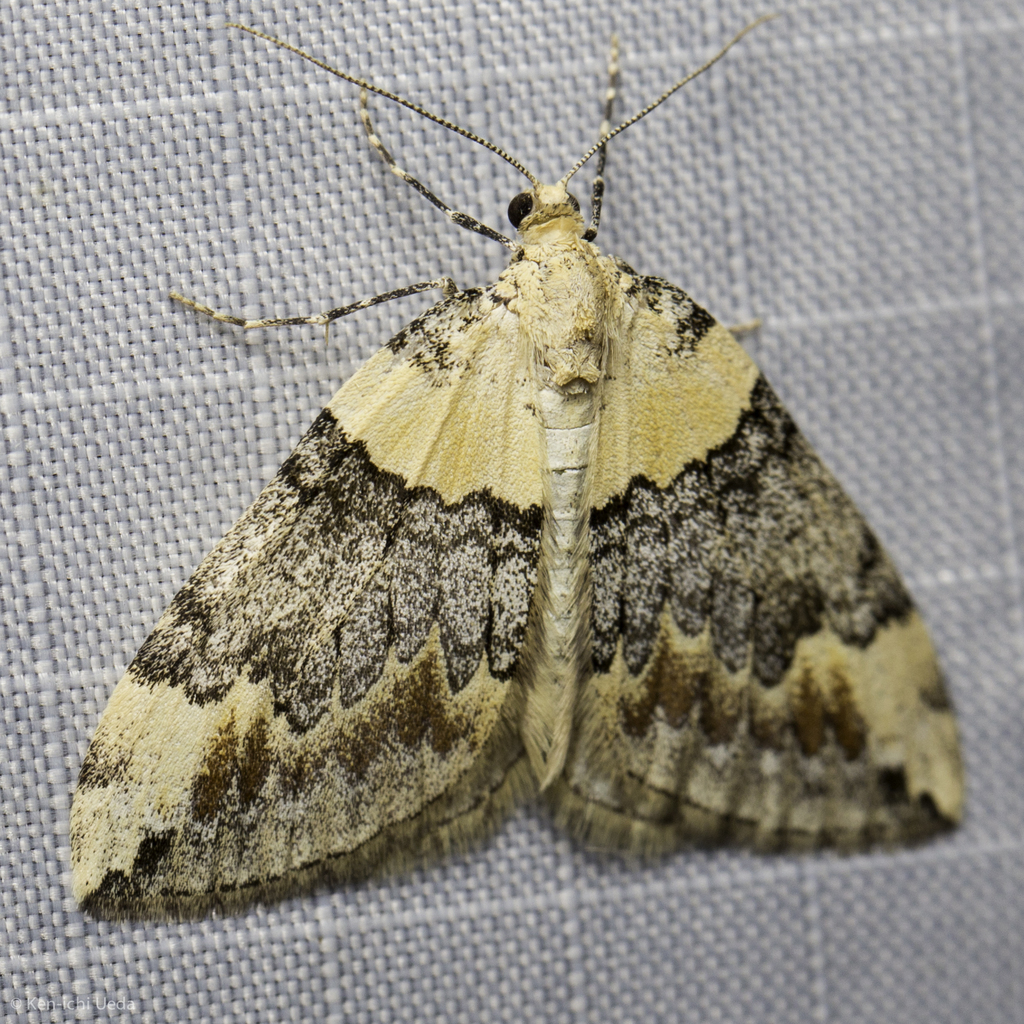
(c) Ken-ichi Ueda, some rights reserved (CC BY) · licence
Family: Geometridae · Class: Insecta · Order: Lepidoptera
Dysstroma brunneata is a California animal in the Geometridae family.
Dysstroma brunneata, commonly known as the brownish carpet moth, is a member of the Geometridae family within the order Lepidoptera. This species exhibits the typical geometric moth characteristics, with adults displaying wings that span approximately 20-25 mm across when fully extended. The forewings present a brownish coloration with subtle darker markings and crosslines, while the hindwings are generally paler with less distinct patterning. The body is slender and brownish, consistent with the overall earth-toned appearance that provides effective camouflage against bark and dried vegetation. This species demonstrates a highly unusual disjunct distribution pattern, occurring in two widely separated regions of North America. The western population ranges from British Columbia south through Saskatchewan, extending southward to Arizona and California. The eastern population is restricted to the far northeast, including Newfoundland, New Brunswick, Quebec, and New York. This distribution pattern suggests a relict species that once had a more continuous range but became fragmented during past climatic changes. Dysstroma brunneata inhabits areas where its host plants, currants and gooseberries (Ribes species), are naturally occurring. In the western range, this includes montane forests, riparian zones, and woodland edges at various elevations where wild Ribes species thrive. The eastern populations are found in similar habitats, particularly in areas with native gooseberry and currant shrubs in forest openings and along stream corridors. The larvae of D. brunneata feed exclusively on the leaves of Ribes species, making them specialists dependent on the availability of these host plants. Adult moths are active during the warmer months, with flight periods varying by geographic location and local climate conditions. Females deposit eggs on or near host plant foliage, and the developing caterpillars consume the leaves throughout their larval development. The species likely overwinters as pupae, emerging as adults the following season when host plants begin their new growth cycle. Like many geometric moths, adults are primarily nocturnal and are attracted to artificial light sources. The species exhibits cryptic coloration that helps adults blend with tree bark and dead vegetation during daylight hours when they remain motionless. Males typically emerge before females and may use pheromones to locate potential mates. No specific conservation status has been assigned to Dysstroma brunneata, and the species does not appear on federal or state endangered species lists. However, the highly disjunct distribution pattern and dependence on specific host plants could make local populations vulnerable to habitat changes. The western populations may face pressures from wildfire, drought, and habitat modification, while eastern populations could be affected by forest management practices and urban development. Climate change may pose additional challenges for this species, particularly given its fragmented range and specialized ecological requirements.
Classification
Class: Insecta · Order: Lepidoptera · Family: Geometridae
Frequently asked questions
How is Dysstroma brunneata classified?
Dysstroma brunneata belongs to class Insecta, order Lepidoptera, family Geometridae.
What family does Dysstroma brunneata belong to?
Dysstroma brunneata is in the Geometridae family.
What is Dysstroma brunneata?
Dysstroma brunneata, commonly known as the brownish carpet moth, is a member of the Geometridae family within the order Lepidoptera.
Is Dysstroma brunneata found in California?
Yes. Dysstroma brunneata is recorded in California in The California Species Project's catalogue.
Related species
Other California species in the same genus, family, or bioregion.
Data from The California Species Project — 14,000+ California species with verified data from CNPS, CDFW, USFWS, and more.