Dysstroma citrata
Dark Marbled Carpet
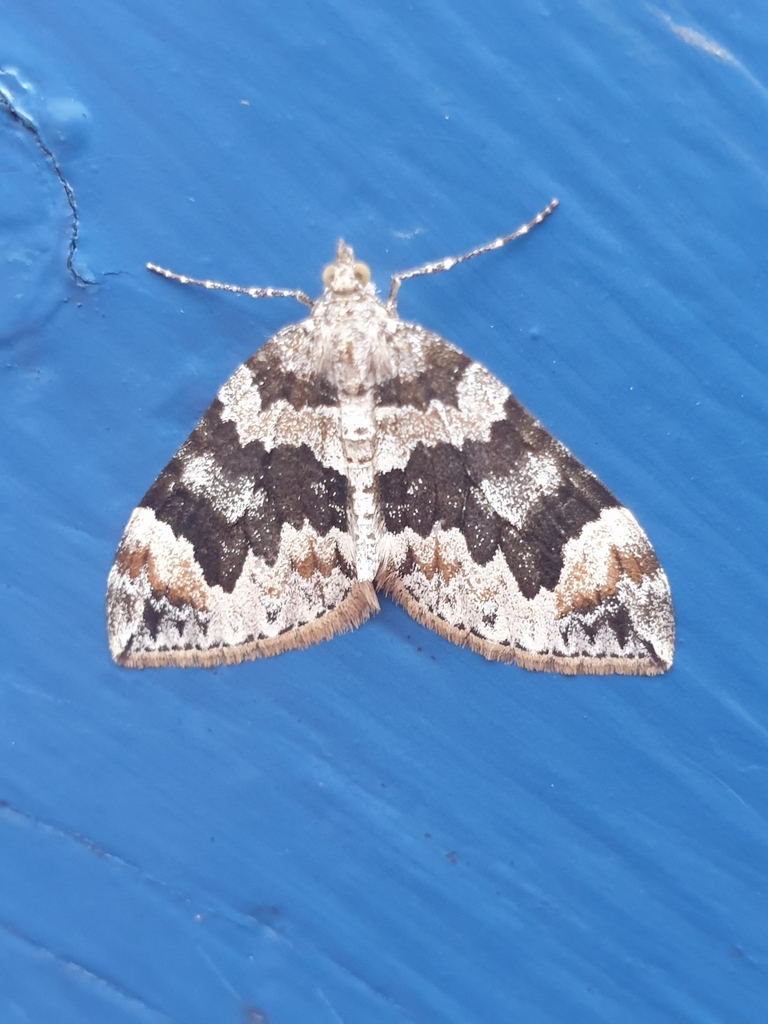
no rights reserved · CC0
Family: Geometridae · Class: Insecta · Order: Lepidoptera
Dysstroma citrata (Dark Marbled Carpet) is a California animal in the Geometridae family.
The Dark Marbled Carpet (Dysstroma citrata) is a small geometrid moth in the family Geometridae. Adults typically measure 20-25 mm (0.8-1.0 inches) in wingspan. The forewings display a complex pattern of gray, brown, and darker marbled markings that give the species its common name. The ground color ranges from light gray to brownish-gray, with irregular dark transverse lines and mottled patterns across the wing surface. The hindwings are typically paler than the forewings, often appearing whitish or light gray with faint markings. Males can be distinguished from females by their more feathery antennae and generally smaller size. Dysstroma citrata occurs across northern regions of North America, with populations documented from Alaska and western Canada southward through mountainous areas of the western United States. In California, the species is found primarily in higher elevation forests of the Sierra Nevada and Cascade ranges. The distribution appears to be closely tied to the presence of suitable host plants and appropriate climatic conditions associated with montane forest ecosystems. This species inhabits coniferous and mixed forests, typically at elevations above 1,500 meters (4,900 feet). Adults are most commonly encountered in areas dominated by fir, spruce, and pine species. The moth shows a preference for forest edges, clearings, and areas with understory vegetation where host plants are abundant. Suitable habitat includes both mature forest stands and younger regenerating forests following natural disturbances or management activities. Adults are nocturnal and attracted to artificial lights. Flight period typically extends from late spring through early fall, with peak activity occurring during summer months from June through August. The species is univoltine, producing one generation per year. Larvae feed on various coniferous trees, with documented host plants including species of Abies (fir) and Picea (spruce). Caterpillars are geometrids or "inchworms," characterized by their distinctive looping locomotion as they move along branches and needles. Pupation occurs in the soil or leaf litter beneath host trees. The conservation status of Dysstroma citrata has not been formally assessed by federal or state agencies, and the species currently lacks special protection status. Population trends are not well documented, but the moth's dependence on montane forest habitats may make it vulnerable to climate change impacts, including shifts in temperature and precipitation patterns that could alter forest composition and distribution. Forest management practices, including timber harvesting and fire suppression, may also influence habitat availability. The species' relatively restricted elevational range and specific habitat requirements suggest that monitoring of population trends and habitat conditions would be valuable for understanding long-term conservation needs. Additional research is needed to better understand the species' distribution, population dynamics, and ecological requirements throughout its California range.
Classification
Class: Insecta · Order: Lepidoptera · Family: Geometridae
Frequently asked questions
How is Dysstroma citrata classified?
Dysstroma citrata belongs to class Insecta, order Lepidoptera, family Geometridae.
What family does Dysstroma citrata belong to?
Dysstroma citrata is in the Geometridae family.
What is Dysstroma citrata?
The Dark Marbled Carpet (Dysstroma citrata) is a small geometrid moth in the family Geometridae.
Is Dysstroma citrata found in California?
Yes. Dysstroma citrata is recorded in California in The California Species Project's catalogue.
Related species
Other California species in the same genus, family, or bioregion.
Data from The California Species Project — 14,000+ California species with verified data from CNPS, CDFW, USFWS, and more.