Dysstroma sobria
1-spotted Rhododendron Moth
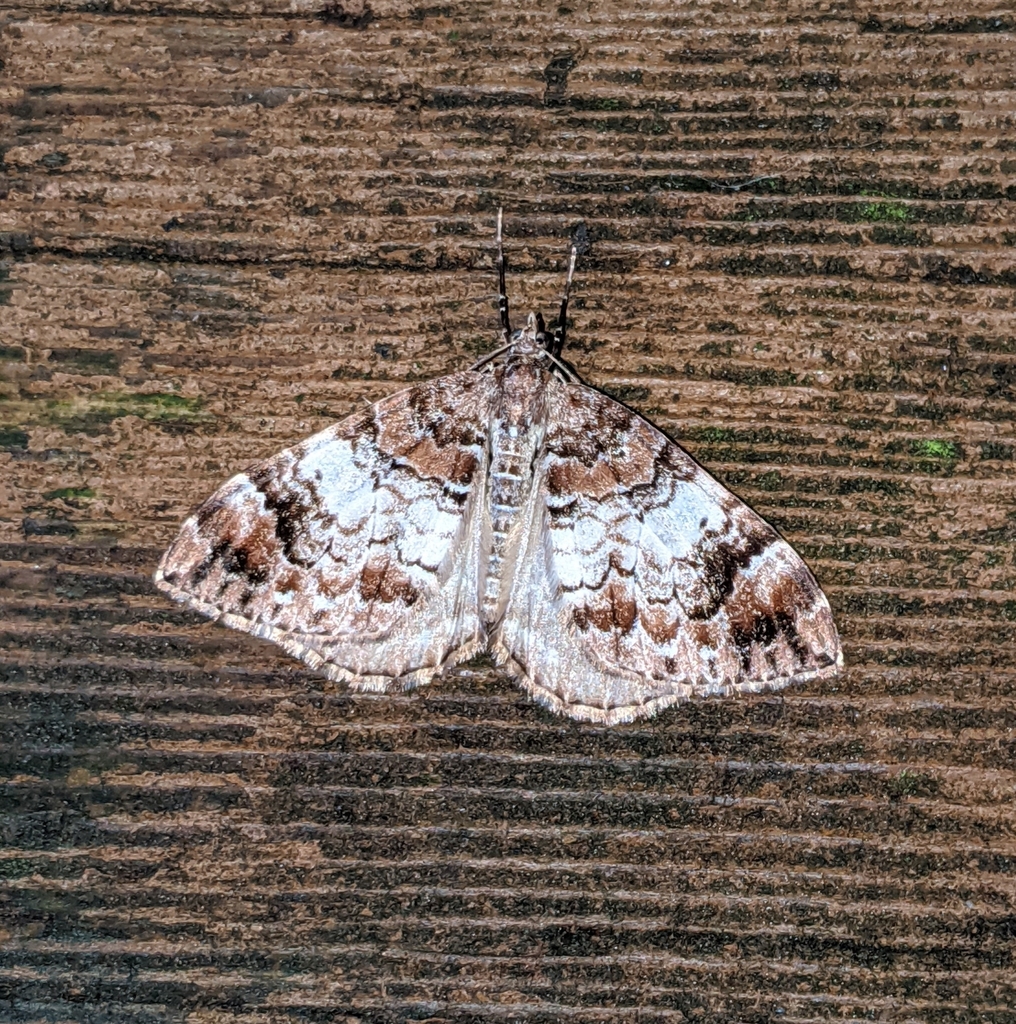
no rights reserved · CC0
Family: Geometridae · Class: Insecta · Order: Lepidoptera
Dysstroma sobria (1-spotted Rhododendron Moth) is a California animal in the Geometridae family.
The 1-spotted Rhododendron Moth (Dysstroma sobria) is a geometrid moth in the family Geometridae, subfamily Larentiinae. Adults are small to medium-sized moths with forewings typically measuring 15-20 mm in length. The forewings display a mottled gray-brown coloration with darker crosslines and patches, providing effective camouflage against bark and lichen-covered surfaces. The common name derives from a distinctive single dark spot or eyespot present on each forewing, though this marking can vary in prominence among individuals. The hindwings are generally paler than the forewings, ranging from light gray to whitish with faint crosslines. Males can be distinguished from females by their more feathery antennae and slightly smaller size. This species occurs along the Pacific Coast of North America, with its range extending from British Columbia south through Washington, Oregon, and into northern California. In California, populations are documented primarily in coastal counties where suitable host plants are present. The species appears to be closely associated with areas supporting native Rhododendron species and coastal forest communities. The 1-spotted Rhododendron Moth inhabits coastal coniferous forests, mixed woodlands, and forest edges where its host plants occur. Primary host plants include various Rhododendron species and Salal (Gaultheria shallon), both members of the heath family (Ericaceae). These habitats typically feature cool, moist conditions with moderate to high humidity levels. The species is most commonly found in areas with dense understory vegetation dominated by ericaceous shrubs, often in association with Douglas fir, Sitka spruce, and other coastal conifers. Elevation ranges vary but generally occur from sea level to approximately 1,500 meters in suitable habitat. Larvae feed on the foliage of Rhododendron species and Salal, creating characteristic feeding damage on leaves. The caterpillars are typical geometrid larvae, moving in a distinctive looping motion due to the absence of prolegs on the middle abdominal segments. Development follows a typical lepidopteran life cycle with egg, larval, pupal, and adult stages. Adults are primarily active during evening and nighttime hours and are attracted to artificial lights. Flight period varies by location and elevation but generally occurs during late spring through early fall, with peak activity often in mid to late summer. Multiple generations per year may occur in favorable conditions. The conservation status of the 1-spotted Rhododendron Moth has not been formally assessed at federal or state levels, and it is not currently listed under the Endangered Species Act or California Endangered Species Act. Population trends are poorly documented, though the species may face localized threats from habitat loss due to coastal development, logging activities, and changes in forest management practices. Climate change could potentially affect the distribution and abundance of both the moth and its host plants, particularly as temperature and precipitation patterns shift in coastal regions. The species' dependence on specific host plants makes it vulnerable to changes in plant community composition and forest succession patterns.
Classification
Class: Insecta · Order: Lepidoptera · Family: Geometridae
Frequently asked questions
How is Dysstroma sobria classified?
Dysstroma sobria belongs to class Insecta, order Lepidoptera, family Geometridae.
What family does Dysstroma sobria belong to?
Dysstroma sobria is in the Geometridae family.
What is Dysstroma sobria?
The 1-spotted Rhododendron Moth (Dysstroma sobria) is a geometrid moth in the family Geometridae, subfamily Larentiinae.
Is Dysstroma sobria found in California?
Yes. Dysstroma sobria is recorded in California in The California Species Project's catalogue.
Related species
Other California species in the same genus, family, or bioregion.
Data from The California Species Project — 14,000+ California species with verified data from CNPS, CDFW, USFWS, and more.