Ectemnius continuus
Common Ectemnius
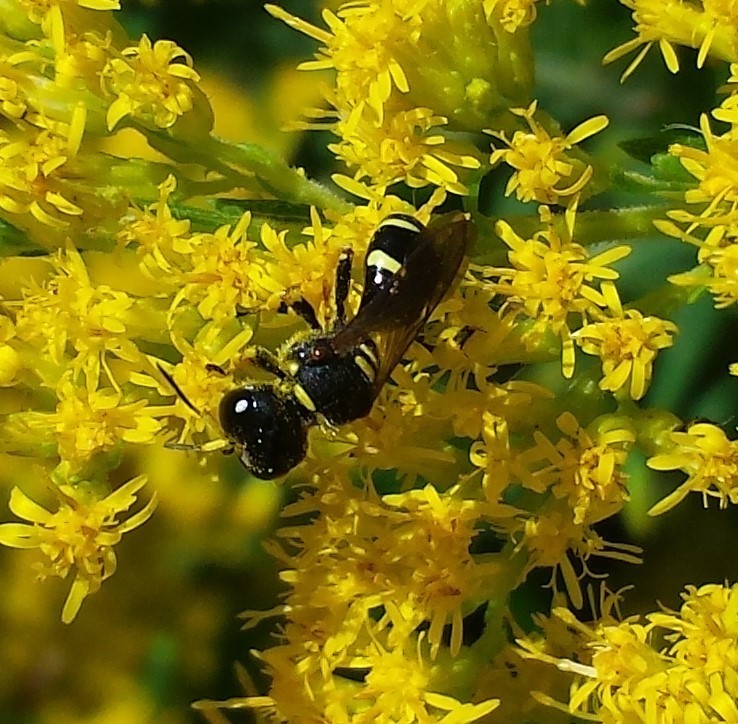
(c) Even Dankowicz, some rights reserved (CC BY) · licence
Family: Crabronidae · Class: Insecta · Order: Hymenoptera
Ectemnius continuus (Common Ectemnius) is a California animal in the Crabronidae family.
Ectemnius continuus is a member of the Crabronidae family, commonly known as square-headed wasps or sand wasps. This species belongs to the subfamily Crabroninae, which encompasses approximately 520 species in 31 genera across North America. Adult Crabroninae typically measure 6-20 mm in body length, though specific morphometric data for E. continuus has not been well documented in the scientific literature. The distribution of Ectemnius continuus includes portions of North America, with documented occurrences in Arkansas where it has been designated as a Species of Greatest Conservation Need (BugGuide). The species appears to have a limited geographic range, though comprehensive distribution surveys have not been conducted. Historical collection records and current population data remain sparse, reflecting the general paucity of research attention directed toward many North American crabronid wasps. Like other members of the Crabroninae subfamily, E. continuus likely inhabits areas where adults can access suitable nesting sites and prey resources. Crabronid wasps typically require sandy or loose soil substrates for nest construction, along with access to vegetation that supports their arthropod prey. The specific habitat requirements for E. continuus have not been thoroughly studied, representing a significant knowledge gap in understanding this species' ecological needs. Ectemnius species are predatory wasps that provision their nests with paralyzed arthropod prey to feed their developing larvae. The subfamily Crabroninae exhibits diverse hunting behaviors, with different genera specializing in various prey types including flies, beetles, aphids, and other small insects. Female wasps construct burrows in soil where they deposit eggs alongside immobilized prey items. The specific prey preferences, nesting behavior, and seasonal activity patterns of E. continuus have not been documented in detail, though these aspects likely follow general patterns observed in related species. Ectemnius continuus was included on Arkansas's 2006 list of Species of Greatest Conservation Need, indicating concern about its conservation status within that state (BugGuide). Species were selected for this designation due to rarity, population decline, or insufficient data to determine their conservation status. The inclusion suggests that E. continuus faces potential threats or exhibits characteristics warranting conservation attention, though specific population trends and threat assessments have not been published. Primary threats to crabronid wasps typically include habitat loss, agricultural intensification, and pesticide applications that reduce prey availability or directly affect wasp populations. The limited scientific documentation available for E. continuus reflects broader challenges in studying solitary wasp species, which often receive less research attention than social insects or economically important species. Current knowledge gaps include detailed morphological descriptions, comprehensive range mapping, habitat requirements, life history parameters, and population status assessments. Enhanced survey efforts and taxonomic research would improve understanding of this species' biology and conservation needs.
Classification
Class: Insecta · Order: Hymenoptera · Family: Crabronidae
Frequently asked questions
How is Ectemnius continuus classified?
Ectemnius continuus belongs to class Insecta, order Hymenoptera, family Crabronidae.
What family does Ectemnius continuus belong to?
Ectemnius continuus is in the Crabronidae family.
What is Ectemnius continuus?
Ectemnius continuus is a member of the Crabronidae family, commonly known as square-headed wasps or sand wasps.
Is Ectemnius continuus found in California?
Yes. Ectemnius continuus is recorded in California in The California Species Project's catalogue.
Related species
Other California species in the same genus, family, or bioregion.
Data from The California Species Project — 14,000+ California species with verified data from CNPS, CDFW, USFWS, and more.