Ectypia clio
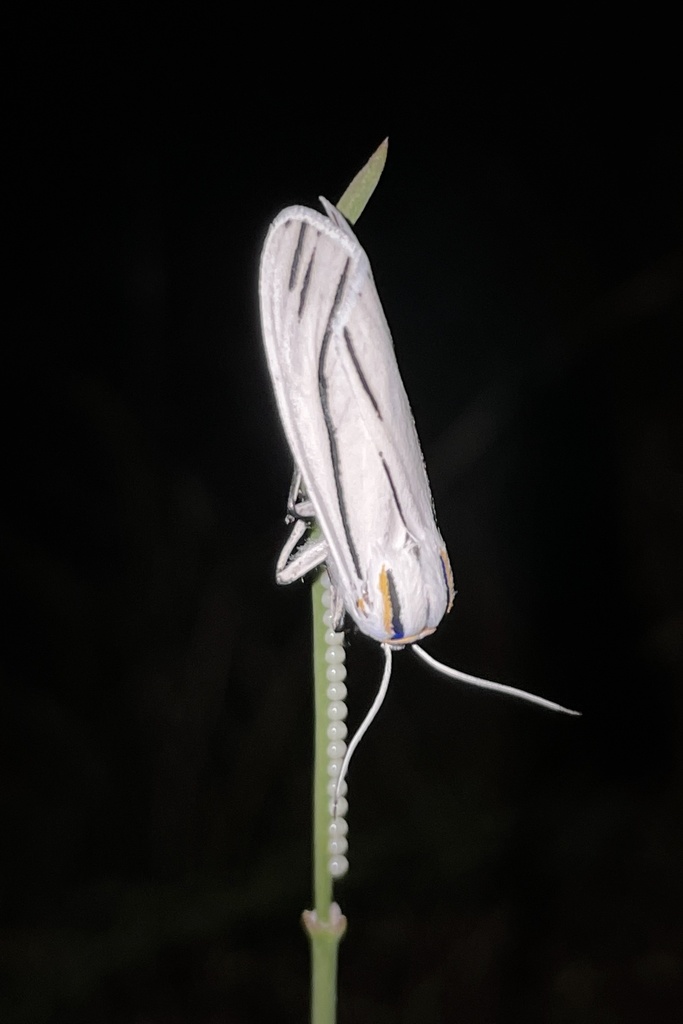
(c) Madeleine Claire, some rights reserved (CC BY) · licence
Family: Erebidae · Class: Insecta · Order: Lepidoptera
Ectypia clio is a California animal in the Erebidae family.
The Clio tiger moth (Ectypia clio) is a moth in the family Erebidae, subfamily Arctiinae. This species was described by Packard in 1864 and is part of the diverse tiger moth group known for their often colorful wing patterns and woolly bear caterpillars. The adult moth displays typical tiger moth characteristics, though specific wing measurements and detailed coloration patterns have not been extensively documented in the scientific literature. Like other Arctiinae moths, adults likely possess the characteristic broad wings and robust body structure of the subfamily. Ectypia clio occurs across a broad range of western and central North America. The species is found in California and extends eastward from southwestern to western Nebraska and south to Texas (iNaturalist). The distribution also includes Arizona, Utah, New Mexico, and Colorado, indicating adaptation to diverse environmental conditions across multiple biogeographic regions. The species inhabits lowland areas where it is commonly found along creeks and rivers, as well as in agricultural and urban environments (iNaturalist). This habitat preference suggests tolerance for human-modified landscapes and association with riparian corridors that provide necessary resources for both larval development and adult activities. The ability to persist in agricultural and urban areas indicates some degree of ecological flexibility. Larval ecology centers on milkweed plants, with caterpillars feeding on Asclepias species (NatureServe). This host plant relationship places the Clio tiger moth among the community of insects dependent on milkweeds, plants that contain cardiac glycosides providing chemical protection against predators. The larvae likely sequester these toxins, a common adaptation among milkweed-feeding insects. Adult feeding behavior and specific nectar sources have not been well documented in available literature. Reproductive timing and seasonal activity patterns require further scientific documentation. Like other tiger moths, the species likely has distinct flight periods when adults are active for mating and egg-laying, but specific months of adult emergence have not been clearly established in the literature. NatureServe assigns the species a Global Status of G5, indicating it is demonstrably secure globally with no immediate conservation concerns. This ranking suggests stable populations across the species' range, though local population trends and specific threats have not been extensively studied. The species' apparent tolerance for modified habitats may contribute to its overall stability. Despite its wide distribution, detailed biological information for Ectypia clio remains limited in the scientific literature. Research gaps include specific wing measurements, detailed life cycle timing, comprehensive host plant documentation beyond Asclepias, and population monitoring data. The information presented here is based on available sources including iNaturalist observations and NatureServe conservation assessments. Additional field studies would enhance understanding of this species' ecology and distribution patterns across its range.
Classification
Class: Insecta · Order: Lepidoptera · Family: Erebidae
Frequently asked questions
How is Ectypia clio classified?
Ectypia clio belongs to class Insecta, order Lepidoptera, family Erebidae.
What family does Ectypia clio belong to?
Ectypia clio is in the Erebidae family.
What is Ectypia clio?
The Clio tiger moth (Ectypia clio) is a moth in the family Erebidae, subfamily Arctiinae.
Is Ectypia clio found in California?
Yes. Ectypia clio is recorded in California in The California Species Project's catalogue.
Related species
Other California species in the same genus, family, or bioregion.
Data from The California Species Project — 14,000+ California species with verified data from CNPS, CDFW, USFWS, and more.