Efferia antiochi
Antioch Efferian Robberfly
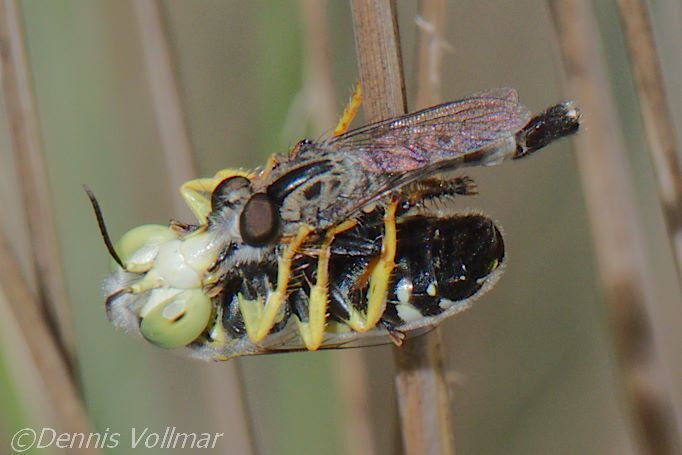
(c) Dennis Vollmar, some rights reserved (CC BY) · licence
Family: Asilidae · Class: Insecta · Order: Diptera
Conservation status: G1G2 S1S2
Efferia antiochi (Antioch Efferian Robberfly) is a California animal in the Asilidae family.
The Antioch efferian robberfly (Efferia antiochi) is a rare dipteran species in the family Asilidae, subfamily Asilinae. As a member of the robberfly family, this species likely exhibits the characteristic predatory behavior typical of asilids, though specific morphological details have not been well documented in the scientific literature. This species appears to be endemic to a very restricted range in California, specifically associated with the Antioch Dunes area of Contra Costa County. The common name directly references this highly localized distribution. According to the U.S. Fish and Wildlife Service, E. antiochi is designated as a Species of Concern, reflecting uncertainty about its population status and conservation needs (USFWS ECOS database, as of December 2025). Habitat requirements for the Antioch efferian robberfly have not been thoroughly studied or documented. Given its association with the Antioch Dunes ecosystem and its inclusion alongside other rare Antioch Dunes endemic species in environmental assessments, it likely inhabits the unique sandy dune habitat of this region. The Antioch Dunes represent a specialized ecosystem characterized by inland sand dunes formed by wind-blown sediments from the Sacramento-San Joaquin Delta. As a robberfly, E. antiochi is presumed to be a predatory species that captures other flying insects, consistent with the feeding ecology of the family Asilidae. Adult robberflies typically hunt from perches, using their excellent vision to detect prey before making rapid pursuit flights. Specific prey preferences, seasonal activity patterns, and reproductive biology for this species remain undocumented in available scientific literature. The conservation status of the Antioch efferian robberfly reflects significant concern due to its extremely limited range and the ongoing threats to the Antioch Dunes ecosystem. NatureServe ranks the species as G1G2 (critically imperiled to imperiled globally) and S1S2 (critically imperiled to imperiled in California), indicating very high extinction risk. The Antioch Dunes have experienced substantial habitat loss and degradation due to sand mining, urban development, and invasion by non-native plant species. Many other endemic species associated with this ecosystem, including the federally endangered Antioch Dunes evening-primrose and the extinct Antioch Dunes shieldback katydid, demonstrate the vulnerability of this unique habitat. Detailed ecological studies of this species are lacking. The above information synthesizes available data from federal databases and environmental assessments. Additional research is needed to understand the species' specific habitat requirements, life history, population status, and conservation needs. Field surveys and taxonomic work would help clarify the current distribution and abundance of this poorly known endemic robberfly.
Classification
Class: Insecta · Order: Diptera · Family: Asilidae
Conservation status
G1G2 S1S2
Frequently asked questions
How is Efferia antiochi classified?
Efferia antiochi belongs to class Insecta, order Diptera, family Asilidae.
What family does Efferia antiochi belong to?
Efferia antiochi is in the Asilidae family.
Is Efferia antiochi protected or of conservation concern?
Efferia antiochi carries the following status: G1G2 S1S2.
What is Efferia antiochi?
The Antioch efferian robberfly (Efferia antiochi) is a rare dipteran species in the family Asilidae, subfamily Asilinae.
Is Efferia antiochi found in California?
Yes. Efferia antiochi is recorded in California in The California Species Project's catalogue.
Related species
Other California species in the same genus, family, or bioregion.
Data from The California Species Project — 14,000+ California species with verified data from CNPS, CDFW, USFWS, and more.