Egira cognata
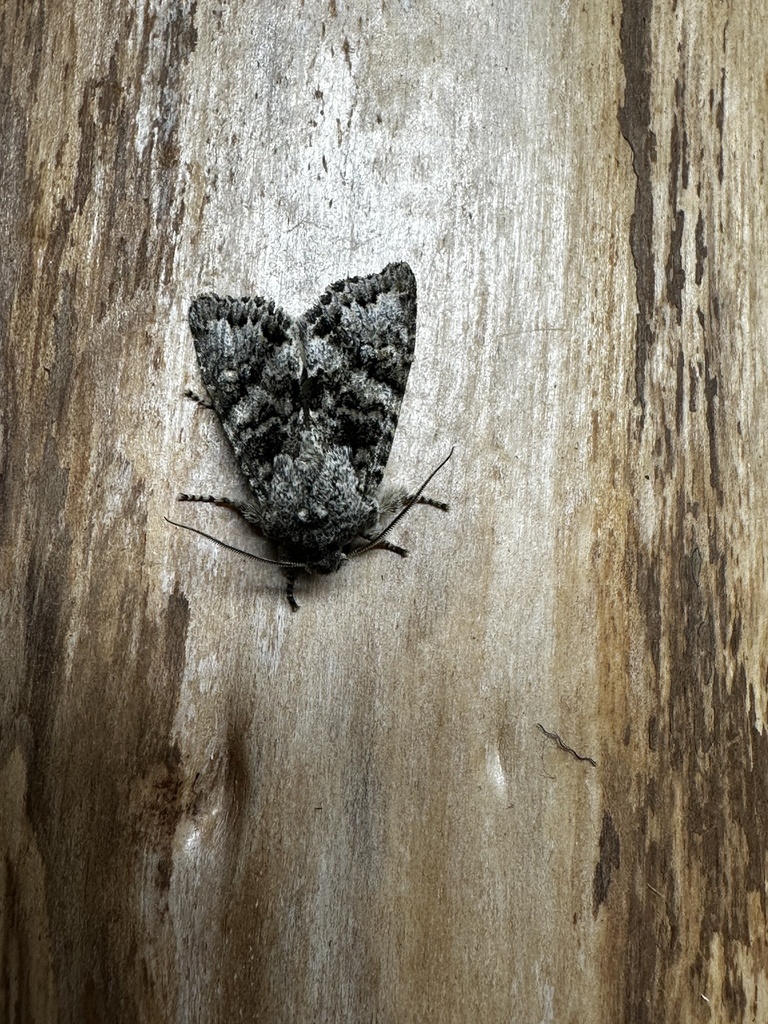
(c) Dave, some rights reserved (CC BY) · licence
Family: Noctuidae · Class: Insecta · Order: Lepidoptera
Egira cognata is a California animal in the Noctuidae family.
Egira cognata is a moth in the family Noctuidae, representing one of the lesser-documented members of California's lepidopteran fauna. This species belongs to the genus Egira, a group of noctuid moths that are part of the diverse nocturnal moth community found across North America. Detailed morphological descriptions for E. cognata remain limited in the scientific literature. Like other members of the genus Egira, adults are likely medium-sized moths with cryptic coloration patterns typical of noctuids. The forewings probably display the mottled browns and grays characteristic of this genus, providing effective camouflage when resting on tree bark or other surfaces during daylight hours. Specific measurements and distinguishing features have not been well documented in accessible sources. The distribution of E. cognata within California has not been comprehensively mapped. According to NatureServe, the species has a global conservation status of GNR (Global Not Ranked), indicating insufficient data to assess its conservation needs (NatureServe 2025). This ranking suggests that basic distributional and ecological information remains incomplete. The species appears to have a broader North American range, with records from multiple states, though specific county-level occurrence data for California is lacking. Habitat requirements for E. cognata have not been thoroughly studied or documented. Based on general patterns observed in related Egira species, this moth likely inhabits forested or woodland environments where suitable host plants occur. The elevation range, specific vegetation associations, and microhabitat preferences remain undocumented in available literature. The life history and ecological relationships of E. cognata are poorly understood. Host plant associations, if any are specific, have not been identified through published research. Larval development, including the number of generations per year, overwintering stage, and seasonal activity patterns, remains undocumented. Adult flight periods and mating behaviors have not been systematically recorded. Like other noctuids, adults are presumably nocturnal and may be attracted to artificial light sources, but specific behavioral observations are lacking. E. cognata does not appear on federal or state endangered species lists, and no specific conservation assessments have been conducted for this species in California. The NatureServe GNR status reflects the broader challenge of assessing conservation needs for poorly studied invertebrate species. In Arkansas, E. cognata was included on the state's Species of Greatest Conservation Need list in 2006, specifically noting that some species were included because insufficient information exists to determine their conservation status (BugGuide 2016). This designation highlights the data gaps that exist for many native moth species across their ranges. Comprehensive surveys and taxonomic studies are needed to better understand the distribution, ecology, and conservation status of E. cognata in California. The limited available information underscores the importance of continued invertebrate biodiversity research and documentation efforts throughout the state.
Classification
Class: Insecta · Order: Lepidoptera · Family: Noctuidae
Frequently asked questions
How is Egira cognata classified?
Egira cognata belongs to class Insecta, order Lepidoptera, family Noctuidae.
What family does Egira cognata belong to?
Egira cognata is in the Noctuidae family.
What is Egira cognata?
Egira cognata is a moth in the family Noctuidae, representing one of the lesser-documented members of California's lepidopteran fauna.
Is Egira cognata found in California?
Yes. Egira cognata is recorded in California in The California Species Project's catalogue.
Related species
Other California species in the same genus, family, or bioregion.
Data from The California Species Project — 14,000+ California species with verified data from CNPS, CDFW, USFWS, and more.