Egira curialis
Curious Egira
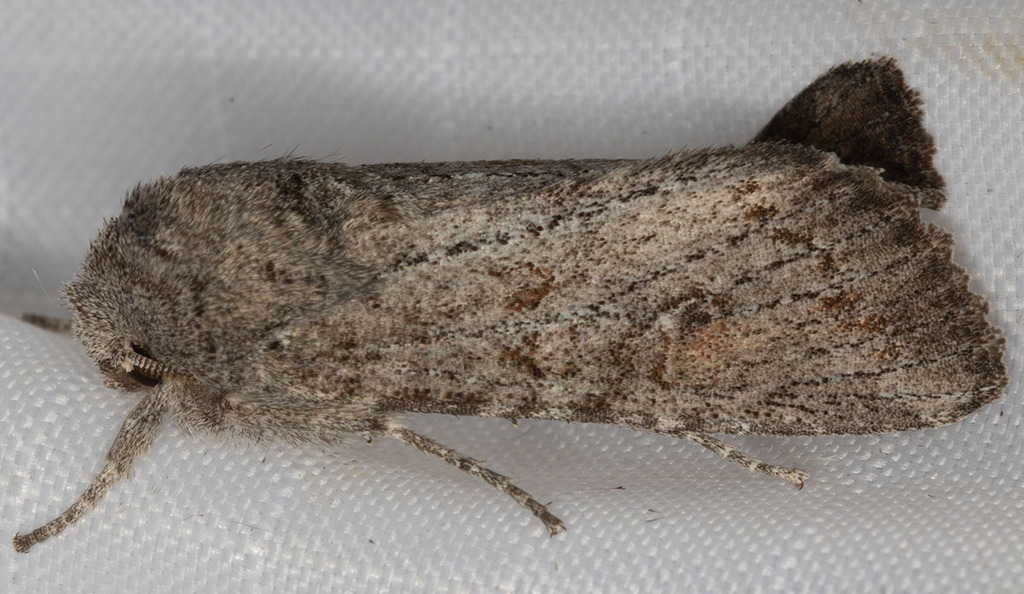
(c) Pinnacles National Park, some rights reserved (CC BY) · licence
Family: Noctuidae · Class: Insecta · Order: Lepidoptera
Egira curialis (Curious Egira) is a California animal in the Noctuidae family.
Egira curialis is a noctuid moth in the subfamily Noctuinae, tribe Orthosiini. This species belongs to a genus of spring-flying moths that are active during cooler months when many other lepidopteran species are dormant. Physical characteristics and wing patterns for this species have not been comprehensively documented in readily available scientific literature. The species occurs in western North America, with documented records from California's Central Valley and Sierra Nevada regions. Specific California records include Fresno County, where specimens have been collected at Coalinga along Mineral Springs Road in the Coast Ranges (News of the Lepidopterists' Society 2005). Additional records suggest presence in the Sierra Nevada, with collections reported from Sierra County near Yuba Pass. The full extent of the species' California range requires further documentation. Habitat preferences for Egira curialis have not been well-characterized in the scientific literature. Based on collection localities, the species appears to inhabit areas with mixed vegetation including chaparral and oak woodland communities. Specimens have been collected at moderate elevations in both coastal mountain ranges and the Sierra Nevada, suggesting adaptation to diverse topographic conditions. The species' association with specific plant communities or microhabitats remains poorly documented. Like other members of the genus Egira, E. curialis likely exhibits early spring flight activity, distinguishing it from most noctuids that are active during warmer months. Adult moths in this genus typically emerge during late winter through early spring when temperatures are cool and many deciduous trees remain leafless. Larval host plants and feeding behavior have not been documented for this species. The life cycle duration, number of generations per year, and specific reproductive behaviors require further study. Egira curialis does not appear on federal or state endangered species lists and lacks formal conservation status designations. The species' population trends and conservation needs are not well-documented due to limited systematic surveys. Collection records suggest a naturally restricted distribution within California, though this may reflect collection bias rather than true rarity. Climate change impacts on early spring-flying moths could potentially affect this species through altered temperature and precipitation patterns during its active period. Habitat loss from urban development and agricultural conversion in the Central Valley and foothills may pose threats to local populations. Scientific documentation for this species remains limited. The information presented here synthesizes available sources including lepidopterological society records and taxonomic databases. Detailed ecological studies, comprehensive distribution mapping, and life history documentation are needed to better understand this species' biology and conservation requirements. We welcome contributions of verified scientific data, photographs, or field observations to enhance this species account.
Classification
Class: Insecta · Order: Lepidoptera · Family: Noctuidae
Frequently asked questions
How is Egira curialis classified?
Egira curialis belongs to class Insecta, order Lepidoptera, family Noctuidae.
What family does Egira curialis belong to?
Egira curialis is in the Noctuidae family.
What is Egira curialis?
Egira curialis is a noctuid moth in the subfamily Noctuinae, tribe Orthosiini.
Is Egira curialis found in California?
Yes. Egira curialis is recorded in California in The California Species Project's catalogue.
Related species
Other California species in the same genus, family, or bioregion.
Data from The California Species Project — 14,000+ California species with verified data from CNPS, CDFW, USFWS, and more.