Egira hiemalis
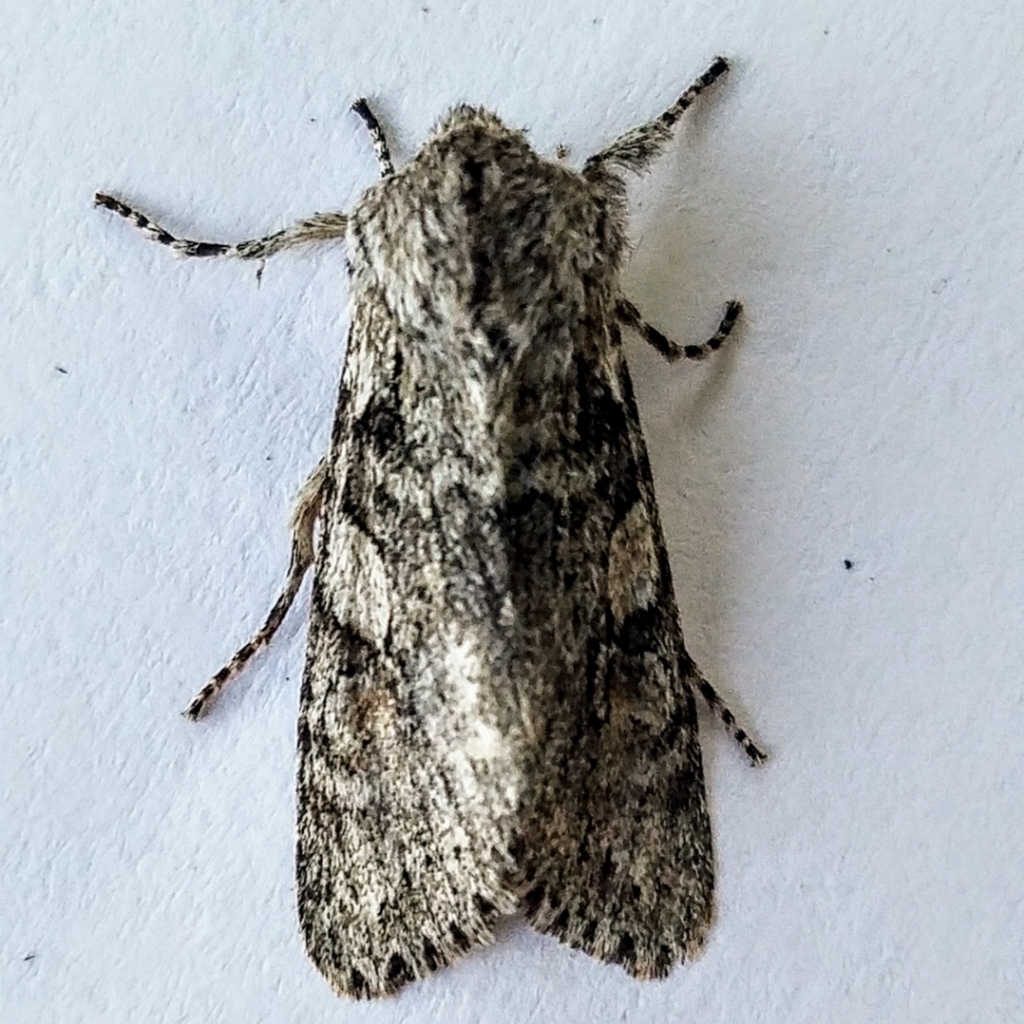
(c) Charles Swift, some rights reserved (CC BY) · licence
Family: Noctuidae · Class: Insecta · Order: Lepidoptera
Egira hiemalis is a California animal in the Noctuidae family.
Egira hiemalis is a moth species in the family Noctuidae, commonly known as the winter moth or February moth. This nocturnal lepidopteran exhibits the typical characteristics of the Egira genus, with adults displaying muted earth-tone coloration that provides effective camouflage during daylight hours. The forewings are typically brownish-gray with subtle darker markings and cross-lines, while the hindwings are lighter, often pale gray to whitish. Adults measure approximately 35-45 mm in wingspan, with females generally larger than males. The species can be distinguished from related Egira species by specific wing pattern details and genitalic characteristics that require expert examination. Egira hiemalis occurs across much of North America, with its range extending from southern Canada through the United States. In California, the species has been documented in various regions, though comprehensive distribution data remains limited. The moth's presence in the state suggests it occupies suitable habitat across multiple ecological zones, likely following patterns similar to other widespread Noctuidae species. The species inhabits deciduous and mixed woodlands, where larvae feed on various hardwood trees. Host plants typically include oak (Quercus species), maple (Acer species), and other broad-leaved trees common in temperate forest ecosystems. Adults are attracted to artificial lights and can be found in suburban areas adjacent to suitable woodland habitat. The species demonstrates adaptability to human-modified landscapes where host trees persist. Egira hiemalis follows a univoltine life cycle, producing one generation annually. Adults emerge during late winter and early spring, typically from February through April, which accounts for common names referencing this seasonal timing. Females deposit eggs on host plant bark or in crevices, where they remain through summer and fall. Larvae hatch in late fall or early spring and feed on emerging foliage. The caterpillars are loopers, moving in a characteristic arching motion, and develop through several instars before pupating in soil or leaf litter. Adults are nocturnal and attracted to light sources, making them relatively easy to observe during their flight period. Currently, Egira hiemalis does not appear on federal or state conservation lists and is not considered a species of conservation concern. The moth's widespread distribution and apparent adaptability to various woodland habitats suggest stable populations across most of its range. However, like many forest-dependent species, it may face localized pressures from habitat fragmentation and forest management practices. Climate change could potentially affect the species' phenology, particularly the timing of adult emergence relative to host plant leaf development. The species serves as part of forest ecosystem food webs, with larvae providing food for birds and other predators during the growing season.
Classification
Class: Insecta · Order: Lepidoptera · Family: Noctuidae
Frequently asked questions
How is Egira hiemalis classified?
Egira hiemalis belongs to class Insecta, order Lepidoptera, family Noctuidae.
What family does Egira hiemalis belong to?
Egira hiemalis is in the Noctuidae family.
What is Egira hiemalis?
Egira hiemalis is a moth species in the family Noctuidae, commonly known as the winter moth or February moth.
Is Egira hiemalis found in California?
Yes. Egira hiemalis is recorded in California in The California Species Project's catalogue.
Related species
Other California species in the same genus, family, or bioregion.
Data from The California Species Project — 14,000+ California species with verified data from CNPS, CDFW, USFWS, and more.