Egira perlubens
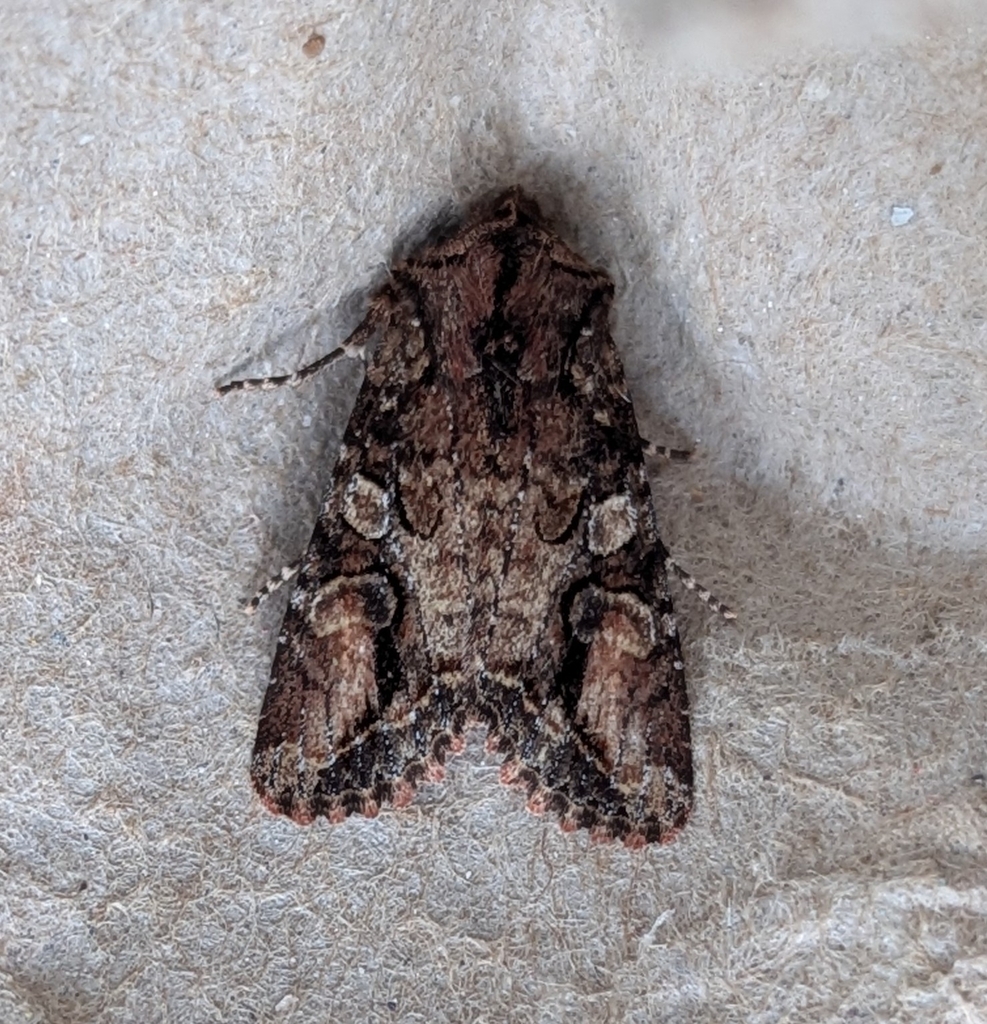
no rights reserved · CC0
Family: Noctuidae · Class: Insecta · Order: Lepidoptera
Egira perlubens is a California animal in the Noctuidae family.
Egira perlubens is a moth species in the family Noctuidae, commonly known as owlet moths or cutworm moths. This species belongs to the genus Egira, which contains several North American moths with similar morphological characteristics. As with many noctuid moths, Egira perlubens likely exhibits the typical robust body structure and cryptic wing coloration patterns that characterize this diverse family. The forewings of Egira perlubens are typically mottled with browns, grays, and subtle markings that provide effective camouflage against tree bark and other natural substrates where adults rest during daylight hours. The hindwings are generally paler than the forewings, a common pattern in noctuids. Wing span measurements and detailed morphological descriptions for this species are not readily available in current literature, indicating potential gaps in taxonomic documentation. The geographic range of Egira perlubens appears to be poorly documented in accessible scientific literature. Many Egira species are known from western North America, including California, but specific distribution records for E. perlubens require further verification. The genus Egira is generally associated with temperate regions where suitable host plants occur. Habitat requirements for Egira perlubens are not well-established in current taxonomic databases. Other Egira species typically inhabit areas with deciduous or mixed forests, where their larval host plants grow. These moths generally prefer areas with moderate moisture levels and protection from extreme weather conditions. Adults are likely nocturnal and attracted to artificial lights, following typical noctuid behavior patterns. The life cycle of Egira perlubens follows the standard lepidopteran pattern of egg, larva, pupa, and adult stages. Larvae of related Egira species are known to feed on various deciduous trees and shrubs, but specific host plant associations for E. perlubens have not been documented in readily accessible sources. Adult flight periods and breeding behaviors are not well-documented for this species, though related species typically have one or two generations per year depending on climate conditions. The conservation status of Egira perlubens is uncertain due to limited available data. No federal or state listing status has been assigned to this species, which may indicate either stable populations or insufficient survey data to assess population trends. The apparent lack of comprehensive ecological and distributional information suggests this species may be understudied, a common situation for many moth species that are often overlooked in biodiversity assessments. This data gap represents a significant challenge for conservation planning, as effective protection strategies require understanding of species' ecological requirements, population status, and threat factors. Further taxonomic and ecological research is needed to establish baseline population data and habitat requirements for Egira perlubens to inform any future conservation efforts that may become necessary.
Classification
Class: Insecta · Order: Lepidoptera · Family: Noctuidae
Frequently asked questions
How is Egira perlubens classified?
Egira perlubens belongs to class Insecta, order Lepidoptera, family Noctuidae.
What family does Egira perlubens belong to?
Egira perlubens is in the Noctuidae family.
What is Egira perlubens?
Egira perlubens is a moth species in the family Noctuidae, commonly known as owlet moths or cutworm moths.
Is Egira perlubens found in California?
Yes. Egira perlubens is recorded in California in The California Species Project's catalogue.
Related species
Other California species in the same genus, family, or bioregion.
Data from The California Species Project — 14,000+ California species with verified data from CNPS, CDFW, USFWS, and more.