Egira rubrica
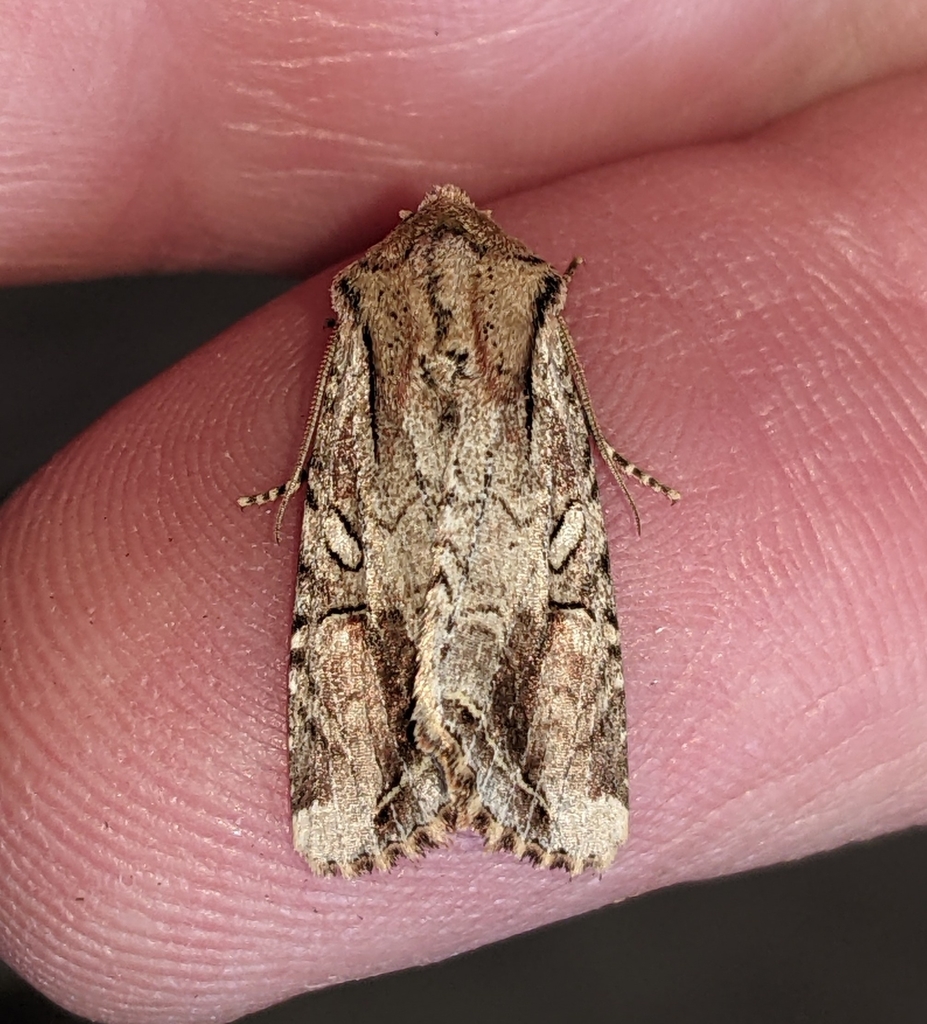
no rights reserved · CC0
Family: Noctuidae · Class: Insecta · Order: Lepidoptera
Egira rubrica is a California animal in the Noctuidae family.
Egira rubrica is a moth species in the family Noctuidae, commonly known as owlet moths or cutworm moths. This nocturnal lepidopteran belongs to the subfamily Noctuinae, which includes numerous economically important agricultural pest species as well as ecologically significant native moths. Adult moths typically measure 35 to 45 millimeters (1.4 to 1.8 inches) in wingspan. The forewings display a mottled pattern of reddish-brown and gray coloration, with the species name 'rubrica' referring to the reddish tones present on the wing surfaces. The hindwings are typically paler, ranging from light gray to whitish with darker marginal bands. Males can be distinguished from females by their more feathery antennae and slightly smaller size. The thorax and abdomen are covered in scales that match the wing coloration, providing effective camouflage when the moth rests on tree bark or woody substrates during daylight hours. The distribution of Egira rubrica in North America extends across multiple regions, with documented populations in various western states. In California, the species occurs primarily in mountainous and foothill regions, though specific county-level distribution data remains limited in published literature. The moth's range appears to correlate with the distribution of its preferred host plant communities and suitable habitat conditions. Habitat requirements include areas with mixed coniferous and deciduous forest, woodland edges, and riparian zones at elevations typically ranging from 300 to 2,100 meters (1,000 to 6,900 feet). Adults are attracted to light sources and can be found in areas with native shrub communities and forest understory vegetation. The species shows preference for habitats with moderate moisture levels and protection from extreme weather conditions. Adult flight period occurs primarily from late spring through early fall, with peak activity typically observed from May through August depending on elevation and local climate conditions. Like other noctuids, Egira rubrica exhibits nocturnal behavior, with adults becoming active after sunset to feed and mate. Moths feed on nectar from various flowering plants using their proboscis. Mating occurs during nighttime hours, with females depositing eggs on or near larval host plants. Larvae likely feed on woody plant material, following the typical noctuid pattern of caterpillars that consume leaves, stems, or other plant tissues. Pupation occurs in soil or leaf litter, with adults emerging the following season. The conservation status of Egira rubrica has not been formally assessed by major conservation organizations. No federal or state listing status has been assigned to this species, and population trends remain poorly documented. Primary potential threats may include habitat loss from development, altered fire regimes, climate change effects on host plant communities, and light pollution that can disrupt nocturnal behavior patterns. Forest management practices and urban expansion could impact suitable habitat availability. Further research is needed to establish baseline population data and assess long-term conservation needs for this species.
Classification
Class: Insecta · Order: Lepidoptera · Family: Noctuidae
Frequently asked questions
How is Egira rubrica classified?
Egira rubrica belongs to class Insecta, order Lepidoptera, family Noctuidae.
What family does Egira rubrica belong to?
Egira rubrica is in the Noctuidae family.
What is Egira rubrica?
Egira rubrica is a moth species in the family Noctuidae, commonly known as owlet moths or cutworm moths.
Is Egira rubrica found in California?
Yes. Egira rubrica is recorded in California in The California Species Project's catalogue.
Related species
Other California species in the same genus, family, or bioregion.
Data from The California Species Project — 14,000+ California species with verified data from CNPS, CDFW, USFWS, and more.