Egira simplex
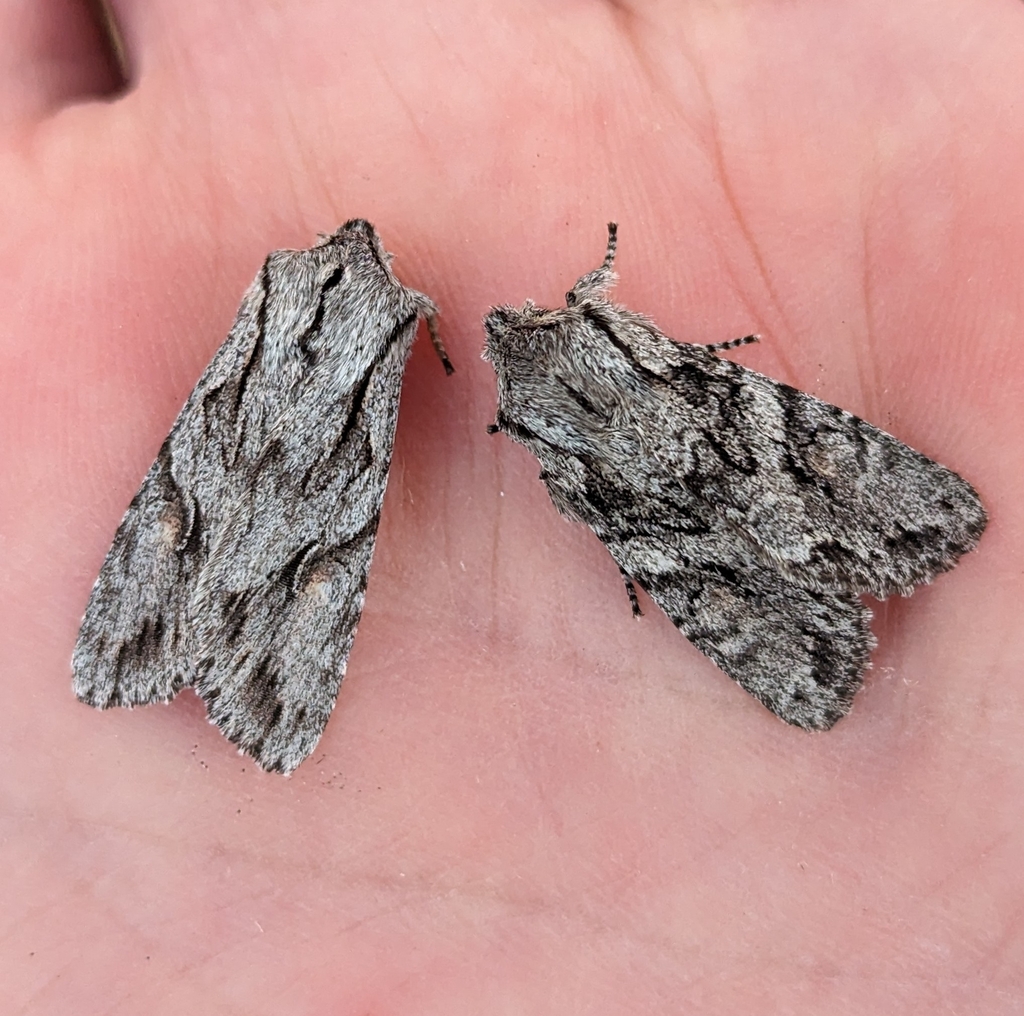
no rights reserved · CC0
Family: Noctuidae · Class: Insecta · Order: Lepidoptera
Egira simplex is a California animal in the Noctuidae family.
Egira simplex is a moth species in the family Noctuidae, commonly known as owlet moths or cutworm moths. This species belongs to a diverse family of nocturnal Lepidoptera that includes over 11,000 described species worldwide. The genus Egira comprises medium-sized moths typically associated with deciduous forest habitats across North America. Adult Egira simplex moths display the characteristic features of their genus, with forewings that are generally brown to gray in coloration with subtle patterning. The species name 'simplex' suggests relatively simple wing markings compared to other members of the genus. Like other Noctuidae, adults possess thread-like antennae and wings that fold roof-like over the body when at rest. The wingspan typically ranges from 30 to 40 millimeters (1.2 to 1.6 inches), consistent with other Egira species. The distribution of Egira simplex within California and its broader North American range requires further documentation. Members of the genus Egira are generally found in temperate regions with deciduous or mixed forests, suggesting this species likely occurs in similar habitats. California populations, if present, would most likely be found in foothill woodlands, oak savannas, or mixed coniferous-deciduous forests at moderate elevations. Egira simplex likely inhabits areas with abundant deciduous vegetation, as caterpillars of related species typically feed on the foliage of various deciduous trees and shrubs. The specific habitat requirements, including elevation preferences, plant associations, and microclimate needs, remain poorly documented for this species. Adults are presumably nocturnal, following the typical behavioral pattern of Noctuidae, and would be attracted to artificial lights during their flight period. Like other members of Noctuidae, Egira simplex undergoes complete metamorphosis with egg, larval, pupal, and adult stages. The timing of these life stages in California is not well documented. Larvae likely feed on deciduous foliage, though specific host plant preferences have not been confirmed for this species. Adults probably emerge during spring or early summer months, as is typical for temperate Noctuidae species. Mating occurs during the adult flight period, with females depositing eggs on or near suitable host plants. The conservation status of Egira simplex is not currently assessed by federal or state agencies, and it does not appear on any special status species lists. This lack of formal assessment likely reflects limited knowledge about the species' distribution, abundance, and population trends rather than confirmed stability. Many moth species, particularly those in diverse families like Noctuidae, remain understudied regarding their conservation needs. Potential threats to moths in general include habitat loss, light pollution, pesticide use, and climate change effects on host plant phenology and distribution. Further research is needed to determine the species' current status, distribution patterns, and specific habitat requirements to assess any conservation needs.
Classification
Class: Insecta · Order: Lepidoptera · Family: Noctuidae
Frequently asked questions
How is Egira simplex classified?
Egira simplex belongs to class Insecta, order Lepidoptera, family Noctuidae.
What family does Egira simplex belong to?
Egira simplex is in the Noctuidae family.
What is Egira simplex?
Egira simplex is a moth species in the family Noctuidae, commonly known as owlet moths or cutworm moths.
Is Egira simplex found in California?
Yes. Egira simplex is recorded in California in The California Species Project's catalogue.
Related species
Other California species in the same genus, family, or bioregion.
Data from The California Species Project — 14,000+ California species with verified data from CNPS, CDFW, USFWS, and more.