Egretta caerulea
Little Blue Heron
no rights reserved · CC0
Family: Ardeidae · Class: Aves · Order: Pelecaniformes
Egretta caerulea (Little Blue Heron) is a California animal in the Ardeidae family.
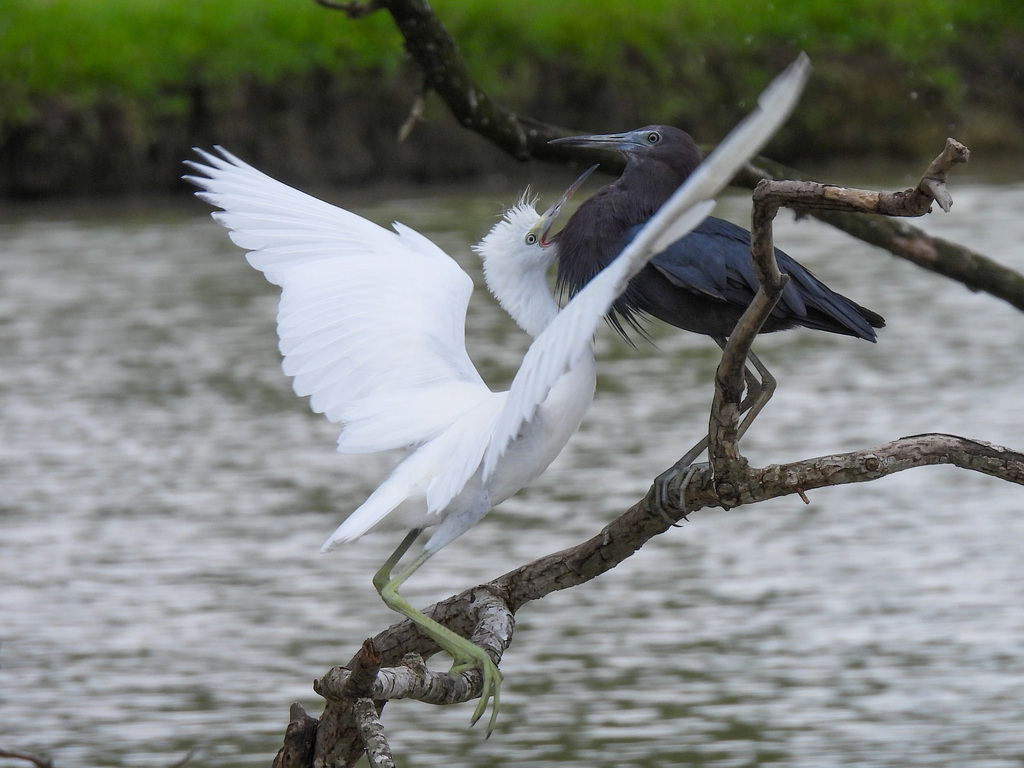
The Little Blue Heron is a medium-sized wading bird measuring 56 to 74 cm (22 to 29 inches) in length with a wingspan of 102 to 107 cm (40 to 42 inches). Adults weigh between 325 to 400 grams (11.5 to 14.1 ounces). Adult birds display distinctive slate-blue to dark blue-gray plumage with maroon coloration on the head and neck during breeding season. The bill is blue-gray with a black tip, and the legs are dark blue to black. Juveniles present strikingly different white plumage, often causing confusion with other heron species. This white juvenile phase persists through the first year before molting into adult coloration. Historically, Little Blue Herons bred throughout much of California's Central Valley and coastal regions. Currently, the species maintains a limited breeding presence in California, primarily in the Sacramento Valley, San Francisco Bay area, and select locations in the Central Valley. Year-round populations are found in southern California, particularly around the Salton Sea and Colorado River valley. The species also occurs as a migrant and winter visitor throughout suitable wetland habitats statewide. Little Blue Herons inhabit freshwater and brackish marshes, swamps, ponds, lakes, and slow-moving streams. They prefer areas with emergent vegetation and shallow water depths of 5 to 25 cm (2 to 10 inches). During breeding season, they nest colonially in mixed-species rookeries, typically selecting sites in trees or shrubs 3 to 6 meters (10 to 20 feet) above water or ground level. Nesting habitat includes willows, cottonwoods, and other riparian vegetation. The species feeds primarily on small fish, frogs, tadpoles, aquatic insects, and crustaceans. Little Blue Herons employ a patient hunting strategy, standing motionless in shallow water before striking prey with rapid bill movements. Breeding occurs from March through August in California, with peak activity in April and May. Females construct platform nests of sticks and twigs, laying 2 to 5 pale blue-green eggs. Incubation lasts 22 to 24 days, with both parents sharing duties. Young fledge after 42 to 49 days but remain dependent on adults for several additional weeks. Little Blue Herons are not federally or state listed in California, though populations have declined significantly from historical levels. According to the North American Breeding Bird Survey, the species experienced a 2.4% annual decline from 1966 to 2019. Primary threats include habitat loss from urban development and agricultural conversion, water diversions affecting wetland ecosystems, and pesticide contamination. Climate change poses additional challenges through altered precipitation patterns and increased drought frequency in western North America. Conservation efforts focus on protecting and restoring wetland habitats, particularly in the Central Valley where breeding populations persist.
Classification
Class: Aves · Order: Pelecaniformes · Family: Ardeidae
Frequently asked questions
How is Egretta caerulea classified?
Egretta caerulea belongs to class Aves, order Pelecaniformes, family Ardeidae.
What family does Egretta caerulea belong to?
Egretta caerulea is in the Ardeidae family.
What is Egretta caerulea?
The Little Blue Heron is a medium-sized wading bird measuring 56 to 74 cm (22 to 29 inches) in length with a wingspan of 102 to 107 cm (40 to 42 inches).
Is Egretta caerulea found in California?
Yes. Egretta caerulea is recorded in California in The California Species Project's catalogue.
Related species
Other California species in the same genus, family, or bioregion.
Data from The California Species Project — 14,000+ California species with verified data from CNPS, CDFW, USFWS, and more.