Egretta rufescens
Reddish Egret
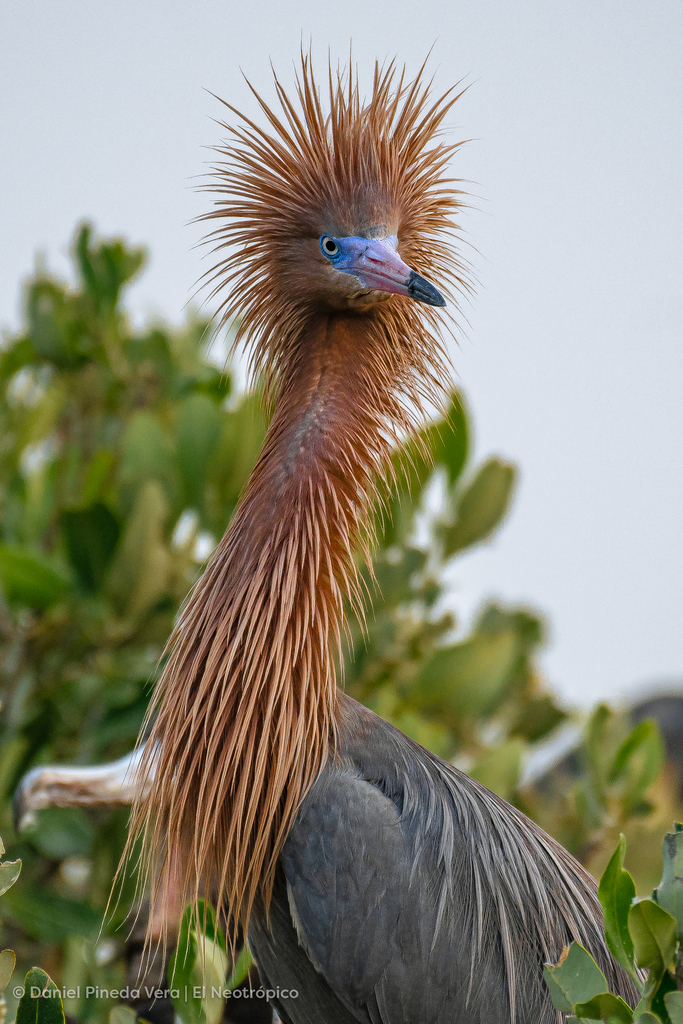
(c) Daniel Pineda Vera, some rights reserved (CC BY) · licence
Family: Ardeidae · Class: Aves · Order: Pelecaniformes
Egretta rufescens (Reddish Egret) is a California animal in the Ardeidae family.
The Reddish Egret is a medium-sized wading bird measuring 68 to 82 centimeters (27 to 32 inches) in length with a wingspan of 116 to 125 centimeters (46 to 49 inches). Adults weigh between 364 to 870 grams (12.8 to 30.7 ounces). The species exhibits two distinct color morphs: the more common dark morph displays slate-blue to grayish plumage with rusty-red head and neck feathers, while the rare white morph appears entirely white. Both morphs possess a distinctive bicolored bill with a pink base and black tip, and blue-gray to black legs. During breeding season, adults develop long, shaggy plumes on the head, neck, and back. Historically, Reddish Egrets bred along the California coast from San Diego County north to San Francisco Bay. The species experienced severe population decline in the early 20th century due to plume hunting and habitat loss. Currently, Reddish Egrets are extremely rare visitors to California, with occasional sightings reported along the southern coast, particularly in San Diego County and the Salton Sea area. The species primarily breeds along the Gulf Coast of Texas, Louisiana, and Mexico, with smaller populations in Florida and the Caribbean. Reddish Egrets inhabit shallow saltwater and brackish environments including tidal flats, salt marshes, mangrove swamps, lagoons, and shallow bays. The species prefers areas with water depths less than 60 centimeters (24 inches) and muddy or sandy substrates rich in small fish. Nesting occurs on islands or isolated areas in low shrubs, mangroves, or ground sites, typically 0.5 to 3 meters (1.6 to 9.8 feet) above ground or water. Reddish Egrets employ a distinctive active foraging strategy, often running through shallow water with spread wings while pursuing prey. This behavior, termed "canopy feeding," involves using wings to create shade that may attract fish or reduce glare. The diet consists primarily of small fish including killifish, anchovies, and mullet, supplemented by frogs, crustaceans, and aquatic insects. Breeding occurs from April through August, with pairs constructing platform nests of sticks and vegetation. Females lay 2 to 7 pale blue-green eggs, with an average clutch size of 3 to 4 eggs. Incubation lasts 25 to 26 days, and young fledge after 45 to 49 days. The Reddish Egret is not federally listed but is considered a species of conservation concern. According to the North American Bird Conservation Initiative, the global population is estimated at 15,000 to 20,000 individuals. Primary threats include habitat loss from coastal development, sea level rise, and human disturbance at roosting and nesting sites. Hurricane impacts and pollution also affect breeding success. Conservation efforts focus on protecting nesting colonies and maintaining suitable foraging habitat in coastal areas.
Classification
Class: Aves · Order: Pelecaniformes · Family: Ardeidae
Frequently asked questions
How is Egretta rufescens classified?
Egretta rufescens belongs to class Aves, order Pelecaniformes, family Ardeidae.
What family does Egretta rufescens belong to?
Egretta rufescens is in the Ardeidae family.
What is Egretta rufescens?
The Reddish Egret is a medium-sized wading bird measuring 68 to 82 centimeters (27 to 32 inches) in length with a wingspan of 116 to 125 centimeters (46 to 49 inches).
Is Egretta rufescens found in California?
Yes. Egretta rufescens is recorded in California in The California Species Project's catalogue.
Related species
Other California species in the same genus, family, or bioregion.
Data from The California Species Project — 14,000+ California species with verified data from CNPS, CDFW, USFWS, and more.