Egretta thula
Snowy Egret
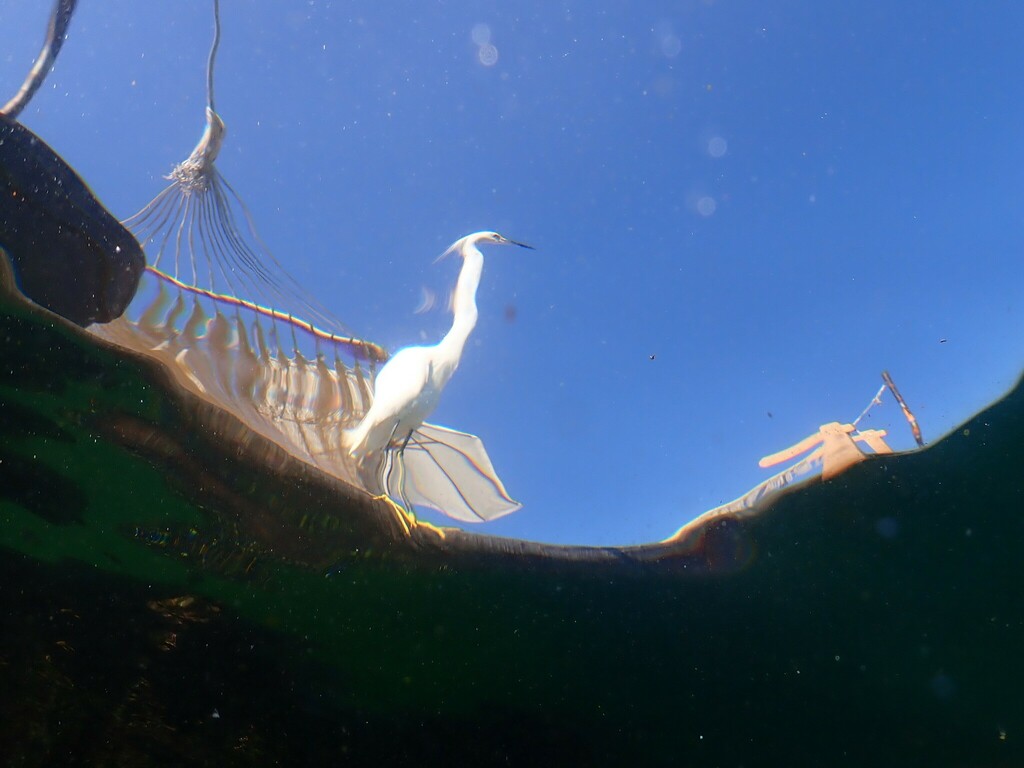
(c) Matt Muir, some rights reserved (CC BY) · licence
Family: Ardeidae · Class: Aves · Order: Pelecaniformes
Conservation status: G5 S4
Egretta thula (Snowy Egret) is a California animal in the Ardeidae family.
The Snowy Egret is a medium-sized wading bird measuring 56-66 cm (22-26 inches) in length with a wingspan of 100 cm (39 inches). Adults weigh 370-400 grams (13-14 ounces). The species displays pure white plumage year-round, with a thin black bill and long black legs terminating in distinctive bright yellow feet, often described as "golden slippers." During breeding season, adults develop delicate, recurved plumes on the head, neck, and back. The lores turn from yellow to red or pink, and the feet may become orange-red. Snowy Egrets breed throughout much of North America, from southern Canada to South America. In California, they are year-round residents in suitable habitat throughout the Central Valley, coastal regions, and southern California. The species also occurs in the San Francisco Bay Area and extends into the Sierra Nevada foothills. Northern populations migrate south for winter, while California birds are largely non-migratory. The species inhabits a wide variety of wetland environments including freshwater marshes, saltwater marshes, mudflats, shallow ponds, lagoons, rice fields, and irrigation ditches. Snowy Egrets prefer areas with water depths of 5-25 cm (2-10 inches) for optimal foraging. They nest colonially in mixed-species rookeries, typically placing stick nests 1-12 meters (3-40 feet) above ground in trees or shrubs near water. Snowy Egrets are opportunistic predators employing multiple foraging strategies. They wade slowly through shallow water or stand motionless waiting for prey, but also actively pursue fish by running and wing-flapping. Their diet consists primarily of small fish, frogs, snakes, crayfish, insects, and occasionally small mammals. The species often feeds in mixed flocks with other herons and egrets. Breeding occurs from March through August, with peak nesting in April and May. Females lay 2-6 pale blue-green eggs, which both parents incubate for 20-24 days. Young fledge after 20-25 days but remain dependent on parents for several weeks. The Snowy Egret is not federally or state listed and maintains a global conservation rank of G5 (globally secure) and California rank of S4 (apparently secure). However, the species faced severe population declines in the late 1800s and early 1900s due to hunting pressure for the millinery trade, which prized their breeding plumes. Protection under the Migratory Bird Treaty Act of 1918 enabled population recovery. Current threats include wetland habitat loss, water diversions, pollution, and disturbance at roosting and nesting sites. Climate change may affect food availability and suitable habitat distribution. In California, conversion of agricultural lands and urban development continue to reduce available foraging habitat, though the species has shown adaptability to modified environments including managed wetlands and wastewater treatment facilities. Population monitoring indicates stable or increasing trends across much of the species' range, though local declines occur in areas of significant habitat modification. Christmas Bird Count data suggests California populations have remained relatively stable over recent decades.
Classification
Class: Aves · Order: Pelecaniformes · Family: Ardeidae
Conservation status
G5 S4
Frequently asked questions
How is Egretta thula classified?
Egretta thula belongs to class Aves, order Pelecaniformes, family Ardeidae.
What family does Egretta thula belong to?
Egretta thula is in the Ardeidae family.
Is Egretta thula protected or of conservation concern?
Egretta thula carries the following status: G5 S4.
What is Egretta thula?
The Snowy Egret is a medium-sized wading bird measuring 56-66 cm (22-26 inches) in length with a wingspan of 100 cm (39 inches).
Is Egretta thula found in California?
Yes. Egretta thula is recorded in California in The California Species Project's catalogue.
Related species
Other California species in the same genus, family, or bioregion.
Data from The California Species Project — 14,000+ California species with verified data from CNPS, CDFW, USFWS, and more.