Egretta tricolor
Tricolored Heron
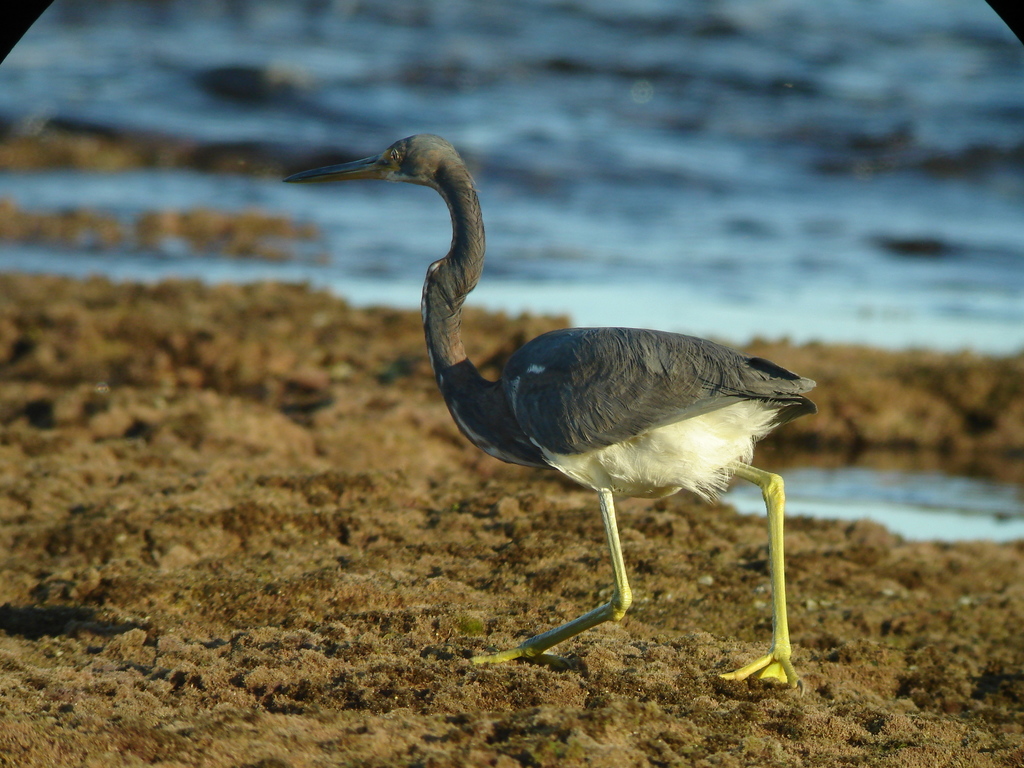
(c) Julien Renoult, some rights reserved (CC BY) · licence
Family: Ardeidae · Class: Aves · Order: Pelecaniformes
Egretta tricolor (Tricolored Heron) is a California animal in the Ardeidae family.
The Tricolored Heron is a medium-sized wading bird distinguished by its slender build and striking plumage pattern. Adults measure 56 to 76 cm (22 to 30 inches) in length with a wingspan of 96 cm (38 inches) and weigh between 334 to 415 grams (11.8 to 14.6 ounces). The species displays a distinctive tricolored pattern with a dark blue-gray head, neck, and back, contrasting white stripe running down the front of the neck, and rusty-colored patches on the wings and back. During breeding season, adults develop long, wispy plumes on the back and a bright blue facial patch. The bill is long, pointed, and yellowish with a dark tip, while the legs are yellow to orange. Tricolored Herons range along the Atlantic and Gulf coasts from Maine to Texas, and along the Pacific coast from Oregon to Baja California. In California, the species occurs primarily as a year-round resident in coastal wetlands from San Francisco Bay south to San Diego County, with smaller populations in the Central Valley and southeastern deserts. Historical breeding populations were more widespread, but current breeding is largely concentrated in San Francisco Bay, particularly in Alameda and Santa Clara counties. The species inhabits shallow freshwater and saltwater wetlands, including marshes, swamps, mangrove areas, ponds, lagoons, and flooded fields. Tricolored Herons prefer areas with water depths of 5 to 23 cm (2 to 9 inches) and emergent vegetation for nesting. They utilize both natural wetlands and artificial habitats such as managed ponds and rice fields. Nesting colonies are typically established in trees or shrubs 1 to 6 meters above ground or water. Tricolored Herons are active feeders, employing various hunting strategies including standing, walking slowly, and stirring sediment with their feet to flush prey. Their diet consists primarily of small fish, particularly killifish and minnows, supplemented by frogs, crustaceans, aquatic insects, and occasionally reptiles. Breeding occurs from March through August in California, with peak activity from April to June. Females construct platform nests of sticks and lay 3 to 5 pale blue-green eggs. Incubation lasts 21 to 25 days, and young fledge after 35 days but may remain dependent on parents for several additional weeks. The Tricolored Heron is not federally listed but faces significant conservation challenges in California. According to the North American Bird Conservation Initiative, the species has experienced a population decline of approximately 65% since 1966. Primary threats include habitat loss from coastal development, wetland drainage, water diversions, and climate change-induced sea level rise. Disturbance at breeding colonies from human activities and predation by introduced species also impact populations. Conservation efforts focus on protecting and restoring wetland habitats, managing water levels in key areas, and monitoring breeding colonies to ensure reproductive success.
Classification
Class: Aves · Order: Pelecaniformes · Family: Ardeidae
Frequently asked questions
How is Egretta tricolor classified?
Egretta tricolor belongs to class Aves, order Pelecaniformes, family Ardeidae.
What family does Egretta tricolor belong to?
Egretta tricolor is in the Ardeidae family.
What is Egretta tricolor?
The Tricolored Heron is a medium-sized wading bird distinguished by its slender build and striking plumage pattern.
Is Egretta tricolor found in California?
Yes. Egretta tricolor is recorded in California in The California Species Project's catalogue.
Related species
Other California species in the same genus, family, or bioregion.
Data from The California Species Project — 14,000+ California species with verified data from CNPS, CDFW, USFWS, and more.