Elaphrus viridis
Delta green ground beetle
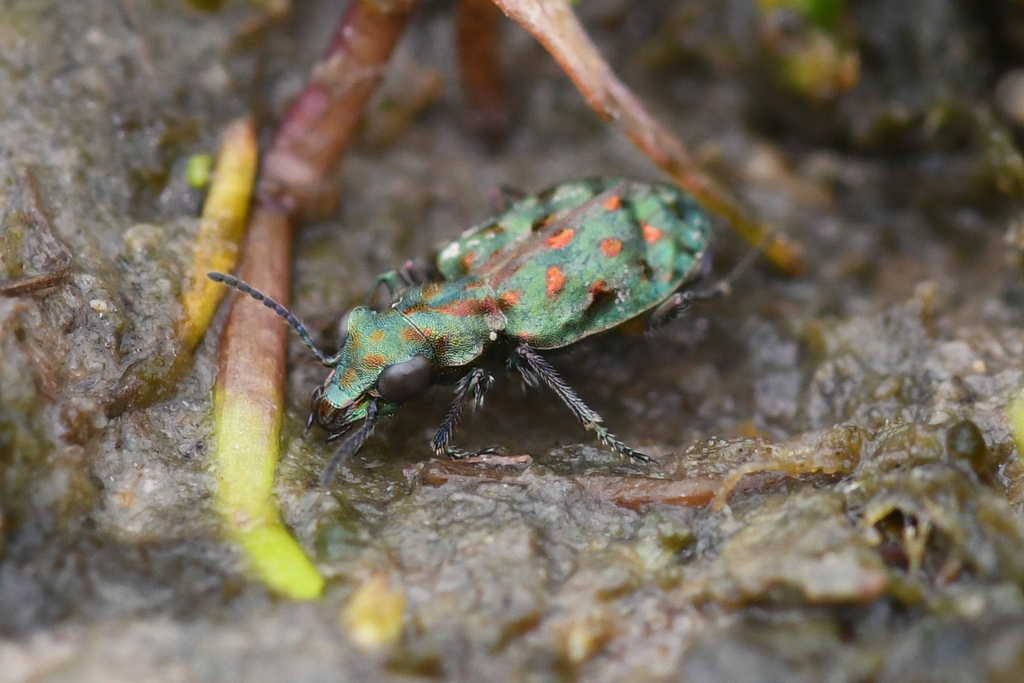
(c) Trevor Van Loon, some rights reserved (CC BY) · licence
Family: Carabidae · Class: Insecta · Order: Coleoptera
Conservation status: Threatened · G1 S1
Elaphrus viridis (Delta green ground beetle) is a California animal in the Carabidae family.
The Delta green ground beetle is a small, predatory ground beetle endemic to California's Central Valley. Adults measure approximately 4-5 mm in length and display a distinctive metallic green coloration that gives the species its common name. The beetle's compact body and robust legs are characteristic of the Elaphrus genus, which includes several other ground beetle species adapted to specific habitat conditions. Historically, the geographic range of the Delta green ground beetle is poorly documented, but the species is currently known only from the Jepson Prairie region of Solano County, California. This extremely limited distribution represents one of the most restricted ranges of any North American ground beetle species. The species occurs within the broader Sacramento-San Joaquin Delta ecosystem, an area that has experienced extensive habitat modification since European settlement. The Delta green ground beetle inhabits vernal pools and associated seasonal wetland habitats characteristic of California's Central Valley grasslands. These temporary pools fill with winter and spring rains and gradually dry throughout the growing season, creating unique microhabitats that support specialized invertebrate communities. The beetle appears to prefer the edges and margins of these pools, where moisture persists longer and prey density may be higher. Based on field observations, Delta green ground beetles are active predators that feed on various small invertebrates (USFWS Species Profile). Their primary food source consists of springtails (Collembola), but they also consume midge larvae and adults, as well as larvae of other beetle species. The beetles hunt by actively pursuing prey rather than using ambush tactics typical of some ground beetle species. Specific details regarding the species' reproductive biology, seasonal activity patterns, and life cycle duration remain poorly documented, reflecting the limited research conducted on this rare species. The U.S. Fish and Wildlife Service listed the Delta green ground beetle as threatened under the Endangered Species Act in 1993. The species receives a recovery priority number of 5C, indicating high degree of threat with low recovery potential and taxonomic uncertainty. Population trends are difficult to assess due to the species' cryptic nature and limited survey efforts, but habitat loss represents the primary conservation concern. Vernal pool ecosystems in California's Central Valley have declined by more than 95% since the mid-1800s due to agricultural conversion, urban development, and altered hydrology. Current threats include continued habitat destruction, altered drainage patterns that affect pool hydrology, invasive plant species that modify habitat structure, and potential impacts from climate change altering precipitation patterns. The species' extremely limited range makes it particularly vulnerable to local disturbances or catastrophic events. Conservation efforts focus on protecting remaining vernal pool habitats in the Jepson Prairie region and conducting additional surveys to better understand the species' distribution, population status, and ecological requirements. Recovery success will likely depend on comprehensive vernal pool ecosystem management rather than species-specific interventions.
Classification
Class: Insecta · Order: Coleoptera · Family: Carabidae
Conservation status
Threatened · G1 S1
Frequently asked questions
How is Elaphrus viridis classified?
Elaphrus viridis belongs to class Insecta, order Coleoptera, family Carabidae.
What family does Elaphrus viridis belong to?
Elaphrus viridis is in the Carabidae family.
Is Elaphrus viridis protected or of conservation concern?
Elaphrus viridis carries the following status: Threatened · G1 S1.
What is Elaphrus viridis?
The Delta green ground beetle is a small, predatory ground beetle endemic to California's Central Valley.
Is Elaphrus viridis found in California?
Yes. Elaphrus viridis is recorded in California in The California Species Project's catalogue.
Related species
Other California species in the same genus, family, or bioregion.
Data from The California Species Project — 14,000+ California species with verified data from CNPS, CDFW, USFWS, and more.