Eleodes acuticauda
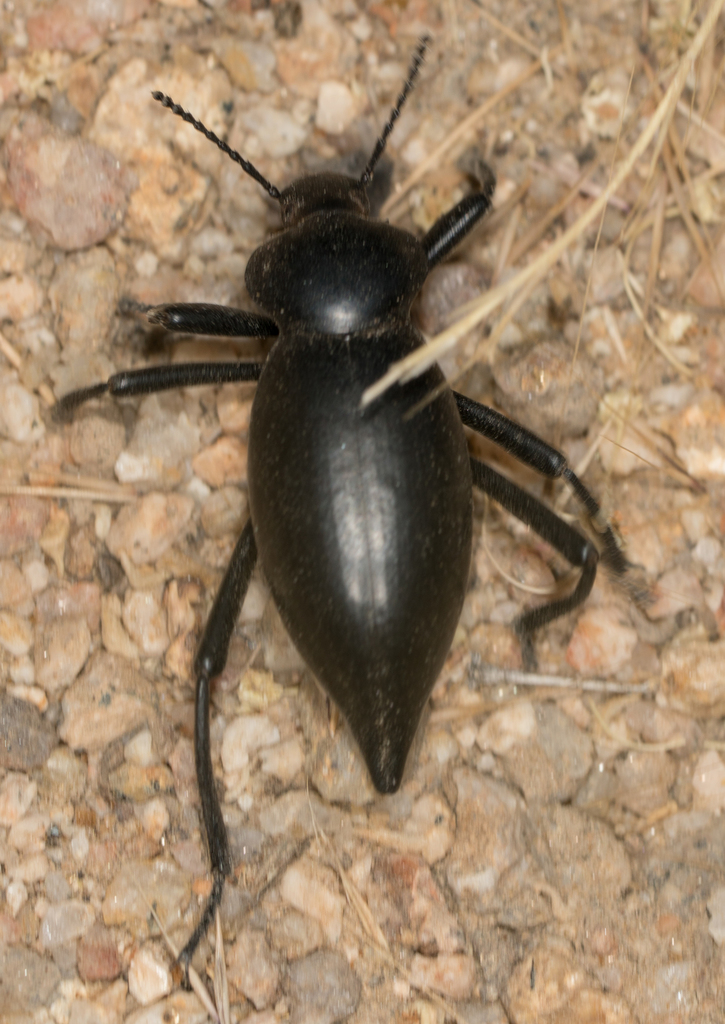
no rights reserved · CC0
Family: Tenebrionidae · Class: Insecta · Order: Coleoptera
Eleodes acuticauda is a California animal in the Tenebrionidae family.
Eleodes acuticauda is a species of darkling beetle in the family Tenebrionidae, subfamily Blaptinae. This beetle belongs to the subgenus Eleodes within the genus Eleodes, commonly known as desert stink beetles. Like other members of this genus, E. acuticauda exhibits the characteristic defensive behavior of standing on its head and releasing chemical compounds when threatened, earning the common name "stink beetle." The species displays the typical robust, oval body form of Eleodes beetles, with a hard, dark exoskeleton. Adult beetles are flightless, possessing fused wing covers (elytra) that cannot open for flight. The body surface is typically black or dark brown, often with a matte finish. Sexual dimorphism may be present, with males sometimes having modified front legs or different body proportions compared to females, though specific morphometric data for this species requires further documentation. Eleodes acuticauda occurs in California, with documented records from Los Angeles County including observations from Elysian Park (BugGuide 2024). The species' broader distribution within California and potential occurrence in adjacent regions remains inadequately documented. Historical records suggest the species may have had a wider range that has contracted due to urbanization and habitat modification. The habitat preferences of E. acuticauda are not well-characterized in the scientific literature. Based on the genus' general ecology, this species likely inhabits arid and semi-arid environments typical of southern California, including chaparral, coastal sage scrub, and possibly urban edges. Most Eleodes species prefer areas with well-drained soils and sparse vegetation cover, often being found under rocks, logs, or debris during daylight hours. As a member of Tenebrionidae, E. acuticauda is primarily detritivorous, feeding on decaying organic matter, fungi, and occasionally plant material. Adults are typically active during cooler evening and nighttime hours, avoiding daytime heat and predation. The species likely follows the general reproductive pattern of related Eleodes, with mating occurring during favorable environmental conditions and females depositing eggs in soil or organic matter. Larval development occurs underground, with larvae feeding on organic detritus before pupating and emerging as adults. The conservation status of Eleodes acuticauda has not been formally assessed by federal or state agencies. The species does not appear on current endangered species lists, though this may reflect insufficient data rather than population stability. Urban development throughout southern California poses potential threats to darkling beetle populations through habitat loss and fragmentation. Climate change may also affect the species through altered precipitation patterns and increased temperatures in already arid habitats. Scientific documentation for this species remains limited. The information presented here is based on available sources including BugGuide community observations and general knowledge of Eleodes ecology. Detailed studies of E. acuticauda's distribution, population trends, and specific ecological requirements are lacking. We welcome contributions of verified scientific data, photographs, or field observations to enhance this species account.
Classification
Class: Insecta · Order: Coleoptera · Family: Tenebrionidae
Frequently asked questions
How is Eleodes acuticauda classified?
Eleodes acuticauda belongs to class Insecta, order Coleoptera, family Tenebrionidae.
What family does Eleodes acuticauda belong to?
Eleodes acuticauda is in the Tenebrionidae family.
What is Eleodes acuticauda?
Eleodes acuticauda is a species of darkling beetle in the family Tenebrionidae, subfamily Blaptinae.
Is Eleodes acuticauda found in California?
Yes. Eleodes acuticauda is recorded in California in The California Species Project's catalogue.
Related species
Other California species in the same genus, family, or bioregion.
Data from The California Species Project — 14,000+ California species with verified data from CNPS, CDFW, USFWS, and more.