Eleodes cordata
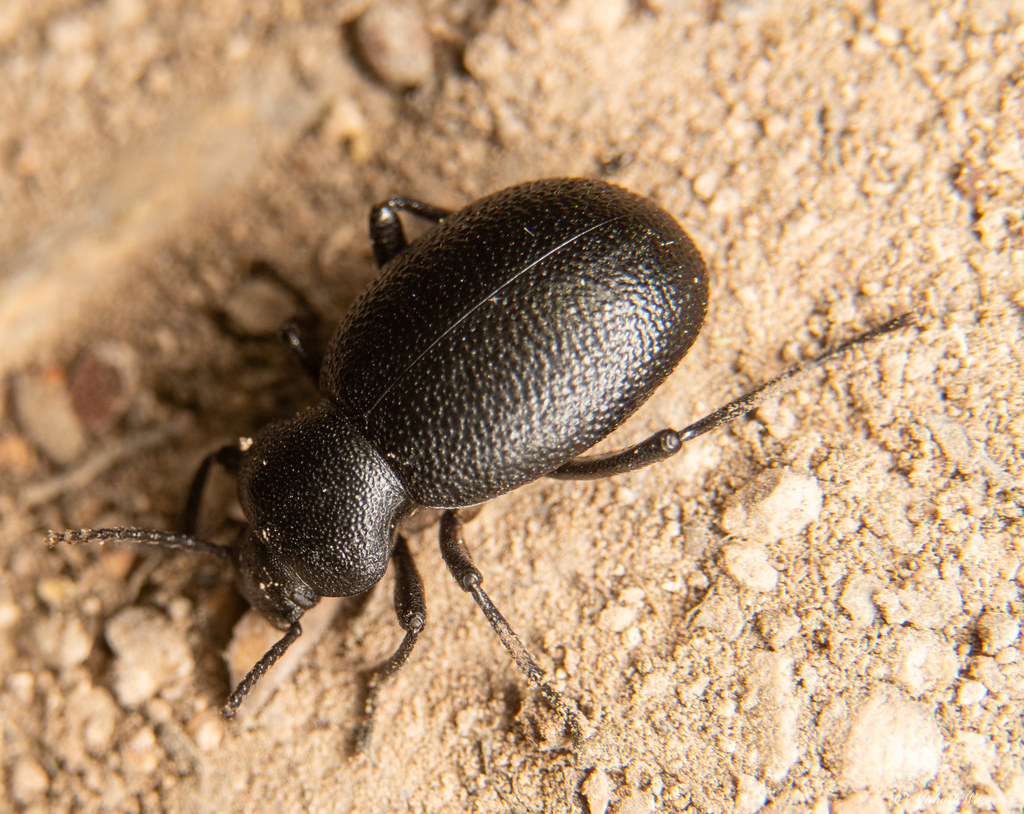
(c) Michael Warner, some rights reserved (CC BY) · licence
Family: Tenebrionidae · Class: Insecta · Order: Coleoptera
Eleodes cordata is a California animal in the Tenebrionidae family.
Eleodes cordata is a darkling beetle in the family Tenebrionidae, part of a diverse genus containing over 120 North American species. These beetles are characterized by their robust, oval-shaped bodies and typically black coloration, though specific morphological details for E. cordata have not been thoroughly documented in the scientific literature. Like other Eleodes species, this beetle likely measures between 15-25 mm (0.6-1.0 inches) in length, with a hardened exoskeleton and distinctive head-down defensive posture when threatened. The geographic range and distribution of E. cordata remains poorly documented. NatureServe lists the species with a global status of GNR (Global Not Ranked), indicating insufficient data to assess its conservation status (NatureServe 2025). The species appears to be represented in online databases and collections, but comprehensive range mapping has not been completed. Most Eleodes species are distributed across western North America, particularly in arid and semi-arid regions, though the specific distribution of E. cordata requires further investigation. Habitat preferences for E. cordata have not been well-documented in the available literature. Other members of the genus Eleodes typically inhabit desert, grassland, and scrubland environments, often preferring areas with sandy or rocky soils. These beetles are generally ground-dwelling species that seek shelter under rocks, logs, or debris during daylight hours. Without specific ecological studies, the precise microhabitat requirements and elevation range for E. cordata cannot be determined with confidence. The behavioral ecology of E. cordata follows patterns typical of darkling beetles. These insects are likely nocturnal, emerging at night to forage for organic matter including decaying plant material, fungi, and occasional animal matter. Reproduction probably occurs through complete metamorphosis, with females depositing eggs in soil or organic debris. Larvae develop underground, feeding on decomposing organic matter before pupating and emerging as adults. Like other Eleodes species, E. cordata likely exhibits the characteristic defensive behavior of standing head-down and elevating the abdomen when threatened, potentially releasing defensive chemicals. Detailed conservation information for E. cordata is currently unavailable. The species lacks federal or state listing status, and population trends have not been assessed. The GNR ranking from NatureServe indicates that basic biological and distributional data needed for conservation assessment are insufficient (NatureServe 2025). This data gap is common among many invertebrate species, particularly beetles, where taxonomic and ecological research has not kept pace with the diversity of described species. Scientific documentation for this species remains extremely limited. The information presented here synthesizes available data from NatureServe and general knowledge of the genus Eleodes. Comprehensive field studies are needed to document the distribution, habitat requirements, life history, and conservation needs of E. cordata. We welcome contributions of verified scientific data, photographs, or field observations to enhance this species account.
Classification
Class: Insecta · Order: Coleoptera · Family: Tenebrionidae
Frequently asked questions
How is Eleodes cordata classified?
Eleodes cordata belongs to class Insecta, order Coleoptera, family Tenebrionidae.
What family does Eleodes cordata belong to?
Eleodes cordata is in the Tenebrionidae family.
What is Eleodes cordata?
Eleodes cordata is a darkling beetle in the family Tenebrionidae, part of a diverse genus containing over 120 North American species.
Is Eleodes cordata found in California?
Yes. Eleodes cordata is recorded in California in The California Species Project's catalogue.
Related species
Other California species in the same genus, family, or bioregion.
Data from The California Species Project — 14,000+ California species with verified data from CNPS, CDFW, USFWS, and more.