Eleodes grandicollis
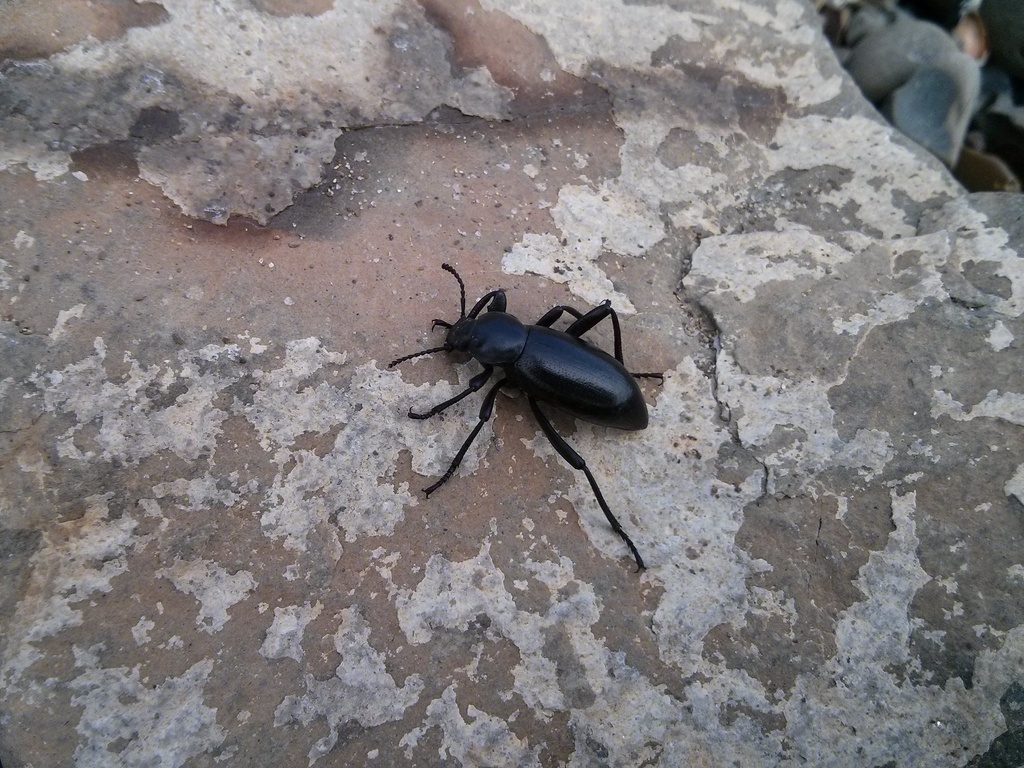
(c) Tom, some rights reserved (CC BY-SA) · licence
Family: Tenebrionidae · Class: Insecta · Order: Coleoptera
Eleodes grandicollis is a California animal in the Tenebrionidae family.
Eleodes grandicollis is a darkling beetle in the family Tenebrionidae, part of a diverse genus commonly known as desert stink beetles or pinacate beetles. Members of this genus are characterized by their dark coloration and defensive behavior of standing on their heads and releasing noxious chemicals when threatened. Specific morphological details for E. grandicollis have not been well documented in available literature, though like other Eleodes species, it likely possesses the typical robust, oval body form with fused elytra and reduced hind wings that render it flightless. The current distribution of Eleodes grandicollis appears to be poorly documented in accessible scientific literature. Many Eleodes species are endemic to western North America, particularly in arid and semi-arid regions, but specific range information for E. grandicollis requires further investigation. The species name 'grandicollis' suggests distinctive collar or neck characteristics, though detailed morphological descriptions are not readily available in current databases. Habitat preferences for this species have not been well characterized in available sources. Other members of the genus Eleodes typically inhabit desert, scrubland, and grassland environments, often favoring areas with sandy or rocky substrates where they can burrow or seek shelter under rocks, logs, or vegetation. These beetles are generally adapted to arid conditions and can tolerate significant temperature fluctuations. Like other darkling beetles, Eleodes grandicollis likely exhibits nocturnal activity patterns, emerging after dark to forage for organic matter. Most Eleodes species are detritivores, feeding on decaying plant material, fungi, and occasionally carrion. They play important ecological roles as decomposers in their ecosystems. Reproductive behavior typically involves the deposition of eggs in soil or under debris, with larvae developing in the substrate where they continue the decomposer role of adults. Development from egg to adult can take several months to over a year depending on environmental conditions. Eleodes grandicollis does not appear on current federal or state endangered species lists, and specific conservation status information is not available in standard wildlife databases. The lack of comprehensive distributional and ecological data for this species represents a significant knowledge gap common among many invertebrate taxa. Many darkling beetle populations face pressures from habitat loss due to urban development, agricultural conversion, and climate change, though species-specific impacts on E. grandicollis remain undocumented. Scientific documentation for this species remains extremely limited. The information presented here synthesizes available taxonomic records and extrapolates from knowledge of related Eleodes species. Detailed ecological studies, distribution mapping, and conservation assessments are needed to properly understand this species' status and requirements. We welcome contributions of verified scientific data, photographs, or field observations to enhance this species account.
Classification
Class: Insecta · Order: Coleoptera · Family: Tenebrionidae
Frequently asked questions
How is Eleodes grandicollis classified?
Eleodes grandicollis belongs to class Insecta, order Coleoptera, family Tenebrionidae.
What family does Eleodes grandicollis belong to?
Eleodes grandicollis is in the Tenebrionidae family.
What is Eleodes grandicollis?
Eleodes grandicollis is a darkling beetle in the family Tenebrionidae, part of a diverse genus commonly known as desert stink beetles or pinacate beetles.
Is Eleodes grandicollis found in California?
Yes. Eleodes grandicollis is recorded in California in The California Species Project's catalogue.
Related species
Other California species in the same genus, family, or bioregion.
Data from The California Species Project — 14,000+ California species with verified data from CNPS, CDFW, USFWS, and more.