Eleodes osculans
Woolly Darkling Beetle
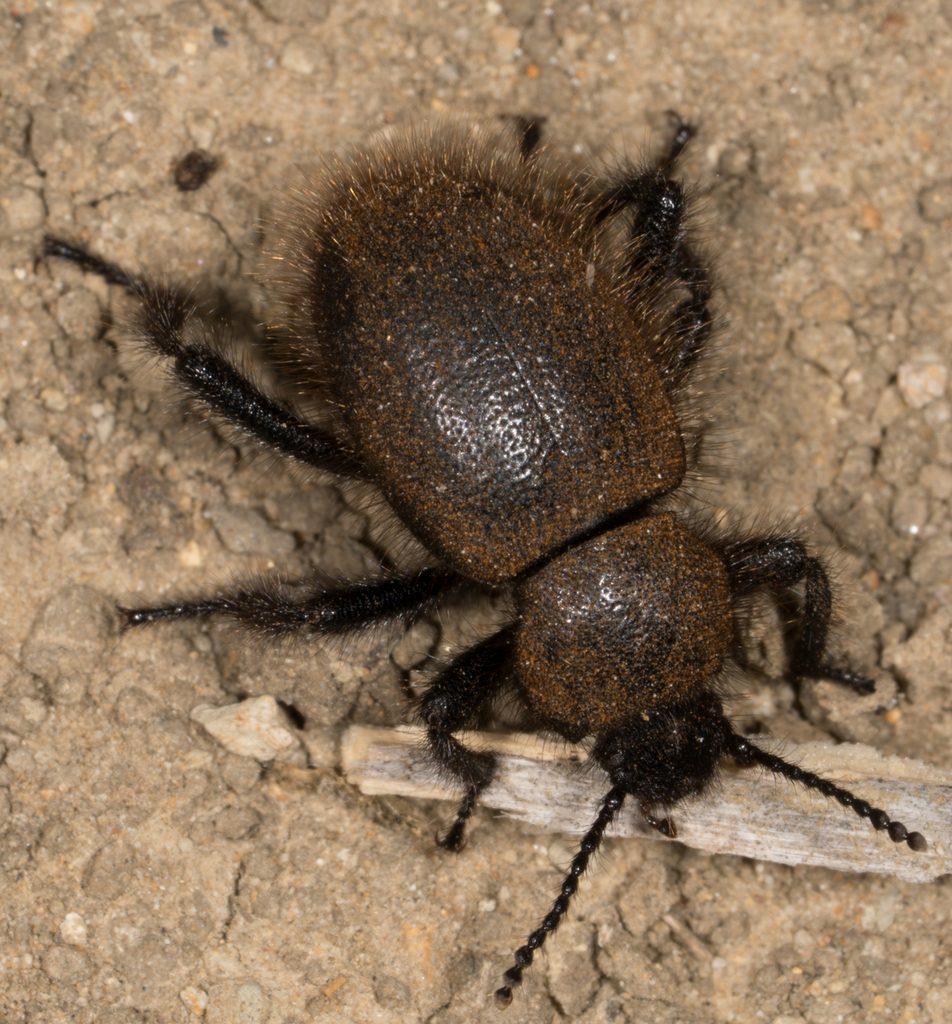
no rights reserved · CC0
Family: Tenebrionidae · Class: Insecta · Order: Coleoptera
Eleodes osculans (Woolly Darkling Beetle) is a California animal in the Tenebrionidae family.
The woolly darkling beetle (Eleodes osculans) is a ground-dwelling beetle in the family Tenebrionidae, distinguished by its robust, elongated body and characteristic defensive behavior of standing on its head when threatened. Adults typically measure 15-25 mm in length, with a dark brown to black coloration and a somewhat flattened appearance. The elytra (wing covers) are fused, rendering the species flightless, and the surface may appear slightly rough or granulated. This species occurs across a broad range in western North America, with populations documented in California, Nevada, Arizona, and other southwestern states. In California, E. osculans is found primarily in coastal and inland areas, including the Central Valley and southern regions. The species has been recorded from various habitat types throughout its range, suggesting considerable ecological adaptability. Woolly darkling beetles inhabit diverse environments including coastal dunes, chaparral, oak woodlands, and grasslands. They are commonly found in areas with sandy or loose soils that facilitate burrowing behavior. The species shows preference for areas with moderate moisture levels and organic matter accumulation, often sheltering under logs, rocks, leaf litter, or other surface debris during daylight hours. Elevation ranges vary considerably across the species' distribution. As nocturnal insects, woolly darkling beetles emerge at night to forage for decaying organic matter, fungi, and plant materials. They are primarily detritivores, playing an important ecological role in nutrient cycling within their ecosystems. When disturbed, individuals exhibit the distinctive defensive posture typical of many Eleodes species, raising their abdomen and releasing defensive chemicals from specialized glands. Reproduction occurs through egg-laying in soil or organic matter, with larvae developing underground where they feed on decomposing materials. The larval stage, known as wireworms, can persist for extended periods depending on environmental conditions. Lifecycle duration varies with temperature and moisture availability, with adults potentially living multiple years under favorable conditions. Adults are most active during cooler months when surface temperatures are moderate. The species demonstrates tolerance for drought conditions through behavioral adaptations including deep burrowing and reduced activity during extreme heat. Currently, Eleodes osculans does not hold any federal or state conservation listing status. Population trends are not well documented, though the species appears stable across much of its range as of December 2025. Habitat modification and urban development represent potential threats in some areas, particularly in coastal California where development pressure is intense. However, the species' broad habitat tolerance and wide distribution suggest resilience to moderate environmental changes. No specific conservation measures are currently in place for this species, though preservation of native habitat benefits overall ecosystem health and maintains populations of this and other native arthropods.
Classification
Class: Insecta · Order: Coleoptera · Family: Tenebrionidae
Frequently asked questions
How is Eleodes osculans classified?
Eleodes osculans belongs to class Insecta, order Coleoptera, family Tenebrionidae.
What family does Eleodes osculans belong to?
Eleodes osculans is in the Tenebrionidae family.
What is Eleodes osculans?
The woolly darkling beetle (Eleodes osculans) is a ground-dwelling beetle in the family Tenebrionidae, distinguished by its robust, elongated body and characteristic defensive behavior of standing on its head when threatened.
Is Eleodes osculans found in California?
Yes. Eleodes osculans is recorded in California in The California Species Project's catalogue.
Related species
Other California species in the same genus, family, or bioregion.
Data from The California Species Project — 14,000+ California species with verified data from CNPS, CDFW, USFWS, and more.