Eleutherodactylus coqui
Coqui
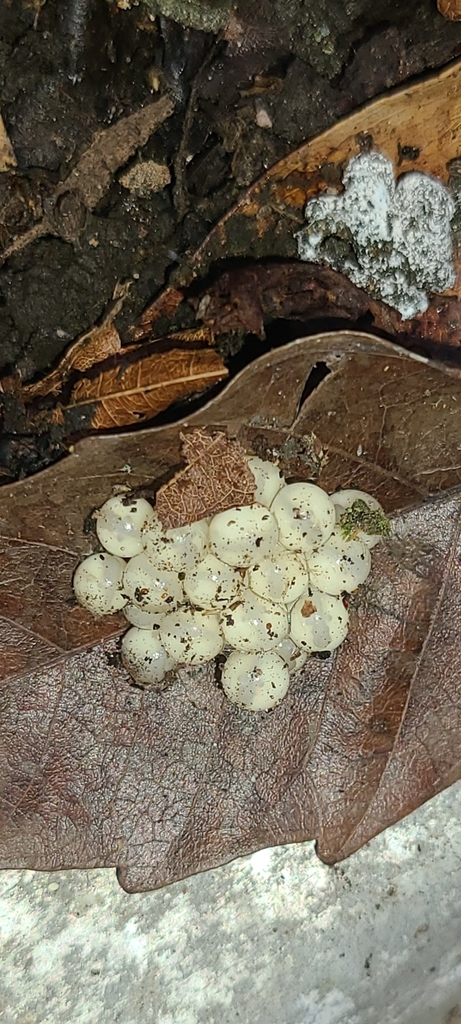
(c) ritirene, some rights reserved (CC BY) · licence
Family: Eleutherodactylidae · Class: Amphibia · Order: Anura
Eleutherodactylus coqui (Coqui) is a California animal in the Eleutherodactylidae family.
The coqui (Eleutherodactylus coqui) is a small tree frog native to Puerto Rico that has become established as an invasive species in Hawaii and has been detected in California. Adults measure 15 to 50 mm (0.6 to 2.0 inches) in snout-vent length, with females typically larger than males. The species exhibits considerable color variation, ranging from brown, gray, or yellow to green, often with darker markings or patterns. Males possess a prominent vocal sac and develop enlarged thumb pads during breeding season. The species lacks webbing between toes, an adaptation for its arboreal lifestyle. Native to Puerto Rico, the coqui occurs from sea level to elevations of 1,200 meters (3,937 feet) across the island. The species has been accidentally introduced to Hawaii, where it has established widespread populations on multiple islands since the 1980s. In California, coqui detections have been reported in nurseries and residential areas, primarily associated with imported plants from Hawaii. The California Department of Food and Agriculture maintains active surveillance and eradication programs to prevent establishment throughout the state. Coqui inhabit a variety of environments including forests, gardens, agricultural areas, and urban landscapes. In their native range, they occupy both pristine rainforests and disturbed habitats. The species demonstrates considerable adaptability to different vegetation types, from native trees to ornamental plants. Adults are primarily arboreal, sheltering in leaf litter, bromeliads, tree holes, and under bark during daylight hours. They prefer areas with high humidity and temperatures between 20 to 29°C (68 to 84°F). Coqui are nocturnal predators that feed on a diverse array of invertebrates including insects, spiders, snails, and small crustaceans. Adults consume prey items ranging from 1 to 10 mm in length. Males produce the distinctive two-note 'co-qui' call that gives the species its common name, with calling activity peaking during evening hours and varying in intensity with temperature and humidity conditions. The species exhibits direct development, bypassing the tadpole stage entirely. Females deposit 15 to 30 eggs in moist locations such as leaf litter or plant axils. Eggs develop for 17 to 26 days before hatching as fully-formed froglets approximately 5 mm in length. Sexual maturity is reached at 8 to 12 months of age. The coqui is not listed under federal or California endangered species legislation as it is considered an invasive species rather than a conservation concern. In Hawaii, populations reach extremely high densities, with estimates exceeding 20,000 individuals per hectare in optimal habitat. The species poses ecological threats through predation on native arthropods and competition with native insectivores. In California, early detection and rapid response protocols are implemented to prevent establishment. Control methods include hand capture, habitat modification, and targeted pesticide application in areas where populations are detected.
Classification
Class: Amphibia · Order: Anura · Family: Eleutherodactylidae
Frequently asked questions
How is Eleutherodactylus coqui classified?
Eleutherodactylus coqui belongs to class Amphibia, order Anura, family Eleutherodactylidae.
What family does Eleutherodactylus coqui belong to?
Eleutherodactylus coqui is in the Eleutherodactylidae family.
What is Eleutherodactylus coqui?
The coqui (Eleutherodactylus coqui) is a small tree frog native to Puerto Rico that has become established as an invasive species in Hawaii and has been detected in California.
Is Eleutherodactylus coqui found in California?
Yes. Eleutherodactylus coqui is recorded in California in The California Species Project's catalogue.
More California species
This species has no close relatives in our California data — here are other species to explore.
Data from The California Species Project — 14,000+ California species with verified data from CNPS, CDFW, USFWS, and more.