Elgaria multicarinata
Southern Alligator Lizard
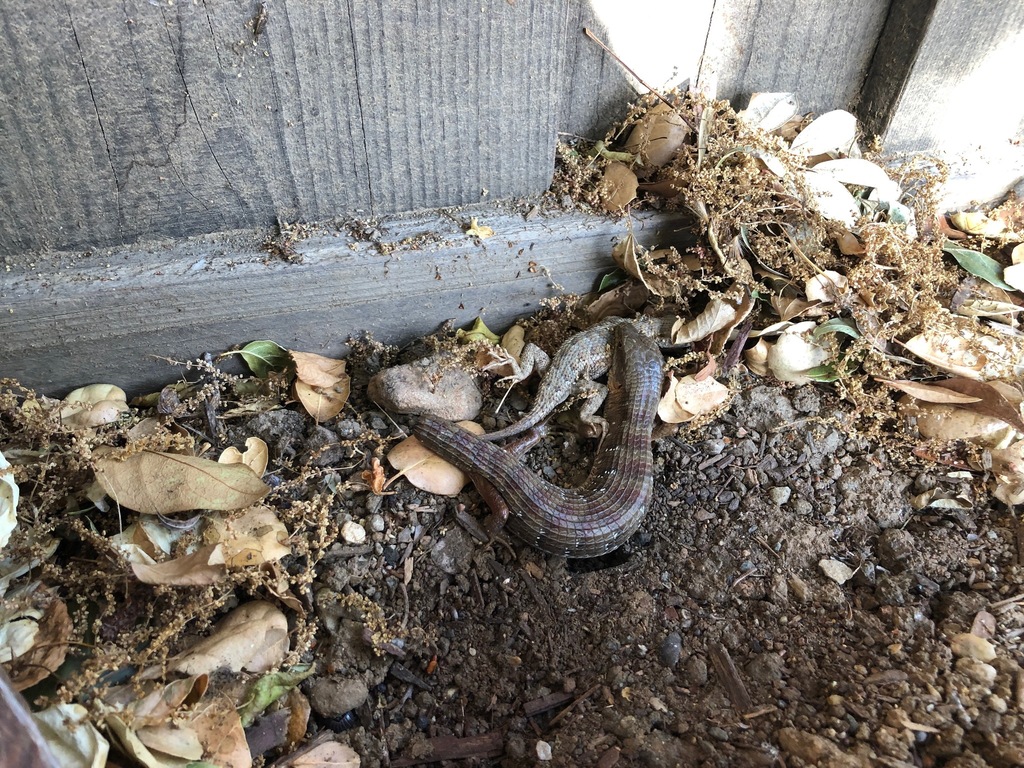
(c) Nicholas Wei, some rights reserved (CC BY-SA) · licence
Family: Anguidae · Class: Reptilia · Order: Squamata
Elgaria multicarinata (Southern Alligator Lizard) is a California animal in the Anguidae family.
The Southern Alligator Lizard is a large, elongated lizard characterized by its distinctive fold of skin along each side of the body, separating the dorsal and ventral scales. Adults typically measure 7 to 12 inches (18 to 30 cm) in snout-to-vent length, with a total length including the tail reaching up to 24 inches (61 cm). The body is covered in keeled scales arranged in distinct rows, creating a rough texture. Coloration varies from brown to gray or yellowish, often with dark crossbands or blotches across the back. The head is triangular and distinctly wider than the neck, with small eyes and movable eyelids. The tail is long and can be regenerated if lost, though the replacement typically differs in color and scale pattern. Southern Alligator Lizards range throughout much of California, from sea level to elevations of approximately 7,000 feet (2,134 meters). The species occurs along the Pacific coast from the San Francisco Bay Area south through Baja California, and extends inland through the Central Valley and into the Sierra Nevada foothills. The range also includes the Coast Ranges, Transverse Ranges, and Peninsular Ranges. This species is absent from the high Sierra Nevada and extreme desert regions of southeastern California. The species inhabits a variety of environments including chaparral, oak woodlands, pine forests, grasslands, and riparian areas. Southern Alligator Lizards prefer areas with adequate cover such as fallen logs, rock piles, brush, and dense vegetation. They are frequently found in gardens, parks, and other human-modified landscapes where suitable microhabitat exists. The species demonstrates considerable habitat flexibility, occurring in both mesic coastal environments and more arid inland areas. Southern Alligator Lizards are primarily terrestrial but are capable climbers, often found basking on rocks, logs, or low vegetation. They are active during daylight hours but may retreat to cover during extreme heat. The diet consists primarily of insects, spiders, and other arthropods, though larger individuals may consume small vertebrates including other lizards, nestling birds, and rodents. Reproduction occurs in spring and early summer, with females laying 6 to 24 eggs in loose soil, compost piles, or rotting logs. Eggs incubate for 65 to 75 days, with hatchlings emerging in late summer or early fall. Young lizards reach sexual maturity at approximately 2 years of age. The Southern Alligator Lizard is not federally or state-listed and appears to maintain stable populations throughout most of its range. The species demonstrates adaptability to human-modified environments, which has likely contributed to its persistence. However, localized population declines may occur due to habitat loss from urbanization, particularly in coastal areas. Climate change may pose future challenges through altered precipitation patterns and increased temperatures, potentially affecting prey availability and suitable habitat distribution. The species benefits from habitat conservation efforts targeting California's diverse ecosystems.
Classification
Class: Reptilia · Order: Squamata · Family: Anguidae
Frequently asked questions
How is Elgaria multicarinata classified?
Elgaria multicarinata belongs to class Reptilia, order Squamata, family Anguidae.
What family does Elgaria multicarinata belong to?
Elgaria multicarinata is in the Anguidae family.
What is Elgaria multicarinata?
The Southern Alligator Lizard is a large, elongated lizard characterized by its distinctive fold of skin along each side of the body, separating the dorsal and ventral scales.
Is Elgaria multicarinata found in California?
Yes. Elgaria multicarinata is recorded in California in The California Species Project's catalogue.
Related species
Other California species in the same genus, family, or bioregion.
Data from The California Species Project — 14,000+ California species with verified data from CNPS, CDFW, USFWS, and more.