Elgaria panamintina
Panamint Alligator Lizard
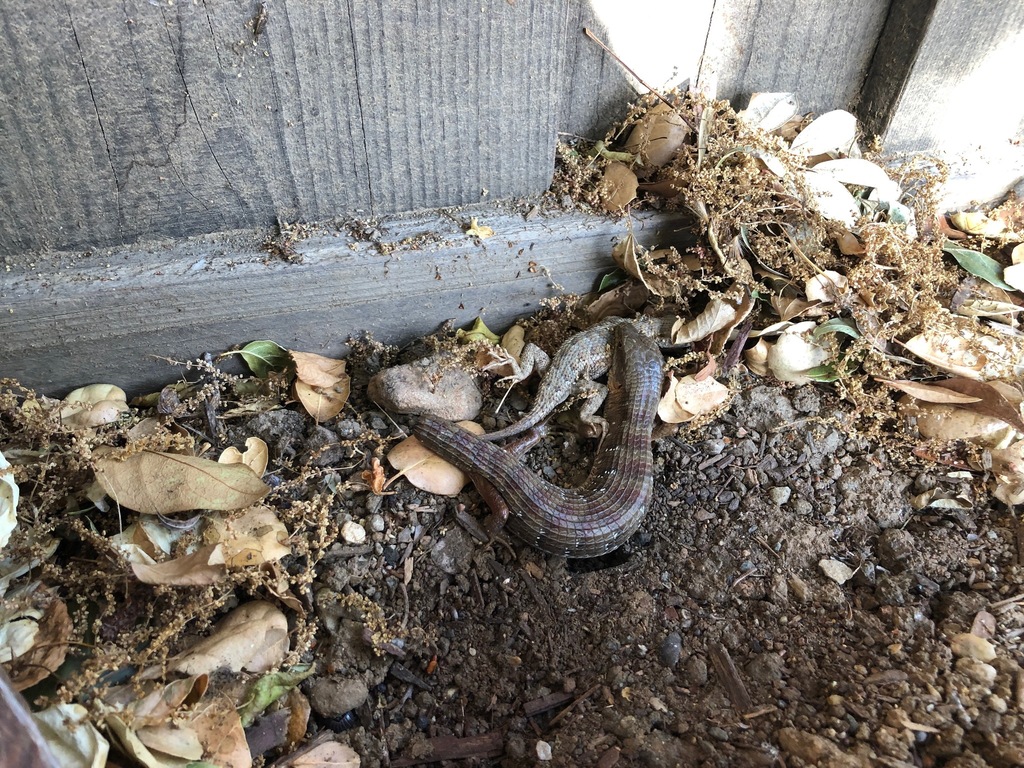
(c) Nicholas Wei, some rights reserved (CC BY-SA) · licence
Family: Anguidae · Class: Reptilia · Order: Squamata
Conservation status: G3 S3
Elgaria panamintina (Panamint Alligator Lizard) is a California animal in the Anguidae family.
The Panamint alligator lizard (Elgaria panamintina) is a medium-sized lizard endemic to the desert mountain ranges of eastern California and southern Nevada. Adults typically measure 76 to 127 mm (3.0 to 5.0 inches) in snout-vent length, with a total length including tail reaching 254 to 305 mm (10 to 12 inches). The species exhibits a robust build with a distinct fold of granular scales along each side of the body, a characteristic feature of alligator lizards. Dorsal coloration ranges from gray to brown with darker crossbands or blotches, providing effective camouflage against rocky substrates. The ventral surface is typically lighter, ranging from cream to pale yellow. The Panamint alligator lizard occupies a highly restricted range within the Mojave Desert region. The species is found primarily in the Panamint Range of Death Valley National Park in Inyo County, California, which serves as the type locality. Additional populations occur in the Spring Mountains of Clark County, Nevada, and isolated mountain ranges in San Bernardino County, California. The total range encompasses fewer than 20 known localities across approximately 10,000 square kilometers. This species inhabits rocky canyon bottoms, cliff faces, and boulder fields in desert mountain ranges at elevations between 915 and 2,440 meters (3,000 to 8,000 feet). Preferred microhabitats include areas with permanent or semi-permanent water sources, dense riparian vegetation, and abundant rock crevices for shelter. The lizards are closely associated with desert springs, seeps, and intermittent streams that support vegetation such as desert willow, cattails, and various shrubs. Rocky talus slopes and limestone cliffs provide essential basking sites and retreat locations. Panamint alligator lizards are primarily diurnal and exhibit strong site fidelity to specific rock crevices and canyon systems. The species is viviparous, with females giving birth to live young after a gestation period of approximately six months. Breeding occurs in spring, with births typically occurring from July through September. Litter sizes range from two to eight young, with larger females producing more offspring. The diet consists primarily of arthropods, including beetles, crickets, spiders, and caterpillars, along with occasional small vertebrates such as juvenile lizards. The Panamint alligator lizard is assigned a conservation status of G3 S3, indicating the species is vulnerable to extirpation due to its restricted range and small population sizes. While not federally or state listed, the species faces threats from habitat degradation, water diversions affecting desert springs, recreational activities, and climate change impacts on desert water sources. The fragmented nature of suitable habitat across widely separated mountain ranges increases vulnerability to local extinctions. Conservation efforts focus on protecting water sources and limiting disturbance to occupied canyon systems within Death Valley National Park and other protected areas.
Classification
Class: Reptilia · Order: Squamata · Family: Anguidae
Conservation status
G3 S3
Frequently asked questions
How is Elgaria panamintina classified?
Elgaria panamintina belongs to class Reptilia, order Squamata, family Anguidae.
What family does Elgaria panamintina belong to?
Elgaria panamintina is in the Anguidae family.
Is Elgaria panamintina protected or of conservation concern?
Elgaria panamintina carries the following status: G3 S3.
What is Elgaria panamintina?
The Panamint alligator lizard (Elgaria panamintina) is a medium-sized lizard endemic to the desert mountain ranges of eastern California and southern Nevada.
Is Elgaria panamintina found in California?
Yes. Elgaria panamintina is recorded in California in The California Species Project's catalogue.
Related species
Other California species in the same genus, family, or bioregion.
Data from The California Species Project — 14,000+ California species with verified data from CNPS, CDFW, USFWS, and more.