Elophila obliteralis
Waterlily Leafcutter Moth
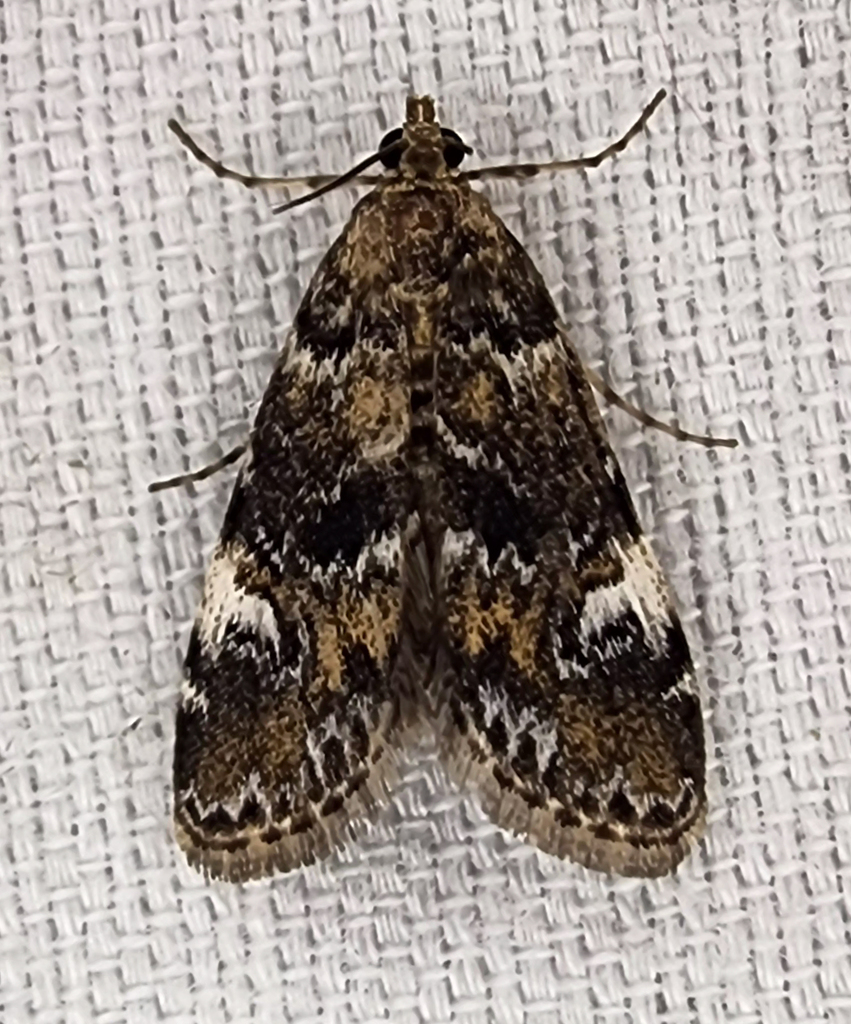
(c) Alexis Smith, some rights reserved (CC BY) · licence
Family: Crambidae · Class: Insecta · Order: Lepidoptera
Elophila obliteralis (Waterlily Leafcutter Moth) is a California animal in the Crambidae family.
The waterlily leafcutter moth (Elophila obliteralis) is a small aquatic moth in the family Crambidae. Adults measure 12-16 mm (0.47-0.63 inches) in wingspan, with narrow forewings displaying a pale yellow to cream coloration marked by thin brown lines and spots. The hindwings are whitish with less distinct markings. At rest, the moth holds its wings tightly against its body in a characteristic triangular profile. Males can be distinguished from females by their more pronounced antennae and slightly smaller size. This species is common throughout eastern North America, with its range extending from southeastern Canada south to Florida and west to the Great Plains. In California, the species occurs primarily in the Central Valley and coastal regions where suitable aquatic habitats exist, though it is less common than in its core eastern range. The moth has expanded its distribution westward over the past several decades, likely aided by the cultivation of ornamental water gardens and the spread of invasive aquatic plants. Waterlily leafcutter moths inhabit freshwater environments including ponds, lakes, slow-moving streams, marshes, and constructed water features. Adults are typically found near the water's edge in areas with abundant floating and emergent aquatic vegetation. The species thrives in both natural wetlands and artificial water bodies such as ornamental ponds and irrigation canals, from sea level to approximately 1,500 meters (4,900 feet) elevation. Larvae are aquatic and construct distinctive portable cases from cut leaf fragments of their host plants, earning the species its common name. The caterpillars feed on white water lily, pondweed (Potamogeton illinoensis and P. americanus), water stargrass (Heteranthera), duckweed, Hydrilla (Hydrilla verticillata), water hyacinth (Eichhornia crassipes), water lettuce (Pistia stratiotes), and at least six other aquatic plant species. Larvae cut semicircular or oval pieces from leaves, binding them together with silk to create camouflaged shelters. Development typically requires 4-6 weeks, with larvae pupating within their leaf cases. Adults emerge from late spring through early fall, with peak flight periods occurring in mid-summer. The species produces 2-3 generations annually in warmer climates. Adults are primarily nocturnal and are attracted to artificial lights near water bodies. Females deposit eggs singly on the undersides of host plant leaves, typically just below the waterline. The species overwinters as larvae in their leaf cases, which sink to the bottom of water bodies during cold months. The waterlily leafcutter moth has no special conservation status and is considered secure throughout its range. Population trends appear stable, and the species may be benefiting from the increased availability of ornamental water gardens and some invasive aquatic plants that serve as hosts. In some regions, larvae are considered minor pests of cultivated water lilies and other ornamental aquatic plants, though damage is typically cosmetic rather than significant.
Classification
Class: Insecta · Order: Lepidoptera · Family: Crambidae
Frequently asked questions
How is Elophila obliteralis classified?
Elophila obliteralis belongs to class Insecta, order Lepidoptera, family Crambidae.
What family does Elophila obliteralis belong to?
Elophila obliteralis is in the Crambidae family.
What is Elophila obliteralis?
The waterlily leafcutter moth (Elophila obliteralis) is a small aquatic moth in the family Crambidae.
Is Elophila obliteralis found in California?
Yes. Elophila obliteralis is recorded in California in The California Species Project's catalogue.
Related species
Other California species in the same genus, family, or bioregion.
Data from The California Species Project — 14,000+ California species with verified data from CNPS, CDFW, USFWS, and more.