Emblethis vicarius
Sand bug
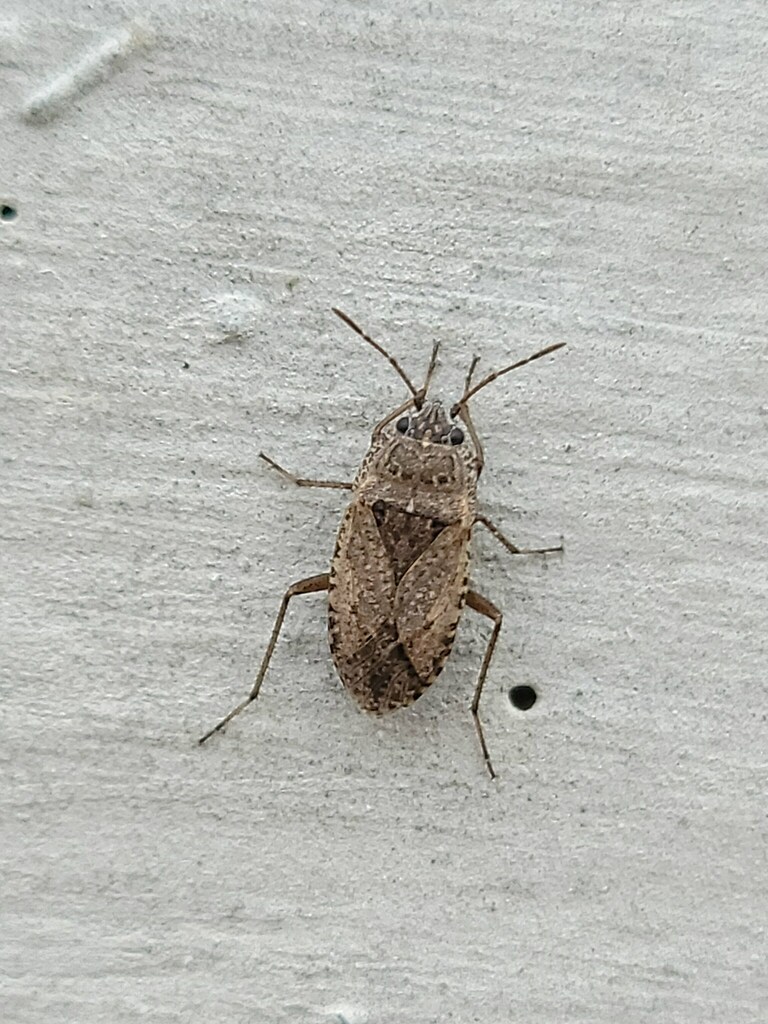
(c) Rodolfo Salinas Villarreal, some rights reserved (CC BY) · licence
Family: Lygaeidae · Class: Insecta · Order: Hemiptera
Emblethis vicarius (Sand bug) is a California animal in the Lygaeidae family.
Emblethis vicarius, commonly known as the sand bug, is a small true bug in the family Lygaeidae. Adults measure approximately 4-6 mm in length with an elongated, oval body shape typical of seed bugs. The species displays a mottled brown and gray coloration that provides effective camouflage against sandy substrates. The forewings (hemelytra) are clear or pale gray, contrasting with the darker coloration of the remainder of the dorsal surface. Like other members of the dirt-colored seed bug family, E. vicarius has well-developed antennae and piercing-sucking mouthparts adapted for feeding on plant materials and organic matter. Emblethis vicarius has a broad distribution across western North America, extending from Alaska south through California and eastward to New England, though it is notably absent from other areas of the eastern United States (BugGuide). The species also occurs in Mexico and extends into South America. In California, specimens have been documented in various coastal and inland locations, including the Ballona Wetlands area where it was recorded during biological surveys (Mattoni 1991). The species inhabits open sandy environments, demonstrating a strong preference for loose, well-drained substrates. Typical habitats include gravel pits, parking lots, sandy fields, roadsides, and beaches above the high tide line (Slater & Baranowski 1990). This habitat specificity reflects the species' adaptation to areas with minimal vegetation cover and exposed sandy or gravelly soil. The sand bug's coloration and behavior are well-suited to these harsh, sun-exposed environments where few other insects thrive. Emblethis vicarius exhibits opportunistic feeding behavior, with documented consumption of cow droppings and other organic matter, though specific plant associations remain poorly documented (BugGuide). The species completes two generations per year in northern parts of its range, suggesting a relatively rapid reproductive cycle adapted to the seasonal availability of suitable habitat conditions. Adults are most commonly encountered during warmer months when they actively forage on the soil surface. Emblethis vicarius currently holds a global conservation rank of G5 (Secure) according to NatureServe, indicating stable populations across its range as of December 2025. The species is not federally or state-listed for protection. However, like many insects associated with sandy habitats, local populations may face pressure from habitat conversion and development. The species' broad distribution and apparent adaptability to disturbed habitats, including human-modified environments like parking lots and roadsides, suggest resilience to moderate habitat disturbance. The documentation of E. vicarius in urban-adjacent areas such as the Ballona Wetlands indicates the species can persist in fragmented landscapes, though long-term population trends have not been systematically studied. The lack of detailed ecological research on this species reflects the broader challenge of understanding the conservation needs of small, inconspicuous invertebrates.
Classification
Class: Insecta · Order: Hemiptera · Family: Lygaeidae
Frequently asked questions
How is Emblethis vicarius classified?
Emblethis vicarius belongs to class Insecta, order Hemiptera, family Lygaeidae.
What family does Emblethis vicarius belong to?
Emblethis vicarius is in the Lygaeidae family.
What is Emblethis vicarius?
Emblethis vicarius, commonly known as the sand bug, is a small true bug in the family Lygaeidae.
Is Emblethis vicarius found in California?
Yes. Emblethis vicarius is recorded in California in The California Species Project's catalogue.
Related species
Other California species in the same genus, family, or bioregion.
Data from The California Species Project — 14,000+ California species with verified data from CNPS, CDFW, USFWS, and more.