Emerita analoga
Pacific Sand Crab
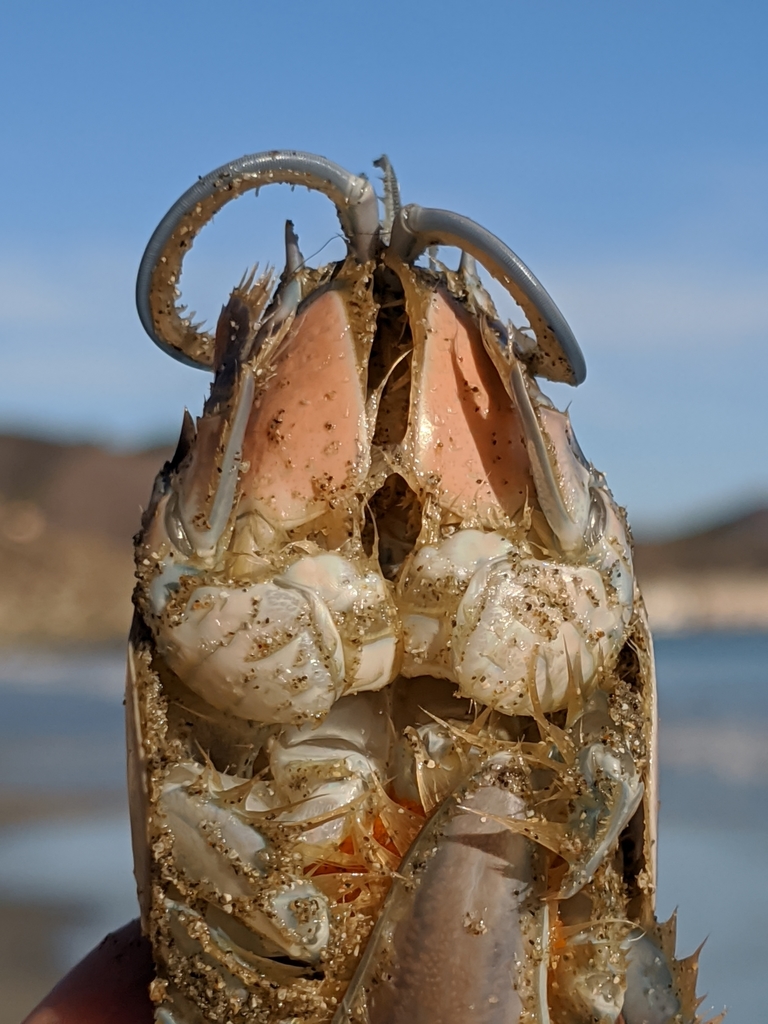
no rights reserved · CC0
Family: Hippidae · Class: Malacostraca · Order: Decapoda
Emerita analoga (Pacific Sand Crab) is a California animal in the Hippidae family.
The Pacific sand crab is a small, barrel-shaped crustacean endemic to the sandy beaches of the Pacific Coast. Adults typically measure 1.9 to 3.5 centimeters (0.75 to 1.4 inches) in carapace length, with females generally larger than males. The body is pale gray to tan in coloration, providing effective camouflage against beach sand. The species possesses distinctive feathery antennae used for filter feeding and lacks claws, instead having flattened, paddle-like appendages adapted for rapid burrowing. Emerita analoga ranges along the Pacific Coast from Alaska to Baja California, Mexico, with populations found throughout California's coastal waters. The species inhabits the swash zone of exposed sandy beaches, typically occurring in the area where waves break and retreat. This narrow habitat zone, usually only a few meters wide, represents the intersection of marine and terrestrial environments. Pacific sand crabs are obligate inhabitants of high-energy sandy beaches with consistent wave action. They require medium to coarse sand substrates that allow for rapid burrowing and drainage. The species shows a strong preference for beaches with moderate to steep slopes and minimal rocky substrate. They are most abundant in areas where waves provide consistent agitation, which facilitates their filter-feeding behavior and prevents burial by sediment. The species exhibits unique behavioral adaptations to life in the dynamic swash zone. Pacific sand crabs position themselves tail-first in the sand with only their feathery antennae exposed above the surface. As waves wash over them, they extend these specialized feeding appendages to filter plankton, detritus, and small organic particles from the water column. When waves recede, the crabs quickly reposition themselves to maintain optimal feeding position. They demonstrate notable ability to orient themselves perpendicular to wave direction and can rapidly burrow into sand when threatened, disappearing within seconds. Reproduction occurs primarily during spring and summer months, with females carrying bright orange egg masses beneath their abdomens. Larvae undergo several planktonic stages in offshore waters before settling in the surf zone as juveniles. The species serves as an important prey item for numerous coastal predators, including shorebirds, surf perch, and marine mammals. According to U.S. Fish and Wildlife Service documentation (USFWS 2020), Pacific sand crabs function as intermediate hosts for certain parasites that affect southern sea otters, including protozoal species that can cause encephalitis. As of December 2025, Emerita analoga lacks federal or state conservation listing status and is not considered at risk. However, the species faces potential threats from coastal development, beach grooming activities, and sea level rise associated with climate change. Sandy beach ecosystems are among the most threatened coastal habitats due to human development and recreational use. The species' specialized habitat requirements and limited mobility make populations potentially vulnerable to habitat modification and increased storm intensity projected under climate change scenarios.
Classification
Class: Malacostraca · Order: Decapoda · Family: Hippidae
Frequently asked questions
How is Emerita analoga classified?
Emerita analoga belongs to class Malacostraca, order Decapoda, family Hippidae.
What family does Emerita analoga belong to?
Emerita analoga is in the Hippidae family.
What is Emerita analoga?
The Pacific sand crab is a small, barrel-shaped crustacean endemic to the sandy beaches of the Pacific Coast.
Is Emerita analoga found in California?
Yes. Emerita analoga is recorded in California in The California Species Project's catalogue.
More California species
This species has no close relatives in our California data — here are other species to explore.
Data from The California Species Project — 14,000+ California species with verified data from CNPS, CDFW, USFWS, and more.